
REVIEW · CHICAGO ARCHITECTURE TOURS
Chicago: Architecture Center Cruise on Chicago’s First Lady
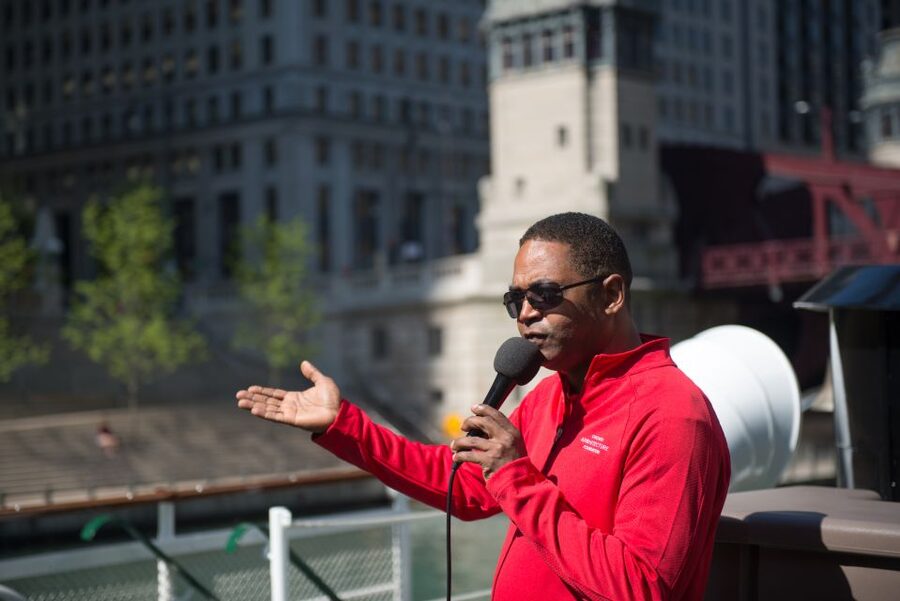
Chicago reveals itself from the river. This 90-minute cruise combines open-air skyline views with a live Chicago Architecture Center docent who explains more than 50 buildings, 13 bascule bridges, and the city’s changing design. I especially like the route through all three branches of the Chicago River, plus the clear, energetic commentary from guides such as Russel, Amy, Tim, and Patricia. The main drawback is practical: the dock has no elevator, and sound can be hard to hear from some seats.
At $57, this is not a cheap boat ride. Still, I think the price makes sense if you want more than photos, especially since part of the fare supports the Chicago Architecture Center’s educational work. You also get guaranteed seating on the open-air upper deck and the option to add the center’s admission for only $5 instead of the usual $14.
Key points to know before you go
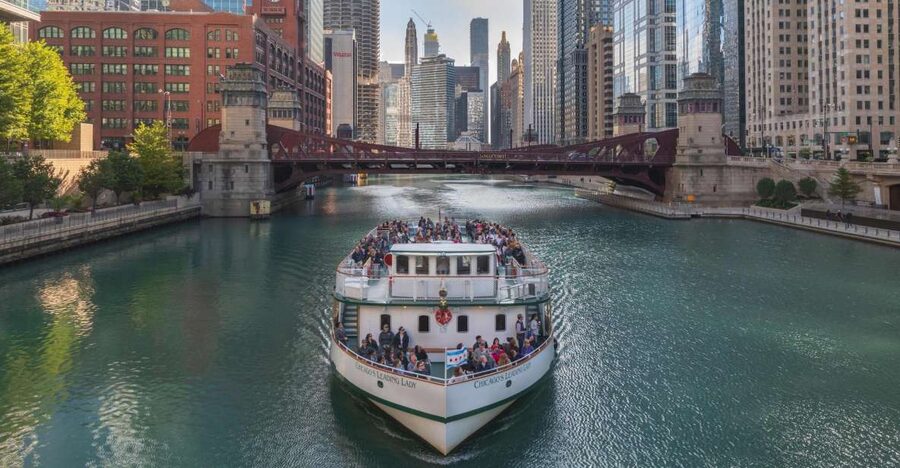
- All three river branches: You see more than the standard downtown stretch, including the forks that give the cruise its broader view of Chicago.
- Live CAC docents: Guides are trained by the Chicago Architecture Center, and the best ones turn building facts into memorable stories.
- More than 50 buildings: Expect Art Deco, neoclassical, mid-century modern, and postmodern design along the route.
- Thirteen movable bridges: The bascule bridges are part of Chicago’s working river story, not just background scenery.
- Open-air seating with indoor backup: You can enjoy 360-degree views, then move inside for air conditioning, shelter, drinks, and snacks.
- A useful museum add-on: The Chicago Architecture Center is at the boarding location, and cruise passengers can add admission for $5.
Why the Chicago River is the right classroom
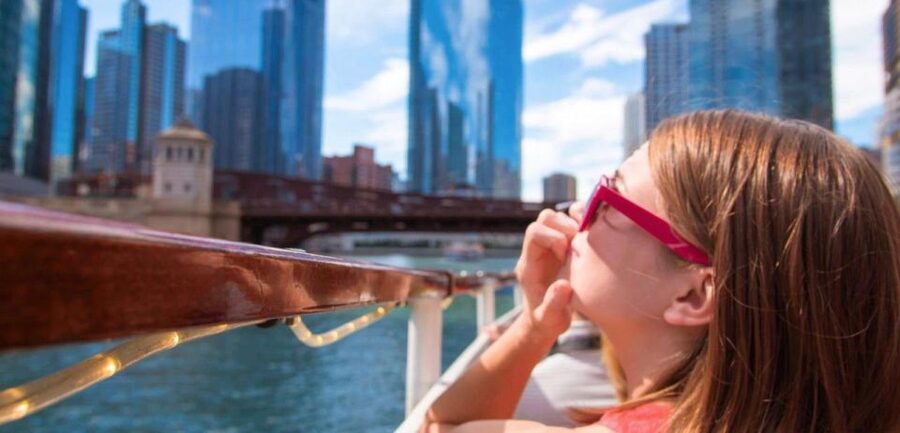
From street level, Chicago’s buildings can feel like a wall of glass, stone, and steel. From the river, you get the breathing room to see how towers relate to one another, how older structures sit beside newer ones, and how the river cuts through the city’s famous downtown canyon.
The cruise focuses on architecture, but it also explains how design shaped daily life and Chicago’s growth. That makes the experience useful even if you cannot tell Art Deco from a fire escape. The docent connects styles, materials, architects, historic figures, and the river itself in plain English.
I like this approach better than a simple sightseeing boat with a recorded script. The live guide can point your attention toward details you might miss, and the strongest docents add local pride and humor without turning the ride into a lecture. Mary Jo, Barbara, Jessica, Cynthia, Kathleen, and Bob P were all singled out for clear, engaging presentations on different departures, while Tim and Russel earned praise for mixing facts with an easy manner.
Your guide will not be the same person every time, so the delivery can vary. One guide may be polished and dramatic, another more relaxed, and another may rely on filler words. The subject matter remains strong, but the human element is part of the bargain.
A few more architecture tours in Chicago worth a look
- Chicago Architecture River Cruise
★ 5.0 · 15,756 reviews - Chicago River 90-Minute Architecture Tour
★ 4.5 · 9,629 reviews - Chicago River: 1.5-Hour Guided Architecture Cruise
★ 4.8 · 8,046 reviews
Boarding at the Michigan Avenue bridge
You check in at the black awning for Chicago’s First Lady on the Riverwalk level, at the southeast corner of the Michigan Avenue bridge where Michigan Avenue meets Wacker Drive. Give yourself time to find the Riverwalk entrance and reach the dock. The meeting point is central, but street-level Chicago can be confusing, especially if you are arriving from a parking garage.
There is no elevator access to the boat dock. That detail matters for anyone with limited mobility. A ramp is available from farther away, and one account describes using the route near State Street and Wacker Drive. The walk can be long, and the boarding area also involves stairs.
The boat is wheelchair accessible in a limited, practical sense. Motorized scooters and electric wheelchairs cannot be accommodated for safety reasons. If you can transfer, the operator may have a manual wheelchair available, depending on supply. Call ahead if this affects your plans, and do not assume that a standard elevator-style boarding setup exists.
Large bags and luggage are not allowed. Bring sunglasses and a sun hat, but keep your belongings compact. Assistance dogs are allowed, while other pets are not.
The first view: Chicago’s canyon from the water
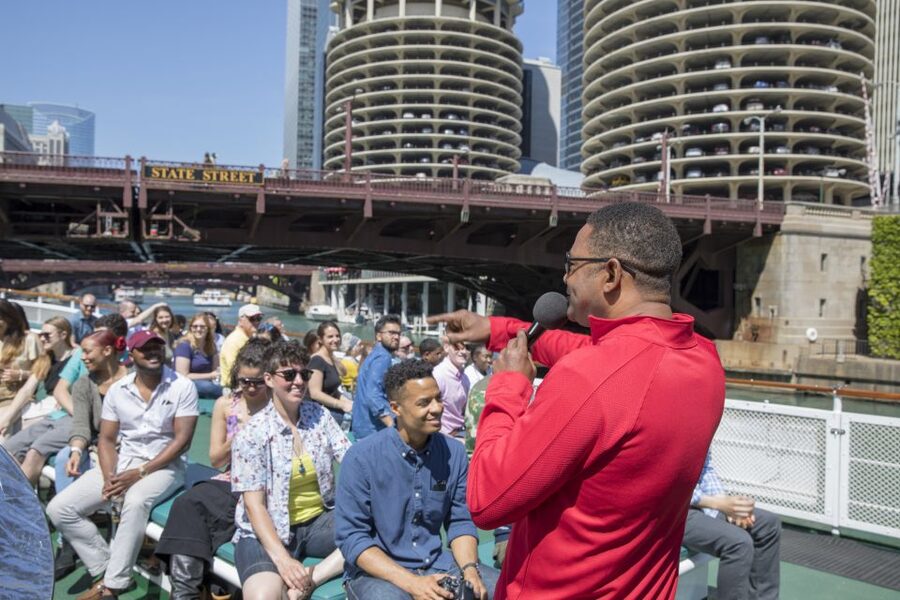
Once aboard, you have guaranteed seating on the open-air upper deck. That removes one common boat-tour worry: arriving early only to discover that the best seats have vanished. The upper deck gives you unobstructed 360-degree views, though the sun can be strong and the narration may be harder to hear if you sit far from the guide or near competing noise.
The river-level perspective changes familiar buildings. You are looking upward at facades that are easy to overlook from a sidewalk. The narrow waterway also creates Chicago’s famous canyon effect, with tall buildings rising on both sides and their forms reflected in the river.
This is the point where the cruise earns its keep. You are not just photographing the skyline. You are learning why different buildings look the way they do, how materials affect their appearance, and how architectural ideas changed over time.
If the sun becomes too much, the boat has climate-controlled interior salons with covered seating. That is a real advantage in Chicago, where a pleasant afternoon can turn hot, rainy, or windy. The tradeoff is simple: indoor seats offer comfort but not the same clear sightlines.
Art Deco, neoclassical, and modern Chicago
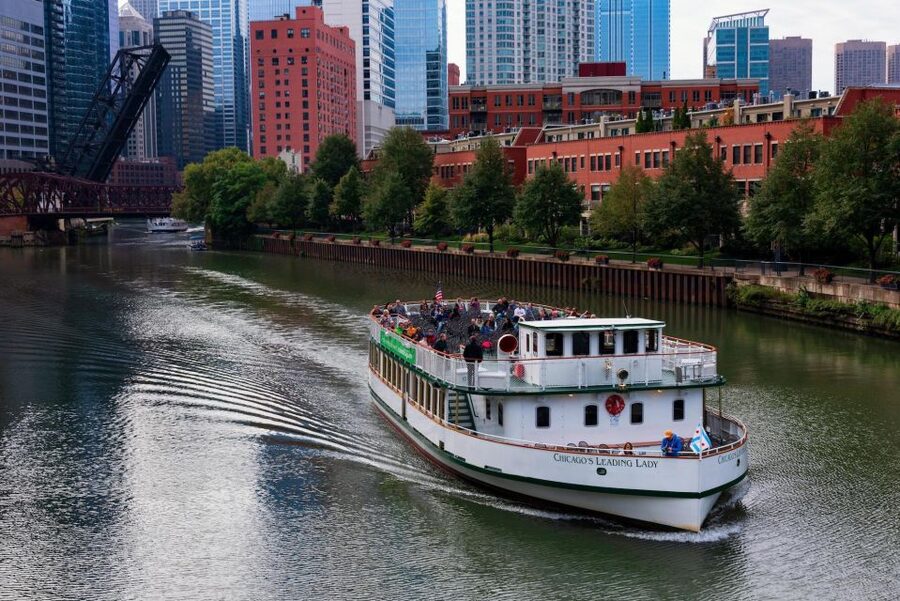
The route presents a wide range of architectural styles, including Art Deco, neoclassicism, mid-century modernism, and postmodernism. You will hear about more than 50 buildings, so the talk moves at a steady pace rather than treating every structure as a long case study.
Art Deco buildings bring strong geometric shapes and decorative detail. Neoclassical work looks back to earlier traditions, often using formal proportions and imposing columns. Mid-century modernism strips away much of that ornament, while postmodern buildings play with historical references and unexpected forms.
You do not need prior architecture training to follow along. Several guides have been praised for making the subject accessible to people with only basic knowledge. That is important because a technical presentation can lose you quickly on a moving boat. Here, the best talks explain what to notice before explaining why it matters.
The commentary also includes stories about the people behind the buildings and the events that shaped Chicago. This gives the skyline a human scale. A tower is no longer just a tall object in a photograph. It becomes part of a story about ambition, engineering, business, design, or city life.
Same city, a different building to stand in front of:
- Chicago Architecture Center River Cruise aboard First Lady
★ 5.0 · 5,536 reviews - Chicago: Architecture River Cruise Skip-the-Ticket Line
★ 4.8 · 4,325 reviews - Chicago River 45-Minute Architecture Tour from Magnificent Mile
★ 4.5 · 2,924 reviews - Chicago Lake and River Architecture Tour
★ 4.5 · 2,308 reviews
All three branches, including the river forks
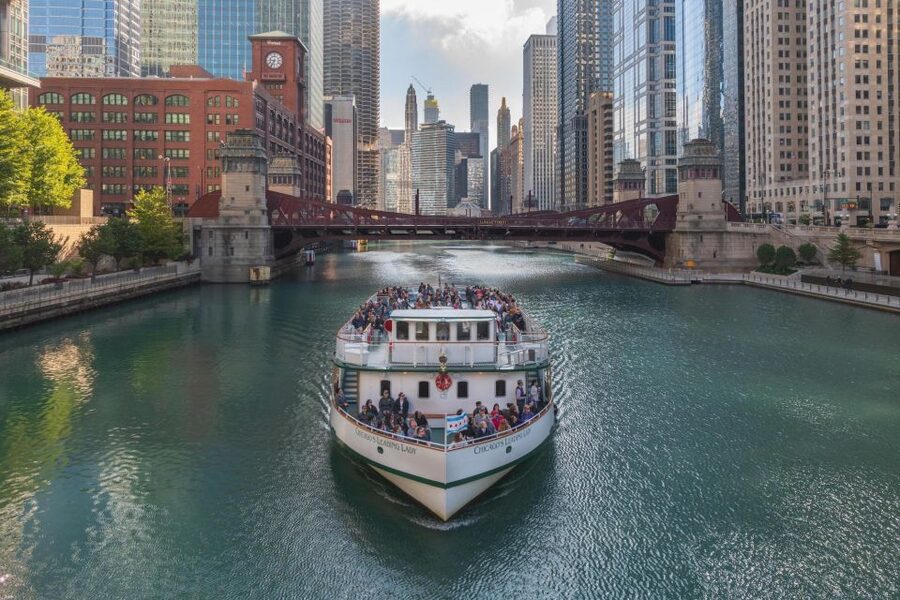
Many Chicago river cruises concentrate on the main downtown section. This one continues down all three branches, giving you a wider view of the river system and the city around it. The branches are valuable because they show that the river is more than a scenic strip beside the central towers.
You will hear about the river’s role in Chicago’s past and present while seeing buildings from changing angles. One experienced rider specifically preferred this route because it included the forks rather than only the main section. That extra reach helps explain how the river shaped the city beyond the most photographed blocks.
The route also makes the 90-minute length feel well judged. You get a strong introduction without committing half a day to a boat. The talk continues for the full trip, so you should expect a steady stream of information rather than long quiet stretches.
That can be a plus or a minus. If you want a peaceful ride with occasional facts, this may feel too talk-heavy. If you want context and a clear introduction to Chicago’s architecture, the full narration is exactly the point.
Thirteen bascule bridges and the working river
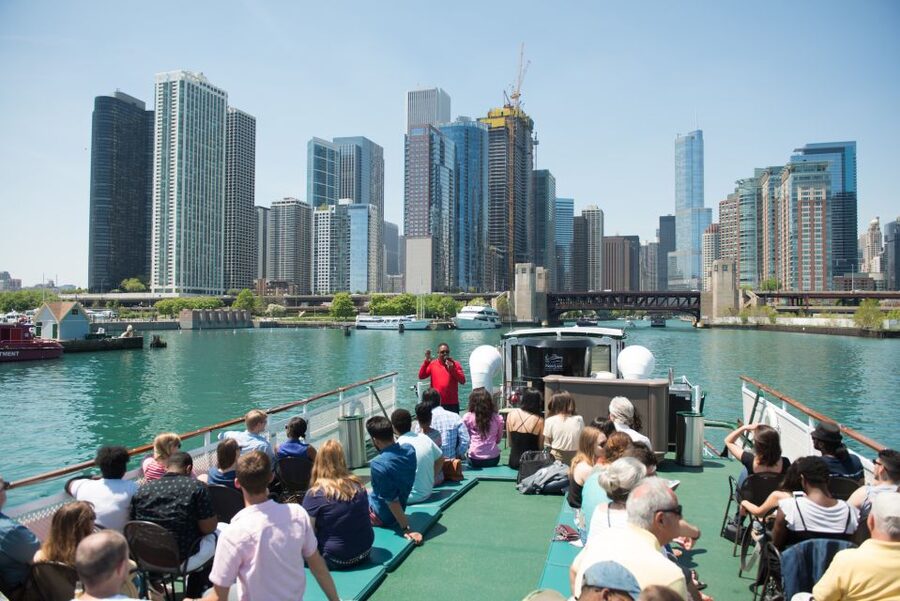
The cruise covers 13 bascule bridges. These movable bridges are not decorative leftovers. They reflect Chicago’s connection to water traffic, transport, engineering, and the river’s continuing practical role.
Your guide explains the bridges alongside the buildings, helping you see how the city had to solve two problems at once: move people across the river and allow boats to pass below. The bridges also add variety to the cruise because the view changes from tower facades to working infrastructure.
This is one of the better reasons to choose a narrated architecture cruise instead of a standard sightseeing trip. You learn to look at the city as a machine as well as a collection of landmarks. The river, bridges, buildings, and streets all depend on one another.
The exact amount of bridge activity can vary, so do not book this expecting a dramatic bridge opening during your departure. The guaranteed feature is the explanation and the chance to see the bridges along the route.
Open-air decks, snacks, and weather
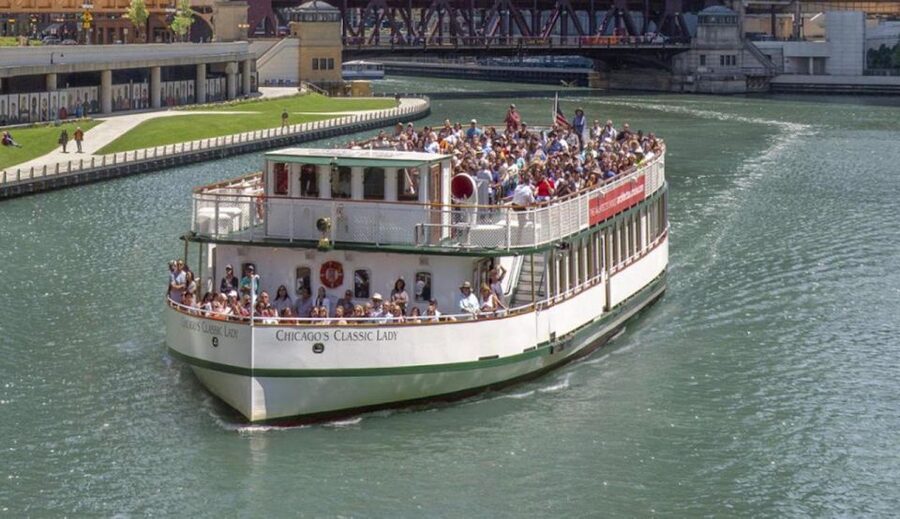
The cruise operates rain or shine. Open and covered seating are available, but the open deck is still the best place for unobstructed views. I would bring a hat, sunglasses, and a light layer, with the understanding that weather can affect how long you want to sit outside.
The interior salons are climate controlled and include full-service cocktail and snack bars. You can buy water, soda, wine, beer, chips, cookies, and nuts. Food and drinks are not included, so budget for them separately if you want refreshments.
The onboard facilities make the boat more comfortable than a bare sightseeing vessel. Clean bathrooms and helpful deckhands were noted as positives, and the indoor area gives you somewhere to retreat when the sun or weather becomes tiring.
Sound quality deserves a small warning. Most guides are easy to follow, but one passenger found the audio too weak. Sit near the guide when possible, and ask a crew member if you are struggling to hear. A great explanation is not much use if it disappears into river noise.
Sunset departures can be especially appealing. One late-afternoon trip offered views of the buildings as they began to light up. Timing is not guaranteed to match sunset, so check the departure options rather than assuming every cruise has the same atmosphere.
Is $57 a fair price?
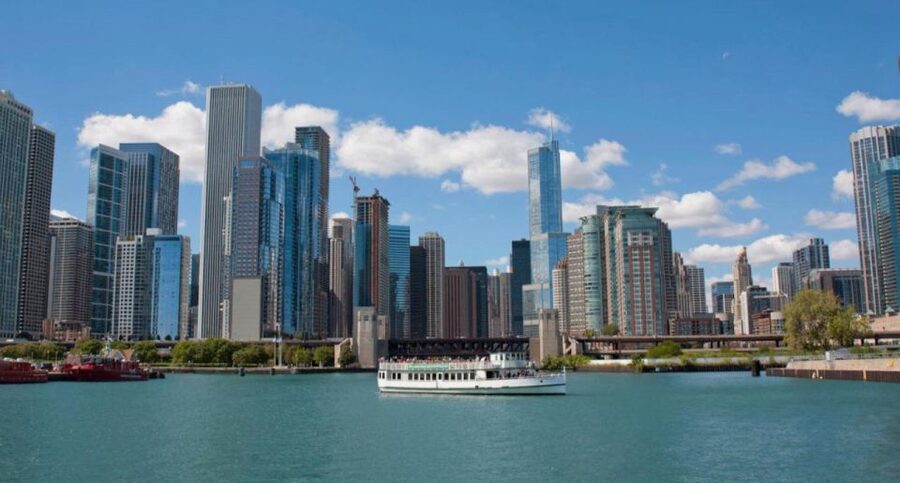
At $57 per person, this costs more than a casual river ride. You are paying for the boat, the crew, reserved upper-deck seating, and a trained Chicago Architecture Center docent who narrates the entire 90-minute route.
For me, the value depends on your goal. If you mainly want skyline photos, a cheaper option may be enough. If you want to understand what you are seeing, this cruise makes a stronger case because the talk covers architectural styles, building materials, designers, Chicago history, and all three river branches.
The Chicago Architecture Center add-on improves the deal. You can add general admission for $5, compared with the normal $14 price. The center is at the same location where you board, so it is easy to visit before or after the cruise. A ticket can also provide entry for up to five days after the boat trip, which gives you useful flexibility.
Part of each ticket supports the center’s nonprofit educational mission. That will not matter to everyone, but it adds purpose to the purchase. You are helping fund architecture education while seeing the city through the organization’s perspective.
Who will enjoy this cruise most?
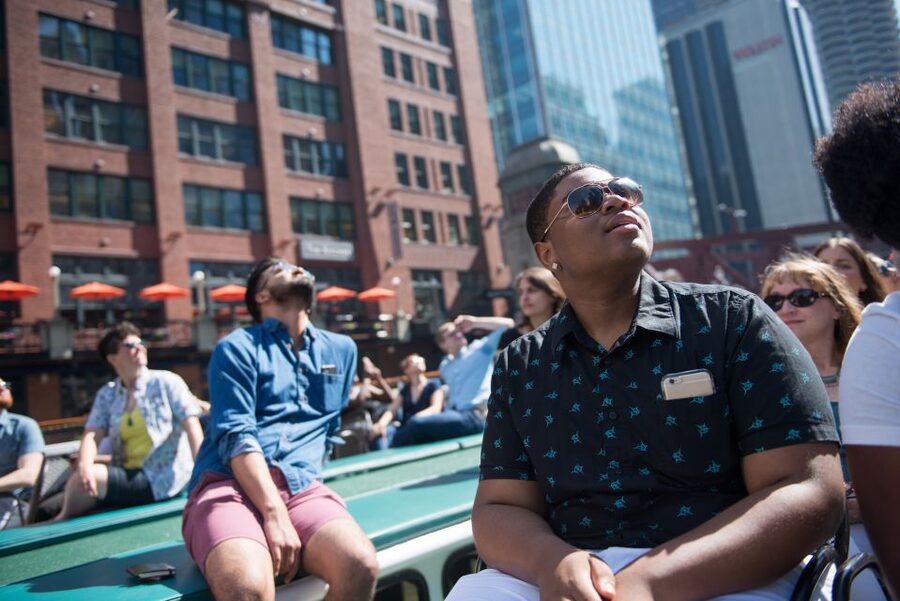
I would choose this for a first visit to Chicago, especially early in your stay. The river gives you a quick orientation to downtown, and the explanations can help you notice more during later walks.
It suits architecture students, design fans, history-minded visitors, and families with older children who can stay seated and listen. It also works well for locals who want a fresh look at familiar buildings. One design student described the experience as more useful than textbooks, which captures the strength of a clear, visual lesson delivered beside the buildings themselves.
You should think twice if you dislike guided commentary, have difficulty with stairs, or need a fully accessible dock. Also reconsider if your schedule is uncertain close to departure. Boats often sell out, late arrivals cannot receive refunds, and the operator runs the cruise in poor weather.
Free cancellation is available up to 24 hours in advance, and you can reserve now while paying later. Those terms help, but they do not remove the need to arrive on time.
Should you book Chicago’s First Lady?
Yes, if you want the story behind the skyline. The route is broad, the upper-deck views are excellent, and the Chicago Architecture Center docents are the main reason to choose this boat over a basic river cruise.
Book ahead, arrive early enough to find the Riverwalk entrance, and choose a seat close to the guide if hearing every word matters. Add the Chicago Architecture Center for $5 if you have time, since it turns a good boat outing into a fuller architecture afternoon.
Skip it only if you want a quiet ride, need step-free access to the dock, or are unwilling to pay a premium for live interpretation. For most first-time visitors, the 90 minutes provide one of the clearest ways to understand why Chicago looks the way it does.
FAQ
How long is the Chicago Architecture Center cruise?
The cruise lasts 90 minutes.
What language is the tour conducted in?
The live commentary is in English.
Does the cruise visit all three branches of the Chicago River?
Yes. The route travels along all three branches of the Chicago River.
How many buildings and bridges are covered?
The docents discuss more than 50 buildings and 13 bascule bridges.
Is seating guaranteed?
Yes. Guaranteed seating is provided on the open-air upper decks.
Can I buy food and drinks on the boat?
Yes. Water, soda, wine, beer, chips, cookies, and nuts are available for purchase. Food and drinks are not included in the ticket price.
Is the cruise wheelchair accessible?
The cruise has accessibility limitations. There is no elevator access to the dock, and motorized scooters and electric wheelchairs cannot be accommodated. Guests who can transfer may use a provider’s manual wheelchair if one is available.
Just added in Chicago
- Private Frank Lloyd Wright Architectural Tour by Luxury Vehicle★ 3.5 · 7 reviews
- Private Chicago Architecture Tour★ 5.0 · 5 reviews
- Chicago Luxury Minibus City Tour and Architecture River Cruise★ 4.5 · 8 reviews
- Chicago History and Architecture Walking Tour with Boat Cruise★ 4.5 · 10 reviews
- Private Chicago Architecture Walking Tour★ 5.0 · 6 reviews
- Small Group History And Architecture Walking Tour of Chicago★ 4.5 · 8 reviews
- Chicago Walking Tour: See Inside Art Deco Masterpieces★ 4.9 · 8 reviews
- Chicago: Icons Guided Architecture Walking Tour★ 4.4 · 4 reviews
Chicago Architecture Tours, compared.

Chicago River: 1.5-Hour Guided Architecture Cruise
Read our review →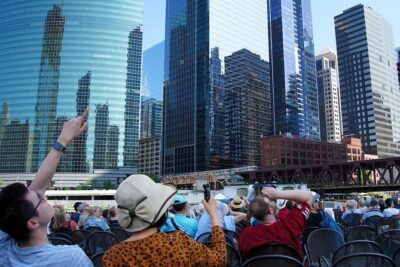
Chicago Architecture Center River Cruise aboard First Lady
Read our review →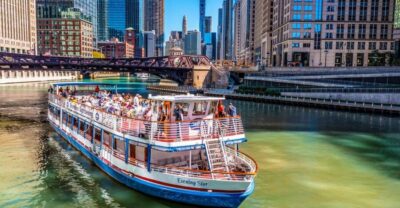
Architecture River Cruise Skip-the-Ticket Line
Read our review →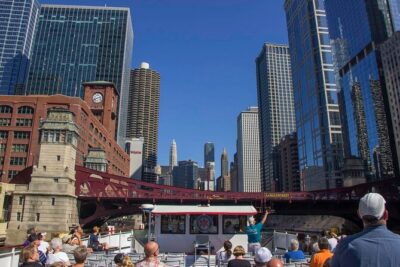
Chicago River 45-Minute Architecture Tour from Magnificent Mile
Read our review →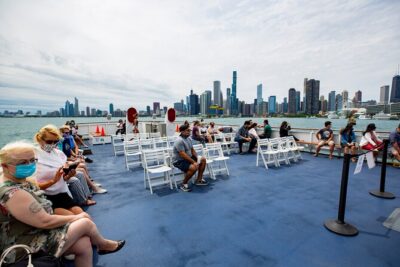
45-Minute Family-Friendly Architecture River Cruise
Read our review →Browse the lists this tour appears in