
REVIEW · WALKING TOURS
Boston: Freedom Trail History and Architecture Walking Tour
Boston’s story fits into a very walkable morning. This 70-minute Freedom Trail tour links major downtown sights from Faneuil Hall to Boston Common, giving you a clear thread through Boston’s past instead of a jumble of old buildings. I like the local guide format and the way the walk brings history and architecture together. I also like the compact route, which covers a lot without taking over your day.
The main consideration is the English-only format. One German participant found that strong English was needed to keep up, and that is fair warning if you are not comfortable listening to fast historical explanations. The tour also makes choices about which stories to emphasize, so you should see it as a useful introduction rather than the final word on every site.
Key points to know before you book

- A focused downtown route: You walk from Faneuil Hall to Boston Common along one of Boston’s most useful historic corridors.
- A strong mix of history and architecture: The tour explains how Boston changed from its earliest settlement through its modern city streets.
- Many landmarks in 70 minutes: You pass the Old and New State House, King’s Chapel, the Old South Meeting House, and several other major sites.
- An English-speaking local guide: The guide adds local character and answers questions along the way.
- Good value at $30: The price is reasonable if you want orientation, context, and a guided look at several important places.
- Easy booking terms: You can cancel up to 24 hours before the walk for a full refund, and you can reserve now and pay later.
Why this short Freedom Trail walk works
Boston can feel confusing on a first visit. Its historic core is compact, but the sites come one after another, and the meaning of each place is not always obvious from a plaque. This walking tour gives you a route and a storyline in one package.
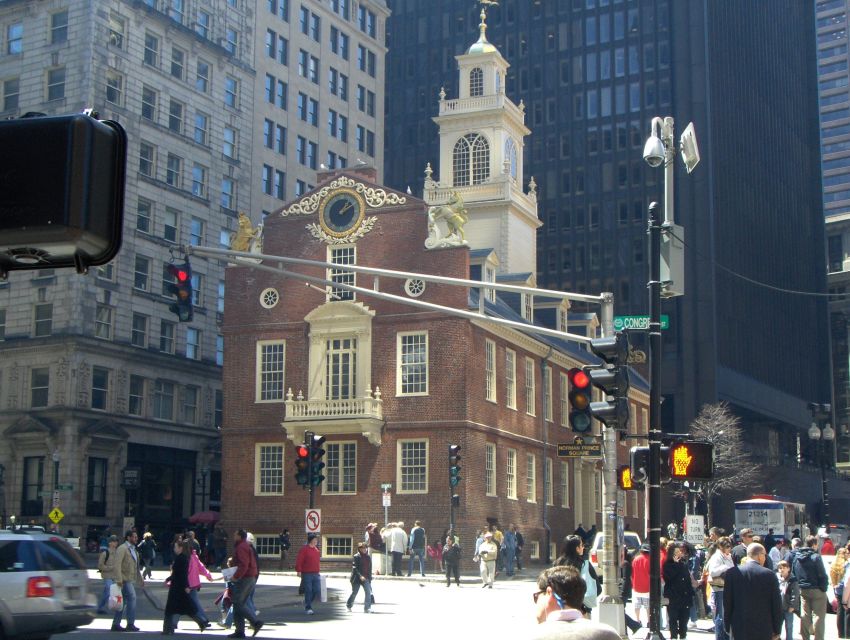
You begin near the Old State House and finish at Boston Common. That direction matters. It moves you through the city center from the area tied to government, commerce, and revolution toward one of the city’s best-known public spaces.
I like the 70-minute length for a first morning in Boston. You get enough time to understand the major landmarks, but you are not committed to a half-day lecture on the sidewalk. If your schedule includes museums, food stops, or a later visit to another part of the city, this tour leaves room for them.
The guide is central to the experience. The strongest praise is for guides who explain clearly, handle questions patiently, and make the walk work for mixed ages. Allan, named in one of the comments, was praised for being personable and well informed. A family with teenagers also found the guide patient and willing to answer every kind of question, which is useful if your group includes curious young people.
More walking tours in the USA:
- The Official Art Deco Walking Tour by The Miami Design Preservation League
★ 5.0 · 1,580 reviews - Chicago in a Day: Food, History & Architecture Walking Tour
★ 5.0 · 1,153 reviews - Miami South Beach Art Deco Walking Tour
★ 5.0 · 1,039 reviews
Meeting near the Old State House
The meeting point is the northwest corner of State and Congress Streets, outside 28 State Street at Citizens Bank. It is across the street from the Old State House.
This is a practical starting point because the Old State House is one of the clearest landmarks in downtown Boston. Still, arrive with enough time to identify the exact corner. Downtown streets can feel tight and busy, and a tour guide cannot easily search for a late arrival once the walk is underway.
The meeting point also gives you an immediate preview of the tour’s subject. You are not beginning in a generic hotel district or a distant transport hub. You are starting beside one of the buildings that shaped Boston’s civic life.
The route is entirely presented as a walking experience, so wear shoes that can handle pavement and expect to remain on your feet for most of the 70 minutes. The supplied details do not specify group size or accessibility arrangements, so you should ask the provider directly if either point is important for your party.
The Old State House and Boston’s early civic center
The Old State House is one of the first major sights connected with the walk. From here, the guide can explain how Boston’s government and public life developed in a dense downtown setting.
You will also encounter the New State House later in the route. Seeing both helps you understand that Boston’s political center changed over time. The contrast is more useful than studying either building alone, since architecture becomes a clue to changing civic needs and changing ideas about public power.
The tour’s strength is not simply pointing out facades. It places them in a timeline that begins with Boston’s earliest settlement and continues to the present. That broad span gives you a way to read the city after the tour ends.
Faneuil Hall, commerce, and public debate
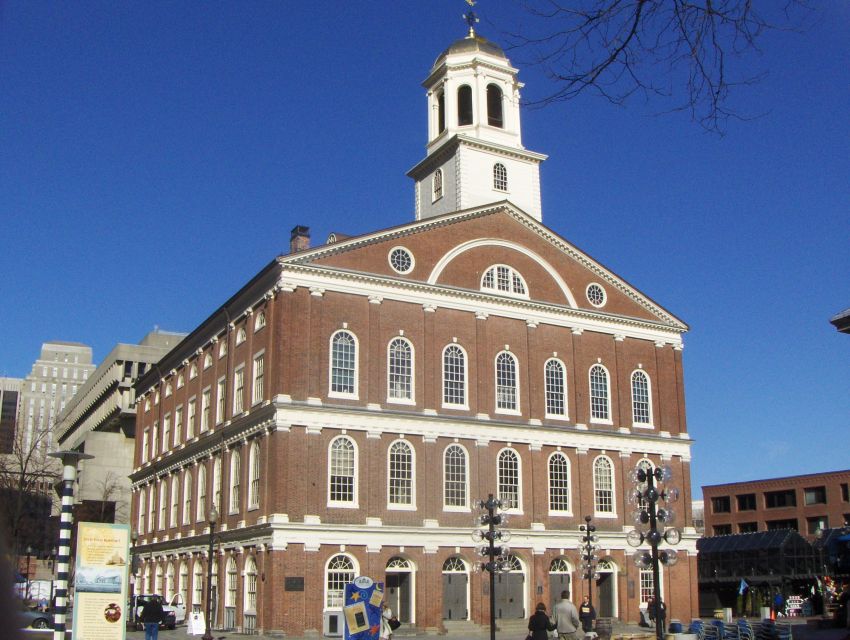
Faneuil Hall is among the best-known stops on the route. It is tied to Boston’s commercial life and public debate, making it a natural part of a tour that explains how the city grew.
You will hear stories about Boston’s culture and political past as you move through this area. The walk does not treat history as a list of dates. Instead, it connects buildings, streets, and public spaces to the arguments and daily life that shaped the city.
This is also where the tour’s short length becomes useful. Faneuil Hall can lead you toward a much longer exploration of markets and nearby streets, but the guided walk keeps moving. You get the historical frame, then you can return later if you want more time.
The tradeoff is that the tour cannot linger at every stop. Boston offers more detail than any 70-minute route can cover, so the guide must choose certain themes over others. That is not a flaw, but you should expect an overview with selected stories rather than a full study of each building.
More history tours in the USA:
- Charleston’s Best Highlights: History, Culture & Architecture
★ 5.0 · 422 reviews - Palm Springs Modernism Architecture & History Bike Tour
★ 5.0 · 359 reviews - Charleston: History and Architecture Guided Walking Tour
★ 4.8 · 349 reviews - Historic Georgetown: History, Gossip, & Architecture Walking Tour
★ 5.0 · 321 reviews
The Boston Massacre Site and the city’s difficult stories
The Boston Massacre Site is one of the stops that gives the route emotional weight. It connects an ordinary downtown location with a major event in the period before American independence.
A guide can add useful context here because the site itself may not look dramatic. The value comes from understanding why this particular spot mattered and how public memory shaped the way the event was discussed.
You should pay attention to how the guide explains the setting, not just the event. The broader point is that Boston’s historic center is not a museum separated from modern life. Offices, shops, traffic, and daily routines continue around places tied to conflict and political change.
King’s Chapel, the Old South Meeting House, and faith in Boston
King’s Chapel and the Old South Meeting House add a different layer to the tour. These sites help you see how religion, public discussion, and community identity fit into Boston’s development.
The Old South Meeting House is especially useful for understanding the role of gathering places in the city’s political life. A building used for worship could also be connected to wider public debates, which makes the stop more than an architectural photo opportunity.
The route also includes Park Street Church. Together, these religious landmarks show that Boston’s old center was shaped by institutions as well as streets and government buildings.
The architecture matters here. You are not seeing one tidy style repeated from block to block. The city changed over time, and the mixed appearance is part of the story. The guide’s job is to help you notice those changes instead of treating every old facade as simply historic.
Granary Cemetery and the personal side of history
The Old Granary Cemetery offers a closer, more personal link to Boston’s past. Cemeteries can make large political events feel connected to real people, names, families, and generations.
This stop may appeal to you if you prefer stories about individuals as much as stories about institutions. It can also slow the pace of the route in a useful way, giving you a chance to consider how Boston preserves its past in the middle of downtown.
The tour includes many sites in a short period, so the amount of time spent at the cemetery may depend on the guide and the group. If you want to study individual graves or inscriptions, plan to return after the walk.
Old City Hall, the First Schoolhouse Site, and everyday Boston
Old City Hall and the First Schoolhouse Site broaden the story beyond revolution and famous speeches. They point toward the practical systems that helped Boston function: local government, education, and city services.
This part of the route is valuable because it shows how Boston’s identity was built through ordinary civic life. The city was not shaped only by major events. It also grew through schools, municipal buildings, workplaces, and changing neighborhoods.
You will also pass the Old Corner Bookstore. Even without spending time inside, the site adds a literary and commercial note to the walk. It reminds you that Boston’s old center was a place of business and ideas, not only a backdrop for political history.
Boston Common and the Irish Famine Memorial
The walk finishes at Boston Common, giving you a natural place to pause after the more tightly packed downtown streets. The Common helps show how Boston’s public spaces changed along with the city itself.
The Irish Famine Memorial adds another important piece to the route. It points to the immigrant experience and to the many communities that became part of Boston’s cultural identity. This keeps the tour from ending with a narrow focus on the colonial period.
That broad reach is one of the experience’s best features. You begin with Boston’s earliest settlement and the revolutionary era, but you also encounter later stories and modern city life. You do not get every chapter, but you get a more useful sense of how the old and new coexist.
What $30 gets you
At $30 per person, the tour offers fair value if you want a guided introduction to central Boston. You are paying for a professional local guide, a planned route, and the explanations that connect separate landmarks into one story.
The value is strongest for a first visit. You can walk the Freedom Trail on your own, but the route alone will not tell you which details matter or how the sites relate to one another. A guide can save you time and help you decide which places deserve a longer return visit.
The price is less compelling if you already know Boston well or prefer to stop at every site for as long as you like. A self-guided walk gives you more control and costs less, though you will need to build the historical context yourself.
The reserve-now-and-pay-later option is useful if your Boston plans are still shifting. You can also cancel up to 24 hours in advance for a full refund, which lowers the risk of booking around an uncertain schedule.
Who will enjoy this tour most
This walk suits first-time visitors who want to understand downtown before exploring it alone. It also works well for families, since the 70-minute format is manageable and the guide can respond to questions from teenagers and adults alike.
You will get the most from it if you enjoy history told through places. The tour is less suited to someone seeking long interior visits, extensive museum time, or a slow architectural study of each building.
English ability matters. The tour is conducted in English, and the stories move from one site to the next. If you need frequent translation or find spoken English difficult to follow, you may miss important context.
The walk can also serve as a useful first-day orientation. Afterward, you will know where the Old State House, Faneuil Hall, King’s Chapel, the Old South Meeting House, and Boston Common fit in relation to one another.
Practical details for a smoother morning
Check the available start times before booking, since the precise departure schedule is not fixed in the supplied information. Plan to arrive at the northwest corner of State and Congress Streets, outside 28 State Street, across from the Old State House.
The tour lasts 70 minutes and is led live in English by a professional local guide. The listed price is $30 per person.
Because the route includes many landmarks in a short time, listen for the main storyline rather than trying to memorize every detail. If a particular place catches your interest, note it and return later with more time.
Should you book the Freedom Trail History and Architecture Walking Tour?
Book it if you want a short, guided introduction to Boston’s historic center at a reasonable price. The route covers an impressive range, from Faneuil Hall and the Boston Massacre Site to religious buildings, cemeteries, civic landmarks, the Irish Famine Memorial, and Boston Common.
I would especially recommend it to first-time visitors, families with teenagers, and anyone who likes a clear story more than a loose wander. The personable style praised in connection with Allan, along with the guide’s ability to answer questions patiently, is exactly what can make a short walk worthwhile.
Skip it if you need a tour in another language, want extensive time inside each site, or already have a strong grasp of Boston’s history. For most visitors looking to get their bearings and see the city’s historic core in one morning, $30 is a sensible investment.
FAQ
How long does the Boston Freedom Trail walking tour last?
The tour lasts 70 minutes.
How much does the tour cost?
The price is $30 per person.
Where does the tour meet?
The meeting point is the northwest corner of State and Congress Streets, outside 28 State Street at Citizens Bank, across the street from the Old State House.
Where does the walking tour finish?
The route runs from Faneuil Hall toward Boston Common and finishes at Boston Common.
What language is the tour conducted in?
The tour is conducted in English with a live English-speaking guide.
What is included in the price?
A professional local guide is included.
Which Boston landmarks are included?
The route includes the Old and New State House, Faneuil Hall, the Boston Massacre Site, Park Street Church, King’s Chapel, the Old South Meeting House, the Old Granary Cemetery, Old City Hall, the First Schoolhouse Site, the Old Corner Bookstore, Boston Common, and the Irish Famine Memorial, among other sites.
Can I cancel the tour for a refund?
Yes. You can cancel up to 24 hours in advance for a full refund.
Can I reserve the tour and pay later?
Yes. You can reserve your place and pay later, so you do not need to pay at the time of booking.
Just added in the USA
- Wilmington History and Architecture Tour★ 4.8 · 18 reviews
- New Orleans : Garden District Architecture Walking tour★ 4.8 · 5 reviews
- Washington DC: Dupont Circle & Embassy Row Architecture Tour★ 5.0 · 6 reviews
- Washington, DC: Georgetown Architecture Walking Tour★ 5.0 · 8 reviews
- Private Colonial Williamsburg Architectural Tour★ 5.0 · 5 reviews
- Tulsa: Art Deco Walking Tour of Tulsa★ 5.0 · 8 reviews
- Monuments and Memorials Architectural Walking Tour★ 5.0 · 17 reviews
- Castle to Capitol: Museums of the National Mall Architecture Tour★ 4.5 · 9 reviews
Walking Tours, compared.

The Official Art Deco Walking Tour by The Miami Design Preservation League
Read our review →
Baroque Architecture and Underground Walking Tour
Read our review →
Chicago in a Day: Food, History & Architecture Walking Tour
Read our review →

Ramblas, Old Town, Gothic and Gaudi Architecture Walking Tour
Read our review →
Chicago’s Secret Interiors Architectural Walking Tour
Read our review →
Browse the lists this tour appears in