
REVIEW · ROTTERDAM ARCHITECTURE TOURS
Rotterdam Must Do Tour: Highlights, History, WW2 and Architecture
Rotterdam tells its story in steel, wood, and concrete. This two-hour walk links the city’s WWII destruction and bold rebuilding with landmarks such as the Cube Houses, Markthal, Lijnbaan, and Rotterdam Centraal. I like the small-group limit of 15 and the chance to hear local stories from guides such as Susan, Edwin, Michel, and Ed.
I also like the route’s mix of major sights and less polished corners, including the Luchtsingel and West-Kruiskade. The main consideration is pace: two hours covers a lot, and one past booking that began late had to move quickly to reach most stops.
Rotterdam in two hours: key points
- WWII and rebuilding: Learn how the 1940 bombing shaped Rotterdam’s modern city center.
- Big architectural contrasts: See the postwar Lijnbaan, the arched Markthal, and the tilted Cube Houses.
- Small group format: The maximum group size is 15, making it easier to ask questions.
- Central starting point: Meet at Stationsplein 10 beside Rotterdam Centraal Station.
- Local guide personalities: Guides including Susan, Edwin, Michel, Ed, John, and Stephan have led the walk.
- Good first look at the city: The route gives you useful bearings before you explore Rotterdam on your own.
Why Rotterdam needs a walking tour
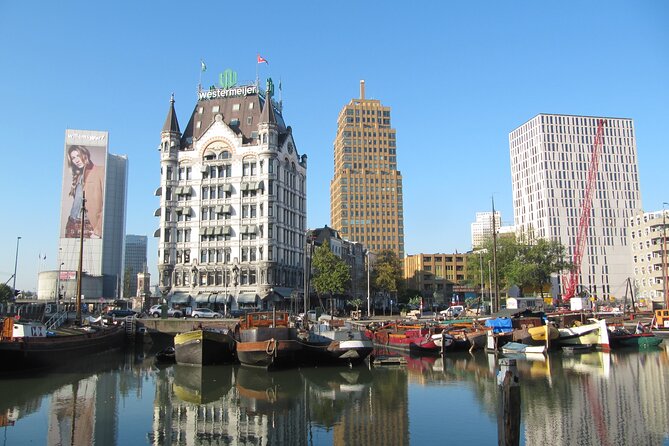
Rotterdam is not a city you understand from a quick postcard view. Its center was largely destroyed during the bombing of Rotterdam in WWII, and much of what you see today came from the ambitious rebuilding that followed.
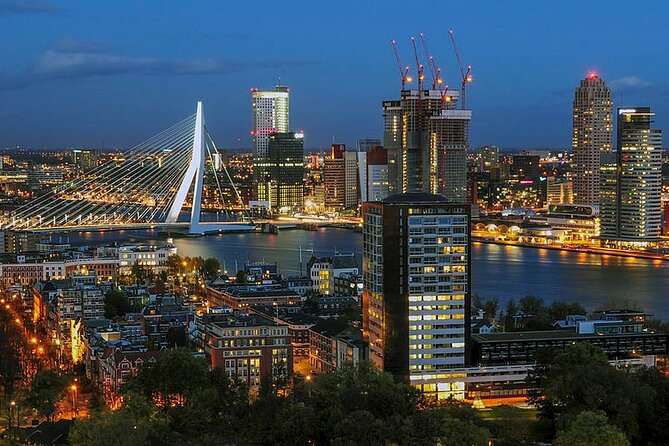
That gives the city an unusual feel. You are not simply moving from old church to old square. You are reading a timeline in the buildings: medieval Rotterdam at the Laurenskerk, postwar planning along the Lijnbaan, experimental design at the Cube Houses, and newer renewal around the Luchtsingel.
I like that this tour treats architecture as part of the city’s story rather than as a parade of odd-looking buildings. The guide explains why Rotterdam looks so different from Amsterdam, and how the harbor, wartime damage, and rebuilding shaped daily life.
The tour costs $29.41 per person. For two hours with a local guide, that is a fair price, especially if you are visiting for the first time and want a clear introduction before setting off alone. Food and drinks are not included, so plan to buy those separately at the Markthal or elsewhere along the route.
More history tours in Netherlands:
- Rotterdam: Highlights, Gems, Architecture & History Walk
★ 5.0 · 191 reviews - The rise of Haarlem: Culture, History, Art and Architecture Walking Tour
★ 5.0 · 59 reviews - Gouda Private Walking Tour: History, Architecture & Cheese
★ 4.5 · 8 reviews
Starting at Rotterdam Centraal Station
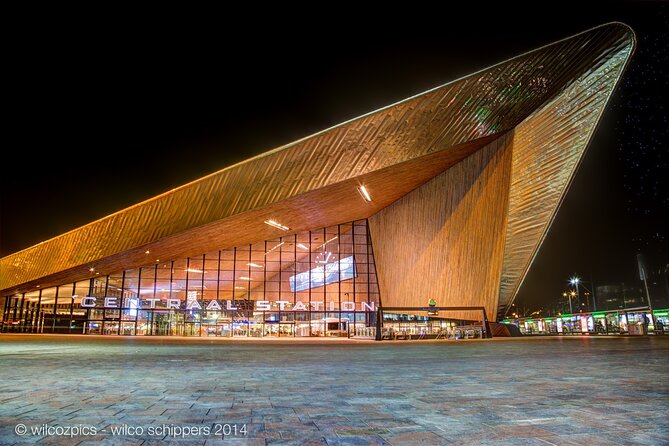
The meeting point is Stationsplein 10, at Rotterdam Centraal Station. This is a practical start because the station is easy to reach by public transportation and gives you an immediate lesson in the city’s modern design.
The station itself is used as the first architecture talking point. Allow about 30 minutes here, according to the planned schedule, though the exact time may depend on the guide and group. You can expect an introduction to Rotterdam’s design language before walking into the center.
This is also the point where timing matters. One booking became complicated when a ship arrived late, but the local contact helped arrange a faster meeting with the guide. Susan then adjusted the route to fit a shortened schedule. That sort of flexibility cannot be guaranteed, but it is useful to know that the operator has handled tight connections before.
Arrive early if you can. You will have a better chance of finding the meeting point without rushing, and you will not force the group to wait.
Groot Handelsgebouw and the postwar city
The Groot Handelsgebouw is one of the first major buildings raised after the WWII bombing. Completed in 1953, it represents Rotterdam’s early push to restore commerce and confidence.
Your stop here is brief, about 10 minutes. Do not expect a long interior visit. The value is in understanding the building as a symbol of reconstruction and in seeing how quickly Rotterdam began replacing its destroyed center with a new commercial city.
This part of the walk is especially useful if you want more than architectural snapshots. Edwin received strong praise for explaining the reconstruction, and several guides were noted for making the connection between the war and modern Rotterdam clear. That focus appears to be one of the tour’s strongest features.
West-Kruiskade and the Lijnbaan
The route continues through the Kruiskade and West-Kruiskade shopping streets. These streets add a more everyday side of central Rotterdam, away from the grand architectural set pieces.
The Lijnbaan is the more important historical stop. Opened in 1953, it became the main pedestrian shopping street in the rebuilt center after the old shopping district was destroyed. In its day, this was a bold approach to city planning: separate shoppers from much of the traffic and create a modern retail core.
You will spend roughly 10 minutes at each shopping area, so this is not a shopping tour. Think of these stops as short urban history lessons. If you want gifts, Susan has also helped people find places to shop for grandchildren, but the tour itself does not include shopping time.
The Lijnbaan is a good example of why a guide helps. Without context, it can look like a regular retail street. With the WWII background, it becomes evidence of how Rotterdam deliberately reinvented itself.
A few more architecture tours in Netherlands worth a look
- Rotterdam: Architectural Highlights Guided Walking Tour
★ 4.8 · 215 reviews - Rotterdam Walk: Hilights, Gems, Architecture & WWII | 2 or 3hrs
★ 5.0 · 149 reviews - Rotterdam Architecture Highlights Walking Tour
★ 5.0 · 66 reviews - Rotterdam: Architecture Highlights Tour including the Depot
★ 4.6 · 17 reviews
The Luchtsingel and a neglected district brought back
The Luchtsingel is a 390-meter wooden pedestrian bridge connecting Rotterdam North with the city center. It was created to link an area that had suffered from vacancy and neglect with the rest of central Rotterdam.
This is one of the more distinctive parts of the route. The bridge is not an ancient monument, but it shows how Rotterdam continues to repair and reshape itself. The walk here shifts from postwar reconstruction to newer urban renewal.
The planned stop is about 10 minutes. Depending on the walking pace and the exact route, you may not walk the entire bridge at length. Still, it gives you a useful view of a city trying new solutions rather than preserving every district in one fixed form.
I would pay attention to the guide’s explanation here. The bridge matters less as a pretty object than as a connection between places that had been cut off from each other.
The Nieuwe Delftse Poort
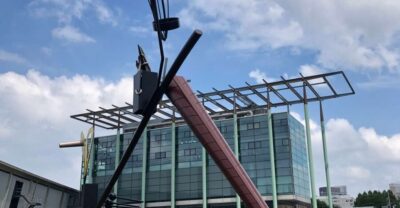
Rotterdam’s original Delftse Poort was a city gate, with the last version built in 1764. The gate later disappeared, but a steel reconstruction by artist Cor Kraat was erected near the original site on the Pompenburg.
This is a short stop, around 10 minutes, and it helps correct the idea that Rotterdam has no older past. The original gate is gone, but the reconstruction keeps the location and memory visible.
The stop also fits the tour’s larger theme: Rotterdam often presents history through modern materials. Instead of restoring every old object exactly as it was, the city sometimes uses contemporary art and design to mark what has vanished.
If your main goal is detailed medieval architecture, this will be a quick introduction rather than a full lesson. If you like the way cities remember destruction and change, it is a worthwhile pause.
Laurenskerk, the survivor of medieval Rotterdam
The Grote of Sint-Laurenskerk, also called the Laurenskerk, is the only surviving remnant of medieval Rotterdam. It is a Protestant church, and you can enter free of charge.
This may be the most important historical contrast on the tour. Around it, Rotterdam is defined by postwar buildings and striking new forms. The church reminds you that an older city existed here before the bombing.
The planned stop lasts about 10 minutes. Since entry is free, you may be able to look inside during the tour, though the amount of time available will depend on the group and the guide. If the church is open and you want a quieter look, ask whether there is enough time to step in.
I would not expect a full church tour in this format. The point is to see the surviving structure and understand its place in the city’s story. If you have a special interest in the church, return later for a longer visit.
Inside the Markthal
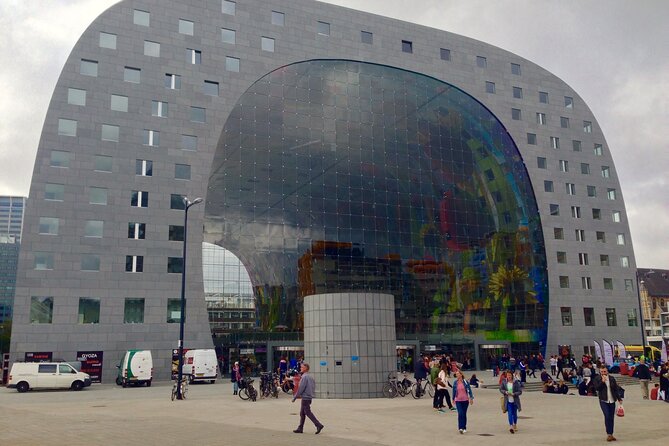
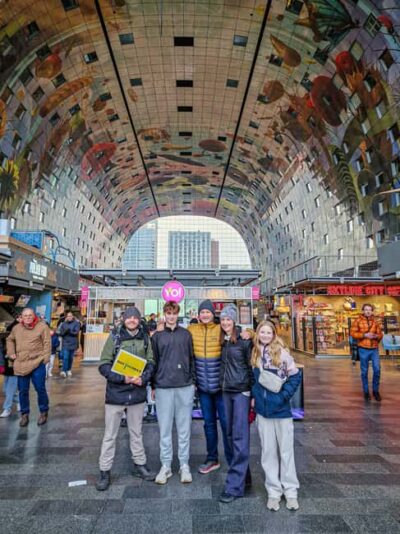
The Markthal is one of Rotterdam’s most recognizable modern buildings. Designed by MVRDV, it has a large horseshoe-shaped structure faced in gray natural stone.
Inside, the huge artwork covers the arched ceiling with enlarged fruit, vegetables, seeds, fish, flowers, and insects. It is the kind of place where a quick walk can easily turn into a longer look upward.
The planned time here is about 30 minutes, the longest single stop on the route. Food and drinks are not included, but the Markthal has restaurants and food counters, so it is a natural place to buy something after the tour or during free time.
One practical point: the Markthal is a busy public food hall, not a quiet museum. You may find it easier to study the artwork before or after the main walk, when you are not trying to stay with a group. One less positive experience came from a guide who did not explain the surrounding artistic buildings well. That is a fair warning: the Markthal is worth seeing on its own, but the guide’s interpretation can make the stop much better.
Oude Haven and the Cube Houses
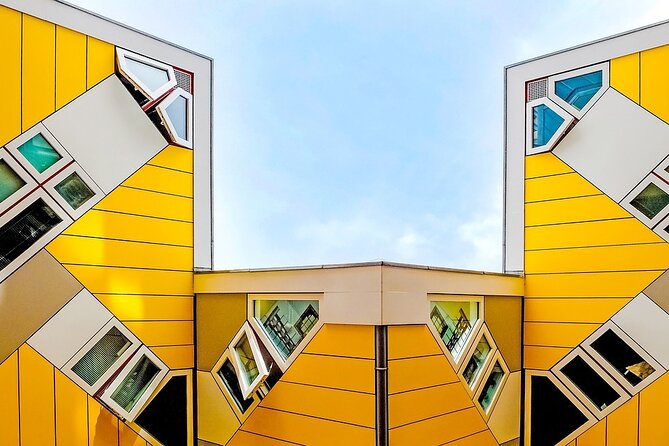
The Oude Haven, or Old Harbour, is the historic harbor area in central Rotterdam. It is beside the famous Cube Houses, which are among the city’s most recognizable buildings.
The harbor gives the tour a change of mood. After the wide avenues and planned shopping streets, you reach water, older harbor traces, and an area used for eating and social time. The Cube Houses then bring you back to Rotterdam’s taste for unusual design.
The stop is planned for about 20 minutes. You will have time to see the buildings and hear why they matter, but not necessarily to explore every corner or visit an interior. The itinerary ends back at the original meeting point, so check with the guide how the route returns after the Old Harbour.
This is a strong final pairing. The Oude Haven connects Rotterdam to its port past, while the Cube Houses show the city’s willingness to test strange ideas. You finish with a clear picture of Rotterdam as both a working harbor city and an architectural experiment.
What the guides add
The guide is the heart of this experience. The published rating is 4.8 from 20 ratings, with 95 percent recommending it, and the strongest praise centers on clear explanations, personal stories, and enthusiasm for Rotterdam.
Susan has been especially good at making the city feel approachable, including helping with practical shopping suggestions. Edwin has focused well on WWII and reconstruction, while Michel has been praised for covering the main points in an informative and friendly way. Ed has shared lesser-known facts, and John has brought obvious pride in his city to the walk. Stephan has also led a small, flexible tour that covered a lot.
That said, the quality can depend on the person leading your group. One less favorable account found the guide too light on detail at the Markthal and nearby buildings. I would ask questions when something catches your eye. A short walking tour works best as a conversation, not a lecture.
Pace, group size, and who should book
The maximum group size is 15. That is small enough for a more personal walk and gives you a reasonable chance to speak with the guide. The tour is offered in English, and different start times make it easier to fit around a day in Rotterdam.
Two hours is enough for orientation, not for a complete study of the city. You will cover many stops, but most are short. If you want to photograph every building, inspect the Markthal artwork at length, or visit the Laurenskerk properly, plan extra time after the tour.
The tour should suit you if:
- You are visiting Rotterdam for the first time.
- You want WWII and rebuilding explained in plain language.
- You enjoy modern architecture and urban design.
- You are arriving by train or have a short stay.
- You prefer a small group rather than a large city walk.
- You want a useful route before exploring alone.
It may not suit you if you want a slow photography walk, a food tour, or a detailed museum-style account of every building. It is also not the best choice if your schedule cannot tolerate a fixed two-hour commitment.
Most people can take part, service animals are allowed, and the route is near public transportation. Confirmation is provided when you book. Free cancellation is available up to 24 hours before the start time. If the minimum number is not reached and the operator cancels, you are offered another date or experience, or a full refund.
Should you book this Rotterdam walk?
I would book it for a first visit, especially if you have only half a day or arrive at Rotterdam Centraal. The $29.41 price is reasonable for a small-group introduction that connects the city’s harbor, WWII story, shopping streets, medieval survivor, and famous modern buildings.
Go in expecting a brisk overview, not a leisurely architectural seminar. Ask questions, arrive early, and save extra time for the Markthal, Laurenskerk, and Cube Houses. If the guide is as engaging as Susan, Edwin, Michel, or Ed, you will leave with more than a collection of unusual building photos. You will understand why Rotterdam looks the way it does.
FAQ
How long does the Rotterdam Must Do Tour last?
The tour lasts approximately two hours.
Where does the tour begin?
It begins at Stationsplein 10, 3013 AJ Rotterdam, Netherlands, at Rotterdam Centraal Station.
Where does the tour end?
The activity ends back at the meeting point.
What language is the tour offered in?
The tour is offered in English.
What is included in the price?
A local guide is included.
Are food and drinks included?
No. Food and drinks are not included.
What landmarks does the tour visit?
The route includes Rotterdam Centraal Station, Groot Handelsgebouw, West-Kruiskade, Lijnbaan, Luchtsingel, Nieuwe Delftse Poort, Laurenskerk, Markthal, Oude Haven, and the Cube Houses.
How large is the group?
The tour has a maximum of 15 participants.
Can I cancel for a refund?
Yes. You can cancel at least 24 hours before the start time for a full refund. Cancellations or changes made less than 24 hours before the start time are not refunded.
Just added in Netherlands
- Escape Room – l’Architecte★ 4.5 · 13 reviews
- Private Rotterdam Walking Tour – guided by Architects★ 5.0 · 2 reviews
- Rotterdam Architecture and Highlights Walking Tour (TOP RATED)★ 4.5 · 14 reviews
- Maastricht Highlights, Architecture & Heritage Tour★ 5.0 · 7 reviews
- Gouda Private Walking Tour: History, Architecture & Cheese★ 4.5 · 8 reviews
- Amsterdam Architecture Tour★ 5.0 · 4 reviews
- Walking Tour about Golden Age Architecture, private local guide★ 5.0 · 15 reviews
- Amsterdam Walking Tour. All about History, Architecture, Traditions & Anecdotes.★ 5.0 · 2 reviews
Rotterdam Architecture Tours, compared.
Rotterdam Walk: Hilights, Gems, Architecture & WWII | 2 or 3hrs
Read our review →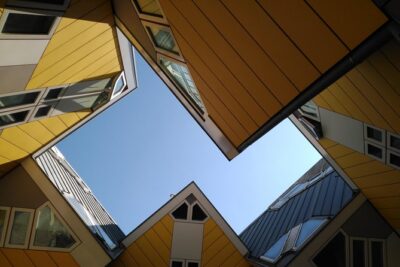
Rotterdam Architecture and Highlights Walking Tour (TOP RATED)
Read our review →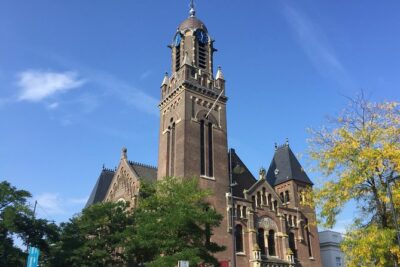
Browse the lists this tour appears in