
REVIEW · ROTTERDAM ARCHITECTURE TOURS
Rotterdam Architecture Highlights Walking Tour
Rotterdam rebuilds boldly. This two-hour walk makes that story readable, linking modern architecture with the city’s postwar rebirth and present-day debates. I like the small groups, capped at 15, and the chance to walk with an architect rather than a general city guide. I also like the route’s variety, from Rotterdam Centraal to the Markthal and the Maas waterfront.
The main caution is that this is not a purely technical architecture tour. Your guide may spend time on social policy, activism, and how buildings serve the public. You should also expect a serious walk, possibly close to 12,000 steps, and the Cube Houses may be viewed from a distance rather than entered.
Key points to know before you book
- Postwar Rotterdam is the main story: The walk explains how the city center was rebuilt after World War II and why its modern character looks so different from many Dutch cities.
- An architect leads the route: Guides such as Tania, Tanja, and Silvia have brought professional design knowledge, local insight, and plenty of patience to past tours.
- The route links major city landmarks: You visit Rotterdam Centraal, Schouwburgplein, Timmerhuis, Markthal, and the Boompjes waterfront.
- The Markthal visit is a useful pause: You get time to look inside the famous market building rather than simply photograph its exterior.
- The group stays small: A maximum of 15 people makes it easier to ask questions and hear the guide in busy public spaces.
- The finish is scenic but exposed: Boompjeskade gives you a broad view across the Maas toward the south bank, though wind and cold can make the riverside uncomfortable.
Why Rotterdam makes such a good architecture walk
Rotterdam is one of Europe’s clearest examples of a city that used destruction as a reason to rethink itself. Much of the central area was heavily damaged during World War II. Instead of rebuilding an old-looking center piece by piece, Rotterdam developed a newer urban identity, with wide spaces, experimental buildings, and designs that often put function and public use ahead of traditional charm.
That is what makes this tour more interesting than a simple building-spotting walk. You are not only looking at unusual shapes. You are asking why the city allowed such forms to appear, how the buildings were meant to work, and what Rotterdam wanted to become after the war.
I like that the tour connects architecture with daily life. A building can be technically clever, but the guide also considers whether it serves residents, supports public activity, or creates problems for the city. This broader approach will suit you if you want to understand Rotterdam as a living city, not just collect photographs of famous designs.
If you want a specialist lecture on construction methods, materials, and structural engineering, you may find parts of the tour less technical than expected. One architectically trained participant wanted more discussion of design and build details and less attention to social and political themes. That is a fair warning, but it also explains the tour’s appeal: it treats architecture as part of public life.
More walking tours in Netherlands:
- Rotterdam: Architectural Highlights Guided Walking Tour
★ 4.8 · 215 reviews - Rotterdam: Highlights, Gems, Architecture & History Walk
★ 5.0 · 191 reviews - Rotterdam Walk: Hilights, Gems, Architecture & WWII | 2 or 3hrs
★ 5.0 · 149 reviews
Starting at Rotterdam Centraal
The meeting point is Rotterdam Central Station, at 3013 AJ Rotterdam. Arrive early enough to find the correct meeting place, since the exact location has caused some confusion. The address and map have not always appeared perfectly consistent, so check the meeting instructions before you set off.
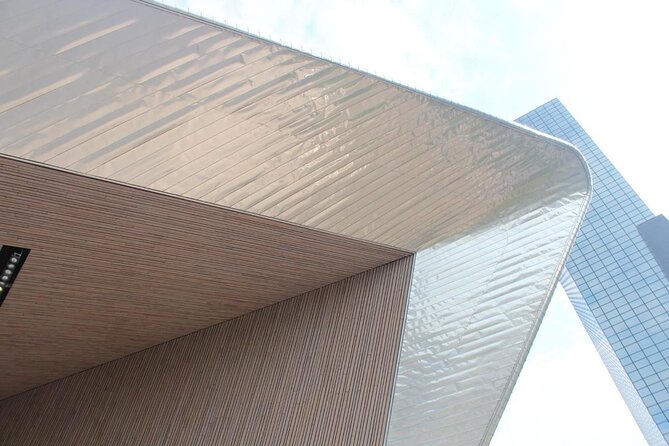
Rotterdam Centraal is an appropriate place to begin. It is the city’s newly built entrance, and the station immediately gives you a sense of Rotterdam’s confidence. The stop lasts about 10 minutes, with no admission charge, but the walking and explanation around it add more time.
Your guide will likely use the station to introduce the city’s modern direction. Pay attention to how the building presents Rotterdam to people arriving by train. This is not an old gateway with a medieval tower. It is a practical, forward-looking piece of city infrastructure, and it sets the tone for everything that follows.
This opening also helps you get your bearings. From here, the tour moves into the center and begins showing how public squares, offices, markets, and waterfront spaces fit together. I appreciate starting at a major transport hub because you can easily reach it by public transportation, and you finish near the river rather than returning to the starting point.
Schouwburgplein and the city’s public stage
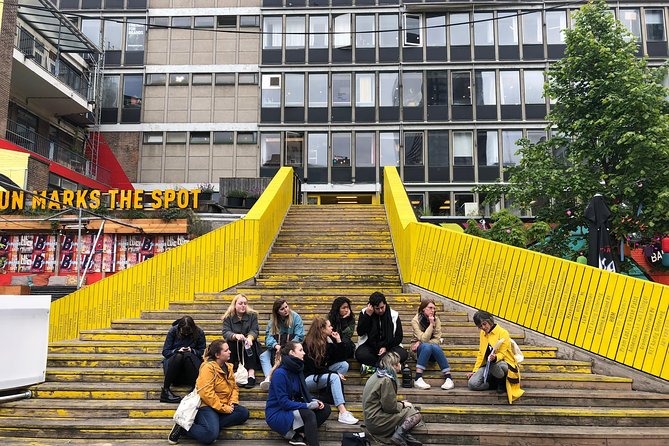
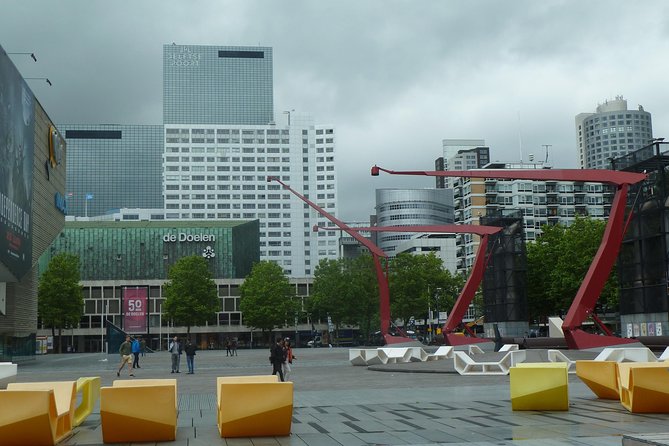
The next stop is Schouwburgplein, described as Rotterdam’s cultural podium square. You spend around 10 minutes here, looking at a public space designed for the city’s cultural life.
The word podium matters. This is not simply an open square that happens to sit between buildings. It is treated as a stage for public activity, and your guide can explain how the square relates to Rotterdam’s theaters and cultural institutions.
This is also a good place to hear the social side of the tour. Rotterdam’s public spaces are not only visual compositions. They are meant to support gatherings, performances, movement, and civic use. If you are interested in how a city gives people room to meet, this stop may be more rewarding than it first appears.
Do not expect every stop to be long. Ten minutes can feel brief if you are taking photographs or asking detailed questions. Still, the small group helps. Guides including Silvia and Tania have been praised for adjusting their explanations to the interests of the people in front of them, rather than delivering the same speech without pause.
The route also includes a brief stop described as a postwar national monument. The supplied information does not identify the monument by name, so you should treat this as part of the broader postwar story rather than plan around a specific museum or interior visit.
Timmerhuis, where design gets playful
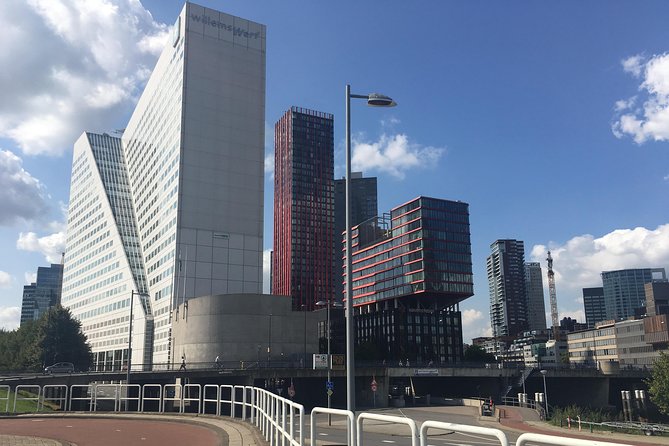
Timmerhuis is one of the tour’s shortest formal stops, at about five minutes. It is an architecture icon designed by OMA, the Rotterdam-based practice known for ambitious contemporary work.
Five minutes may sound too short for a major building, but the guide can use the exterior as a compact lesson in modern design. This is a place to look closely at the building’s form, repeated elements, and relationship to the street. The value comes less from entering and more from having someone explain what you are seeing.
I would not expect an extended architectural study here. The timetable has several major locations to cover, so Timmerhuis works as a focused pause along the route. Ask questions while you are there, especially if you want more detail about how the building was designed or how it fits into the surrounding city.
The guide’s professional background matters at this point. Tania, Tanja, and Silvia have been praised for explaining buildings clearly, answering questions, and adding contemporary context. That can make a short stop feel more substantial than a quick photograph and a name.
A few more architecture tours in Netherlands worth a look
- The rise of Haarlem: Culture, History, Art and Architecture Walking Tour
★ 5.0 · 59 reviews - Rotterdam Must Do Tour: Highlights, History, WW2 and Architecture
★ 5.0 · 20 reviews - Rotterdam: Architecture Highlights Tour including the Depot
★ 4.6 · 17 reviews - Walking Tour about Golden Age Architecture, private local guide
★ 5.0 · 15 reviews
Markthal, the tour’s big visual treat
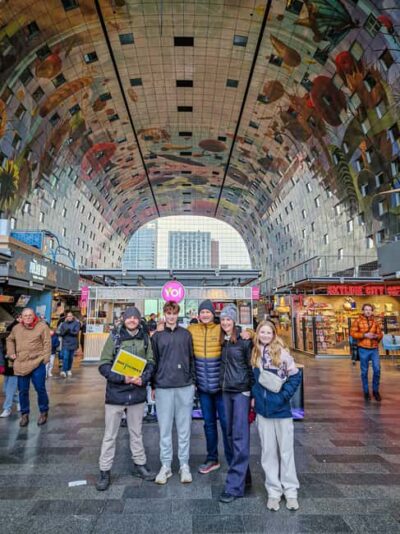
The Markthal receives about 15 minutes, making it one of the longest stops. The building is presented as one of the world’s fanciest indoor markets, and it is easy to see why it draws attention. Its large interior gives the tour a change of mood after the offices, station, and public squares.
Here, I would use your time to look both at the market activity and at the building as a whole. The point is not only what you can buy inside. It is how a public food hall can become a major piece of urban design.
The Markthal also helps connect architecture with ordinary life. A station moves people. A square hosts public events. A market brings food, shopping, and social activity into one roofed space. The route keeps asking how buildings are used, not simply how they look.
There is no admission charge listed for the stop, but the tour does not include shopping or food. If you want to linger, eat, or browse, plan to return after the guided walk. Fifteen minutes is enough for an introduction, but not enough for a relaxed market visit and a full meal.
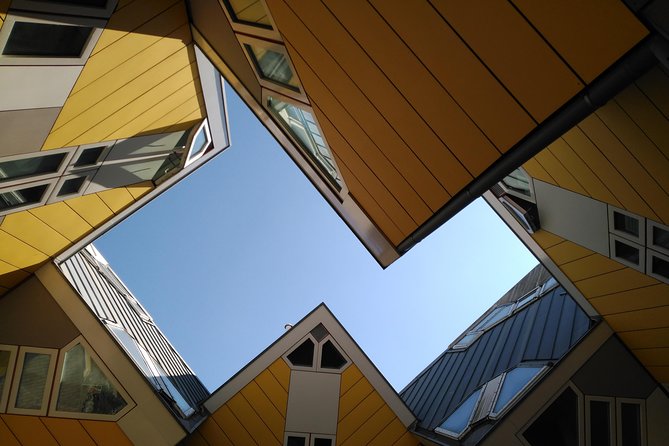
The nearby Cube Houses are an important qualification. They appear among the tour’s architectural highlights, but the route may pass them at a distance instead of walking through them or entering one. If the Cube Houses are your main reason for booking, confirm the precise route before paying. If your interest is the wider story of Rotterdam’s experimental city center, seeing them as part of the surrounding urban fabric can still be useful.
Boompjeskade and the Maas finish
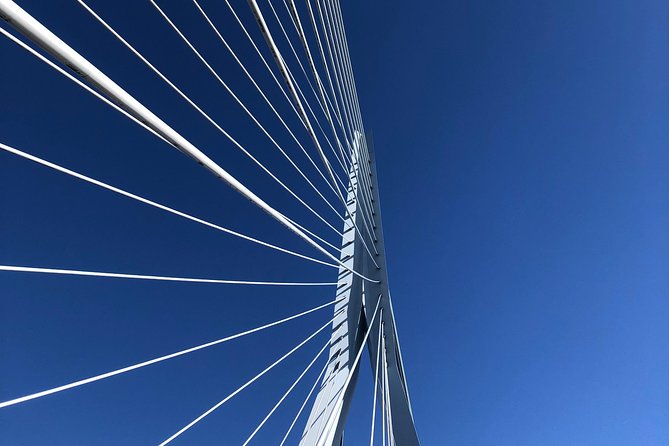
The walk ends at Boompjeskade on the river Maas, at 3011 Rotterdam. This is a strong finish because it opens the view after a route through dense city streets. You get a broad look toward the south bank and a chance to consider Rotterdam’s relationship with its river.
The stop lasts around 15 minutes. That gives you time for photographs and final questions, though the waterfront can be cold and windy. One person on a cold day found the breeze especially sharp, so wear a proper outer layer even when the weather looks manageable near the station.
The riverside also gives the guide a natural place to discuss Rotterdam’s future. The city is not a finished architectural experiment. It continues to face questions about housing, public space, development, and how a working port city should grow.
I like finishing here instead of circling back. You end with a clear sense of place, and Boompjeskade is near public transportation. It is also a useful launch point for continuing your own exploration along the river.
What the architect guide adds
The guide is the heart of this experience. The walk is offered in English, though the guide may be multilingual. The named guides praised most warmly are Tania, Tanja, and Silvia, all of whom have been described as friendly, organized, and generous with their time.
Silvia has been especially good at adapting the tour to different interests and nationalities. Tania has brought detailed explanations, contemporary observations, and a clear affection for Rotterdam. Past guides have also offered restaurant suggestions and spent extra time with groups when the conversation ran long.
Do not count on a private tour, but the group limit of 15 keeps the setting personal. Some bookings may be small enough to feel almost private, while others will have more people. A minimum of two people is required for a booking.
The guide’s role is not just to name buildings. You will get context about the city’s demolition and reconstruction after World War II, the way modern designs were planned, and some of the political and social questions behind them. That mix is a strength if you like cities explained through people and policy. It may feel less satisfying if you want only architectural vocabulary and construction details.
Is $54.31 a fair price?
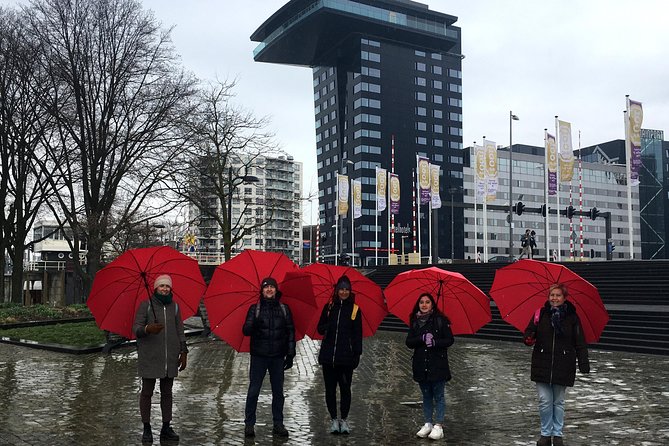
At $54.31 per person, this is not a cheap way to spend two hours. You are paying for a professional architect guide, a small group, and a carefully connected route through several major sites. There are no entrance tickets included because the walk uses public spaces and views rather than paid attractions.
The value depends on how you would otherwise explore Rotterdam. If you are happy to read plaques, follow a map, and research the city’s rebuilding on your own, you can see many of these exteriors for less. But you would lose the live explanation and the chance to ask why the city developed this way.
I think the price makes the most sense early in your Rotterdam visit. After two hours, you will have a clearer map in your head and a better idea of which buildings or neighborhoods deserve another look. The guide can also point you toward places to eat or continue exploring.
The tour is often reserved well ahead, with an average booking time of about 47 days. That suggests you should not leave it until the last moment if your schedule is fixed, especially if you want a particular day.
Who should take this walk?
I would recommend it most strongly to:
- First-time visitors who want a clear introduction to Rotterdam
- Architecture students, design fans, and people curious about OMA
- Visitors interested in postwar rebuilding and urban planning
- Anyone who prefers a small group to a large bus tour
- People who enjoy asking questions and discussing how cities work
- Visitors using Rotterdam as a day trip from elsewhere in the Netherlands
You should think twice if you dislike walking, need frequent seated stops, or want to visit building interiors. The physical demand is moderate, but the route can add up to a lot of steps. Comfortable shoes are essential.
The minimum age is 12, and service animals are allowed. Dress for the weather, especially if the walk ends by the river. Since poor weather can cancel the experience, keep some flexibility in your schedule if rain or strong conditions are expected.
Practical details that shape the experience
The walk lasts about two hours, but allow a little extra time if your guide continues answering questions. Several people have found the guides willing to stay longer when the conversation is useful, though you should not assume an extension is guaranteed.
The route is point-to-point. You begin at Rotterdam Centraal and finish at Boompjeskade. Hotel pickup and drop-off are not included, so you must reach the station yourself and arrange your own onward transport from the river.
Free cancellation is available until 24 hours before the local start time. Cancellations or changes made inside that window are not refunded or accepted. If poor weather forces the operator to cancel, you will be offered another date or a full refund.
Should you book the Rotterdam Architecture Highlights Walking Tour?
Book it if you want Rotterdam explained rather than simply photographed. The strongest features are the architect guide, the small group, the postwar context, and the satisfying route from the station through the center to the Maas.
I would not book it solely for an interior visit to the Cube Houses or for a technical lecture on construction. The route may show the Cube Houses from outside, and the guide may give as much attention to social questions as to structural design.
For most visitors interested in how Rotterdam became Rotterdam, this is a worthwhile introduction. Wear good shoes, check the meeting point carefully, bring a warm layer for the waterfront, and arrive ready to ask questions. That is where the $54.31 price earns its keep.
FAQ
How long does the Rotterdam Architecture Highlights Walking Tour last?
The tour lasts approximately two hours.
Where does the tour begin?
It begins at Rotterdam Central Station, 3013 AJ Rotterdam, Netherlands.
Where does the tour end?
The tour ends at Boompjeskade, 3011 Rotterdam, on the riverside.
Which language is the tour offered in?
The tour is offered in English. The guide may also be multilingual.
How many people can join the tour?
The maximum group size is 15 people, and at least two people are required per booking.
What happens if the weather is poor?
The experience requires good weather. If it is canceled because of poor weather, you will be offered a different date or a full refund.
Just added in Netherlands
- Rotterdam Must Do Tour: Highlights, History, WW2 and Architecture★ 5.0 · 20 reviews
- Escape Room – l’Architecte★ 4.5 · 13 reviews
- Private Rotterdam Walking Tour – guided by Architects★ 5.0 · 2 reviews
- Rotterdam Architecture and Highlights Walking Tour (TOP RATED)★ 4.5 · 14 reviews
- Maastricht Highlights, Architecture & Heritage Tour★ 5.0 · 7 reviews
- Gouda Private Walking Tour: History, Architecture & Cheese★ 4.5 · 8 reviews
- Amsterdam Architecture Tour★ 5.0 · 4 reviews
- Walking Tour about Golden Age Architecture, private local guide★ 5.0 · 15 reviews
Rotterdam Architecture Tours, compared.
Rotterdam Walk: Hilights, Gems, Architecture & WWII | 2 or 3hrs
Read our review →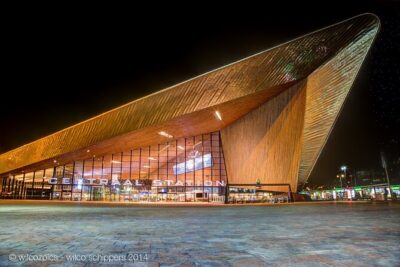
Rotterdam Must Do Tour: Highlights, History, WW2 and Architecture
Read our review →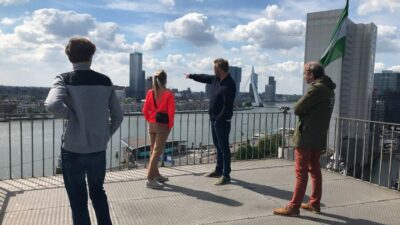
Rotterdam Architecture and Highlights Walking Tour (TOP RATED)
Read our review →
Browse the lists this tour appears in