
REVIEW · BARCELONA ARCHITECTURE TOURS
Palau de la Música & Sant Pau Modernist Site
Barcelona’s finest interiors deserve time. This combined ticket links two major works by architect Lluís Domènech i Montaner: the Palau de la Música Catalana and the Sant Pau Recinte Modernista. I like the freedom to explore both sites on your own, and I like that the ticket lets you choose your Palau entry time while keeping Sant Pau flexible.
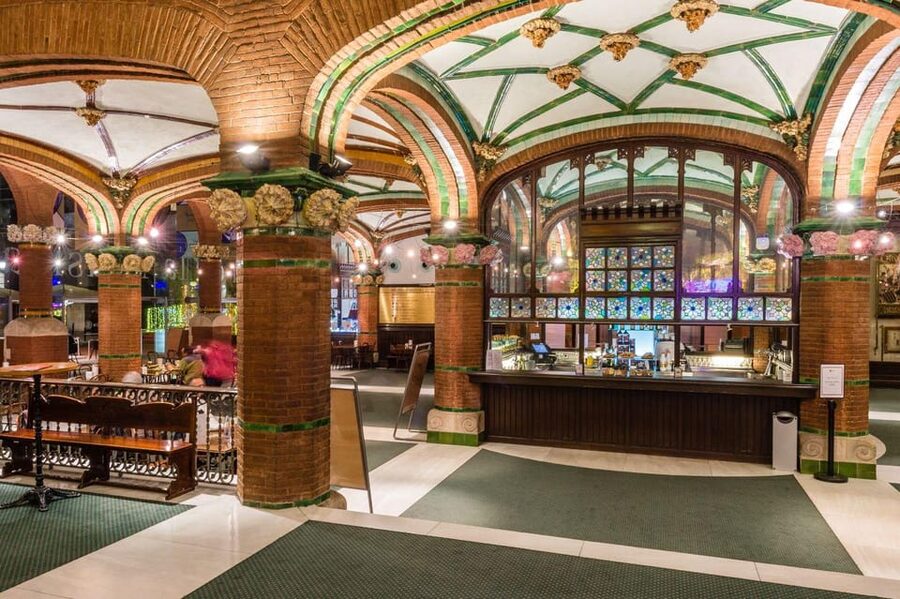
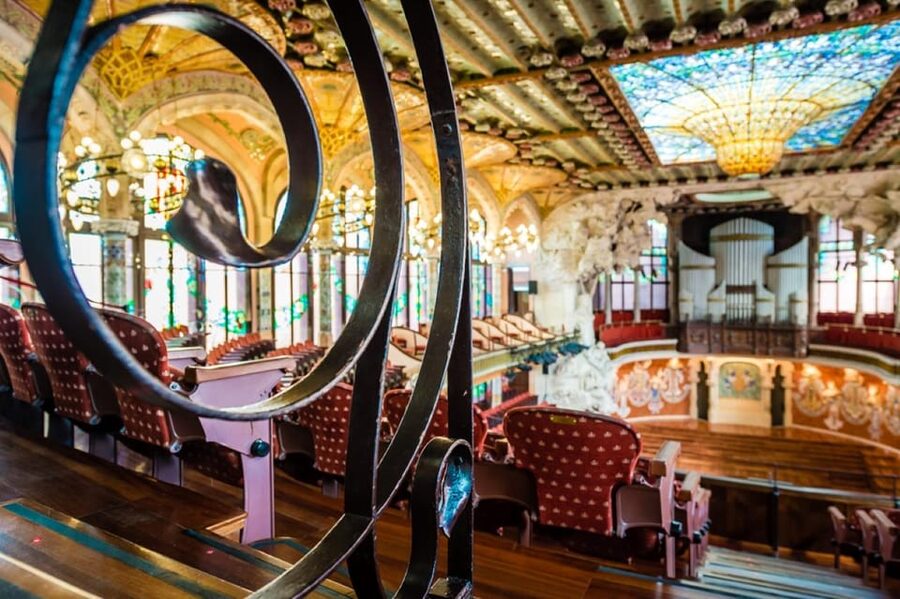
The Palau brings the biggest visual punch, with remarkable decoration, excellent acoustics, and an inverted dome that can stop you in your tracks. Sant Pau gives you more room to wander through a large modernist complex with a map and staff in its various spaces. The main drawback is that this is not a guided tour, so you must use the digital brochure and printed map to supply the context.
Key points to know before booking
- Two works by one important architect: The ticket connects Domènech i Montaner’s Palau de la Música Catalana with the Sant Pau Recinte Modernista.
- Choose your Palau time: You select the date and entry time for the concert hall during booking.
- Keep Sant Pau flexible: You can enter Sant Pau by showing the same ticket, during its opening hours.
- Self-guided visits: A digital brochure helps at the Palau, while Sant Pau provides a map and information staff in different spaces.
- Three hours is a sensible target: The stated duration is 180 minutes, though the two sites have different opening schedules.
- Strong value for architecture fans: At $38 per person, the ticket works best if you plan to visit both monuments rather than only one.
Why these two buildings belong together
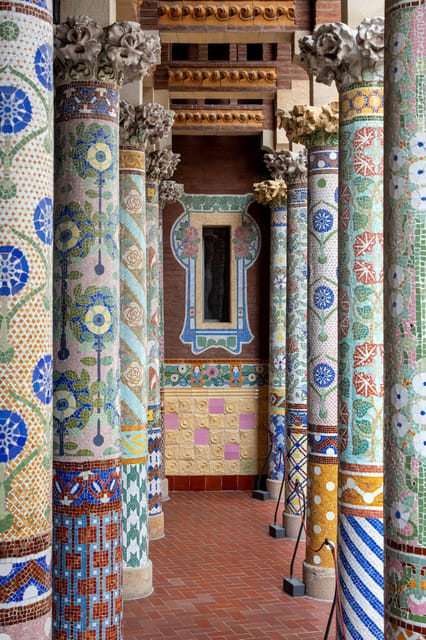
Barcelona’s Modernisme is often associated with Antoni Gaudí, but Domènech i Montaner deserves equal attention. These two buildings show how inventive the city’s early modernist architecture could be, from a concert hall built for music to a vast complex designed around care and public life.
The combined ticket makes sense because the sites are not simply two unrelated stops. You get to see the same architect working on very different scales. The Palau is a concentrated burst of design, while Sant Pau gives you a larger setting in which to watch his ideas unfold across multiple spaces.
I also like the contrast in mood. The Palau is theatrical and intimate. Sant Pau is spacious and easier to explore at your own pace. Taken together, they make a more rounded architectural outing than either monument alone.
A few more architecture tours in Barcelona worth a look
- Barcelona: Sant Pau Recinte Modernista Entry Ticket
★ 4.6 · 2,567 reviews - Barcelona: Sagrada Familia, Modernism, and Old Town Tour
★ 4.7 · 1,621 reviews - Ramblas, Old Town, Gothic and Gaudi Architecture Walking Tour
★ 5.0 · 723 reviews
The Palau de la Música Catalana, Barcelona’s dramatic concert hall
Your visit begins at the Palau at the time you selected when booking. The self-guided format keeps things simple: you enter, take the digital brochure, and move through the building at your own speed.
The concert hall is the star. Its decoration is not background material to glance at on the way through. It is the point of the visit. The hall’s details, color, and design create the feeling of a building made for performance even when no concert is taking place.
One feature deserves special attention: the inverted dome. It is the kind of detail that rewards looking up slowly rather than rushing through with a camera already raised. The shape helps explain why the interior feels so unusual, and it has become one of the most memorable parts of the visit for many people.
The Palau also has a reputation for excellent acoustics. You will not be attending a concert as part of this ticket, but the design still makes more sense when you remember that this is a working performance space, not just an ornate monument. The decoration serves the room’s purpose as well as its appearance.
Give yourself time to study the brochure. The visit is free-flowing, but that can be both its strength and its weakness. You are not tied to a guide’s pace, yet you also do not have someone pointing out every important feature. If you prefer to read, pause, and take photographs on your own, this format should suit you. If you want a detailed architectural explanation, bring patience and use the material provided.
The Palau is open for this visit from 9:00 a.m. to 3:30 p.m. The ticket requires you to select your day and time here, so this is the part of the experience that needs the most planning. Arrive with enough room around your chosen entry time instead of trying to squeeze it between several fixed appointments.
Sant Pau Recinte Modernista, a much larger setting
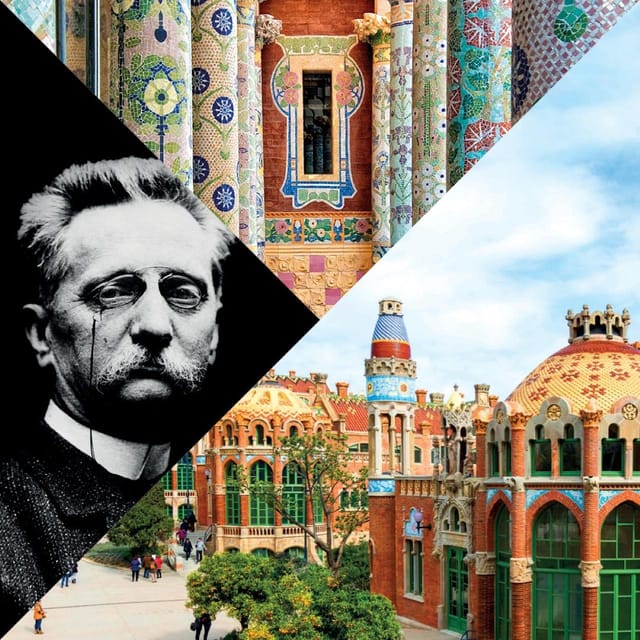
Sant Pau changes the rhythm of the day. Instead of one principal concert hall, you visit the Sant Pau Recinte Modernista, described as the world’s biggest modernist complex. The scale matters. You need time to walk, look around, and read the information in the different spaces.
The visit is also self-guided. You receive a map, and information staff are available in the various areas. That gives you practical help without turning the experience into a group tour. You can decide which spaces deserve a longer pause and which ones you want to pass through more quickly.
I would not treat Sant Pau as a quick add-on after the Palau. The Palau offers an intense, polished interior experience. Sant Pau needs a slower eye because the interest is spread across a larger complex. The map is useful for keeping track of where you are and for giving the visit some order.
Sant Pau opens from 9:30 a.m. to 6:30 p.m. from April through October. From November through March, it closes earlier, at 5:00 p.m. Last entry is 30 minutes before closing. These hours make the combined ticket easier to use if you visit Sant Pau before or after the Palau, but winter visitors need to watch the clock more closely.
The ticket arrangement is convenient: once you have visited the Palau, you show the same ticket to enter Sant Pau. You do not need to buy a second admission ticket. Still, remember that your Palau time is the fixed part, while Sant Pau is the flexible part. Plan around that difference.
How to fit both sites into three hours
The stated duration is 180 minutes, which is a reasonable guide for a focused visit to both places. It is not a promise that you must leave after three hours, and it may feel short if you read every panel, photograph every detail, and linger at both sites.
For a practical schedule, allow about an hour for the Palau and about two hours for Sant Pau. That gives the larger complex the extra time it needs. You can reverse the order if the opening hours work better, but the selected Palau time should anchor your day.
If your Palau entry is early, Sant Pau may be a natural second stop, especially during the longer April to October opening period. In the colder months, an earlier Sant Pau visit may be wiser because of the 5:00 p.m. closing time.
Do not plan lunch as part of the ticket. Lunch is not included, and the three-hour duration refers to the sightseeing experience itself. A short break between the two sites may help, particularly if you want to appreciate Sant Pau rather than race through it.
Same city, a different building to stand in front of:
- Barcelona: Park Güell and Gaudí House Museum Entry Ticket
★ 4.5 · 6,326 reviews - Barcelona: Gaudí’s Park Güell Tour with Fast-Track Ticket
★ 4.8 · 4,512 reviews - Sagrada Familia & Gaudi Tour Private or Small Group with Tickets
★ 4.5 · 1,188 reviews - Complete Gaudi Tour: Casa Batllo, Park Guell & Sagrada Familia
★ 5.0 · 1,152 reviews
What the $38 price gives you
At $38 per person, this is not the cheapest way to spend a morning in Barcelona. The value depends on one simple question: will you visit both monuments?
If you are interested in architecture, the answer is likely yes. You get admission to two major Domènech i Montaner sites, a digital brochure for the Palau, and a brochure or map-based visit at Sant Pau. You also gain the convenience of one purchase and one ticket covering both entries.
The price is harder to justify if you only care about the concert hall. In that case, a single-site option may better match your plans, if available. The combined ticket earns its keep when you treat Sant Pau as a main attraction rather than a bonus.
The self-guided format also affects value. You are not paying for a live guide, lunch, or a group experience. That keeps the structure flexible, but you are responsible for making sense of the material. I see this as a good deal for independent visitors who like to set their own pace, and a less complete choice for anyone who wants expert commentary built into the admission.
The score of 4.6 from 47 ratings supports the idea that the package delivers what it promises, especially for people who value the architecture and the chance to take photographs. One especially useful observation is that both places reward a detailed look at the exhibitions and other programs, rather than a fast walk through the most famous rooms.
The best details to watch for
At the Palau, look up. The inverted dome is easy to miss if you focus only on eye-level decoration, yet it is one of the building’s defining visual moments.
Listen to the room, too. Even without a scheduled performance, the concert hall’s excellent acoustics are part of its identity. The building was designed for music, not only for appearance.
At Sant Pau, use the map before you begin. A large complex can feel confusing if you wander without a plan. The map helps you understand the relationship between the different spaces and choose where to spend your time.
Keep your camera ready, but do not let photographs replace looking. The architectural details are a major reason to book this experience, and both sites offer plenty of striking subjects. One of the strongest recommendations from the supplied feedback was to take time with the exhibitions and additional programs, not just the main interiors.
Who will enjoy this experience most
I would recommend this ticket to independent visitors with a strong interest in architecture, design, photography, or Barcelona’s Modernisme. It is also useful if you prefer flexible sightseeing over a fixed group schedule.
Families and mixed-interest groups may appreciate the freedom to move at different speeds, though younger children may not care equally about the architecture. The option to explore without a guide can help, but adults may need to add their own explanations.
This is less suitable if you want a personal guide, a live lecture, or a tightly narrated history of every room. No guide or lunch is included. The experience depends on your willingness to read the digital brochure, follow the map, and ask information staff for help at Sant Pau.
The broad language range is helpful. Information is available in Aranese, Catalan, Spanish, English, French, Italian, Galician, German, Portuguese, Russian, Japanese, Korean, Chinese, Arabic, Hebrew, Polish, and Basque. Some content remains in its original language, so you should be prepared for that in parts of the visit.
Both sites are wheelchair accessible, another practical advantage for visitors who need step-free access. Free cancellation is available up to 24 hours before the visit, and the reserve-now, pay-later option gives you some flexibility while your plans are still changing.
A few practical cautions
The biggest planning issue is the difference between fixed and flexible entry. You select a time for the Palau, but Sant Pau does not require a separate scheduled slot under this combined arrangement. Keep the Palau appointment visible in your day plan.
Season also matters. From April through October, Sant Pau remains open until 6:30 p.m. From November through March, it closes at 5:00 p.m., with last entry 30 minutes earlier. A late start may work in summer but could leave you pressed for time in winter.
Do not expect a guided tour. The brochures and map provide structure, while staff can help in Sant Pau’s various spaces. If you like to move independently, this is a plus. If you want every artistic choice explained as you go, it is a limitation.
Finally, allow your attention to shift between the two places. The Palau is compact and visually intense. Sant Pau is more spread out. Trying to give both sites the same amount of time may not work well.
Should you book the combined ticket?
Book it if you want to see two of Domènech i Montaner’s most important Barcelona buildings and are happy to explore without a guide. The $38 price is fair when you use both admissions, and the combination gives you a useful contrast between a grand concert hall and a large modernist complex.
I would skip it if you only want a quick look at one site or need a fully guided visit. For most architecture-minded visitors, though, the inverted dome, strong acoustics, detailed interiors, and spacious Sant Pau complex make this a worthwhile three-hour plan. Choose your Palau time carefully, leave room for Sant Pau, and resist the urge to rush.
FAQ
How long does the combined visit last?
The stated duration is 180 minutes, or three hours.
Do I choose an entry time for both sites?
You choose the day and time for the Palau de la Música Catalana during booking. Sant Pau can be visited by showing the same ticket.
What are the Palau opening hours for this experience?
The Palau can be explored from 9:00 a.m. to 3:30 p.m.
What are the Sant Pau opening hours?
Sant Pau is open from 9:30 a.m. to 6:30 p.m. from April through October, and from 9:30 a.m. to 5:00 p.m. from November through March. Last entry is 30 minutes before closing.
Is a guide included?
No. The Palau visit includes a digital brochure, while Sant Pau provides a map and information staff in its different spaces.
Is lunch included?
No. Lunch is not included in the ticket.
Can I cancel the booking?
Yes. You can cancel up to 24 hours in advance for a full refund. You can also reserve now and pay later.
Just added in Barcelona
- Self-Guided Audio Tour-The Surrealist Barcelona of Dalí and Gaudí★ 3.5 · 8 reviews
- Visit to the Modernist houses of the Americans★ 5.0 · 2 reviews
- Roman & Gotic & Gaudi in Barcelona: private walking tour★ 4.5 · 2 reviews
- Barcelona Gaudi Tour: Sagrada Familia, Casa Batllo & Casa Mila★ 5.0 · 4 reviews
- Barcelona Street Escape: Gaudi and the Hidden Treasure★ 5.0 · 17 reviews
- Sagrada Familia Private Tour – Unlock the mysteries of Gaudi★ 5.0 · 10 reviews
- Gaudi’s Casa Batlló and La Pedrera with Chocolate Tasting★ 5.0 · 5 reviews
- Gaudí & Catalan Modernism Private Walking Tour★ 5.0 · 11 reviews
Barcelona Architecture Tours, compared.
Park Güell and Gaudí House Museum Entry Ticket
Read our review →
Gaudí’s Park Güell Tour with Fast-Track Ticket
Read our review →

Sagrada Familia, Modernism, and Old Town Tour
Read our review →
Sagrada Familia & Gaudi Tour Private or Small Group with Tickets
Read our review →
Complete Gaudi Tour: Casa Batllo, Park Guell & Sagrada Familia
Read our review →
Park Güell: Guided Tour with Optional Gaudí Experience Entry
Read our review →
Barcelona e-Bike Tour: Gaudí & Old Town Small Group
Read our review →Browse the lists this tour appears in