
REVIEW · WALKING TOURS
Helsinki: Architectural Highlights Guided Walking Tour
Helsinki tells its story through buildings. This three-hour walk moves from Senate Square and the National Library to Oodi, Amos Rex, and the Kamppi Chapel, showing how Finland’s capital grew from a neoclassical center into a bold design city. I especially like the small group of six or fewer, which gives the guide room to answer questions, and the chance to enter several buildings instead of simply admiring façades from the pavement.
I also like the way the tour links architecture with Finnish politics, culture, language, and daily life. Guides such as Zana have been praised for explaining small carvings and design details that are easy to miss. The main caution is the distance: you will walk 5 to 6 kilometers, rain or shine, and some office buildings may be closed on weekends.
Key points before you book
- The route spans centuries: You see neoclassical, art nouveau, Nordic classicism, functionalism, modernism, and contemporary design in one compact central walk.
- Several interiors are part of the experience: The National Library, cafés, Academic Bookstore, Oodi, and other public spaces give you more than an outside view.
- The guide can shape the emphasis: Tell the provider in advance if you care most about a particular period, architect, or architectural style.
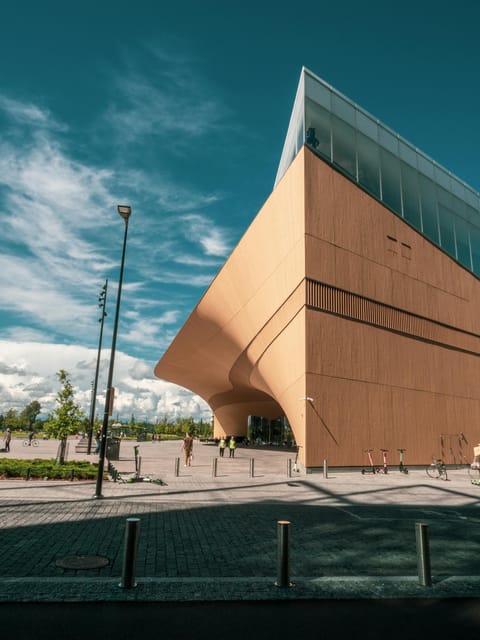
- Oodi is a major highlight: The wave-shaped central library is one of the tour’s most memorable modern stops.
- The group is limited to six people: This suits visitors who want conversation and the chance to ask detailed questions.
- Plan for Finnish weather: Bring suitable clothing and comfortable shoes, since the walk runs in all conditions.
Why Helsinki works so well as an architecture walk

Helsinki is unusually manageable on foot. In the central area, grand civic buildings, cafés, shops, railway architecture, libraries, chapels, and museums sit within a route of roughly 5 to 6 kilometers.
That compact layout gives this tour its value. You are not spending half the day on buses between isolated sights. Instead, the city changes gradually as you walk. Neoclassical buildings around Senate Square give way to later styles along the Esplanadi, then to modern public architecture near Kansalaistori.
The tour also treats architecture as a record of Finnish life. You may discuss the country’s ties to Sweden and Russia, the development of an independent Finnish identity, the role of public libraries, and the way modern design serves ordinary residents. That broader context is important. Otherwise, a walk through Helsinki can become a parade of impressive façades without much sense of why they matter.
The experience is led in English by a local guide, with the company describing its guides as having a strong academic interest in the city. One guide named Zana has received especially warm praise for patience, clear explanations, and close attention to details. The exact guide can vary, so consider the academic approach a central feature rather than a guarantee of one particular person.
More walking tours in the world:
- Lecce: Baroque Architecture and Underground Walking Tour
★ 4.6 · 1,248 reviews - Chicago in a Day: Food, History & Architecture Walking Tour
★ 5.0 · 1,153 reviews - Ramblas, Old Town, Gothic and Gaudi Architecture Walking Tour
★ 5.0 · 723 reviews
Starting at Fazer Café Kluuvikatu
The meeting point is in front of Fazer Café on Kluuvikatu. This is a practical central start, close to Helsinki’s main shopping streets and easy to pair with time in the city center.
You begin with orientation rather than a long lecture. The guide sets up Helsinki as a city where different building periods sit close together. That helps you know what to watch for as the walk progresses.
Fazer is also a fitting starting point. The route later includes another Fazer Café inside Sanomatalo, so the familiar Finnish name appears at both ends of the architectural story, from a traditional city-center café setting to a modern media building.
Food and drinks are not included, but the cafés provide useful places to pause if you want to buy something on your own. Do not treat the café stops as meal breaks. They are primarily architectural visits.
Senate Square and the city’s neoclassical beginning

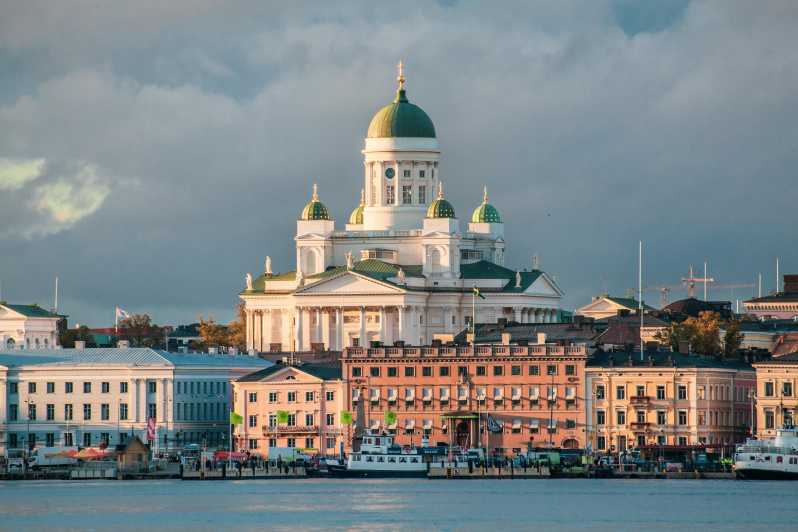
Senate Square gives the tour its grand opening. The square introduces the formal, carefully planned side of Helsinki, with monumental buildings arranged around an open civic space.
You spend about 15 minutes here, enough time for the guide to explain the square’s visual order and its place in the city. This is where Helsinki can feel most stately and ceremonial.
The Helsinki Cathedral is next. The tour includes a short guided visit or pass-by of about five minutes. That is enough to discuss its role in the square and its strong exterior presence, but it is not a long cathedral tour.
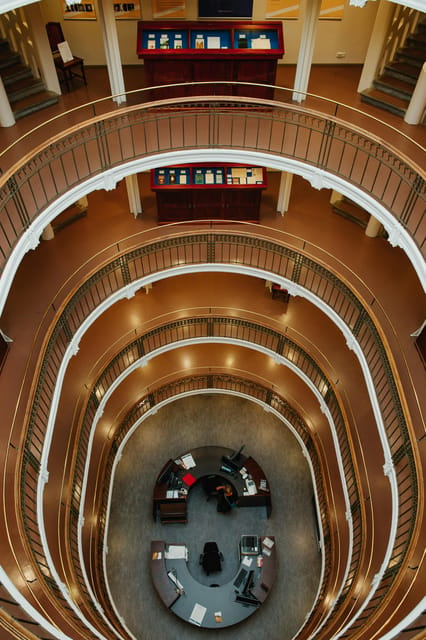
The National Library of Finland receives more time, around 15 minutes. This is one of the more rewarding stops because you can appreciate the building from inside. The library helps show how public institutions were given architectural weight, not treated as anonymous utility spaces.
If you care about historical styles, tell the guide before the walk begins. The experience can be adjusted toward a particular period or style, although the exact amount of time at each stop will depend on the group.
Cafés, Esplanadi, and Helsinki’s public rooms
Robert’s Coffee Jugend offers a change of scale. Instead of a major civic building, you see how design appears in a commercial interior. The stop lasts about 10 minutes and gives you a chance to notice how Helsinki uses cafés as part of its social and visual life.
Kappeli and Esplanadi follow. Kappeli is visited briefly, while Esplanadi receives around 10 minutes. This section shifts the tour away from formal government architecture and toward public space, dining, movement, and city life.
The Runeberg monument adds another cultural layer. Johan Ludvig Runeberg is an important Finnish literary figure, and the stop shows how national memory appears in the city’s streets and parks. You are not just looking at buildings here. You are also learning how Finland presents its writers and public figures.
That mix is one of the tour’s strengths. If you want only technical architectural analysis, some of the cultural discussion may feel like a detour. I think it makes the walk more useful for a first visit, since it gives you a working sense of Helsinki rather than a narrow list of styles.
A few more architecture tours in the world worth a look
- Chicago River: 1.5-Hour Guided Architecture Cruise
★ 4.8 · 8,046 reviews - Charleston: History and Architecture Guided Walking Tour
★ 4.8 · 349 reviews - Vienna: Spanish Riding School Guided Architectural Tour
★ 4.8 · 333 reviews - Charleston History, Homes, and Architecture Guided Walking Tour
★ 5.0 · 267 reviews
Academic Bookstore and the elegance of everyday design

The Academic Bookstore is one of the route’s most appealing stops. You spend about 10 minutes inside, which lets you see how a commercial building can also be a major architectural work.
This is a good place to consider the Finnish habit of placing serious design in ordinary daily settings. A bookstore is not presented as a plain retail box. It becomes part of the city’s public life, a place where people shop, browse, meet, and spend time.
The following stop, Rautatalo, takes only about five minutes. Its short visit reflects the pace of the walk. You are not entering every building for a full tour. Instead, the guide uses a mix of brief exterior explanations and selected interior visits to keep the route moving.
That pace works well for most people, but you should not expect long sessions at each sight. The tour covers a lot of ground and often uses a building as a starting point for a wider point about Finnish design or urban planning.
Helsinki Central Station and the move toward modern Helsinki
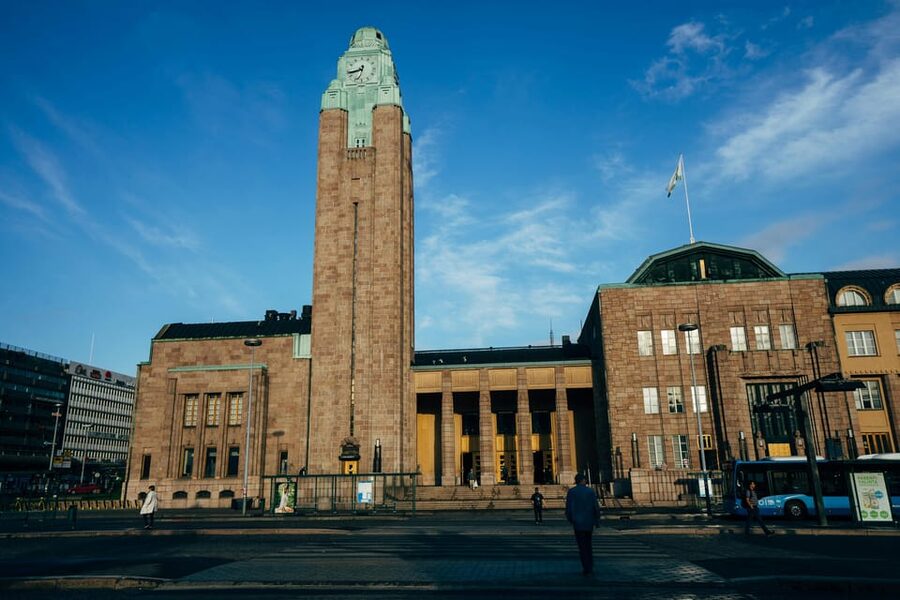
Helsinki Central Station receives around 10 minutes. It is an important transition point in the route, linking the older center with the city’s modern transport and business districts.
The station helps you see how architecture must handle practical needs as well as symbolic ones. It is a place for movement, but also one of Helsinki’s best-known buildings. The guide can use it to explain how national style and functional demands meet in a major public structure.
From there, the route continues to Fazer Café in Sanomatalo. This stop introduces a more recent office and media setting. As with Robert’s Coffee Jugend, the café is not simply a refreshment stop. It gives you a chance to look at an interior that you might otherwise pass without entering.
One useful tip comes from the schedule of the buildings themselves: weekday tours may offer better access to office interiors. Some are not open on weekends. If seeing as many interiors as possible matters to you, choose a weekday when your plans allow it.
Kansalaistori and Oodi, the tour’s modern centerpiece

Kansalaistori marks the route’s major modern turn. This open public area brings together some of Helsinki’s most current cultural architecture.
The central library Oodi receives about 20 minutes, the longest single stop on the walk. That extra time is deserved. Oodi is widely admired for its wave-like form and for the way it functions as a community center rather than simply a place to store books.
The building is particularly useful for understanding present-day Finnish values. It treats public space, learning, work, leisure, and community services as connected parts of everyday life. You can look at the shape, materials, and public areas, but the more important question is how the building is used.
Several people who took the walk singled out Helsinki’s libraries as a major pleasure, and I can see why. They are not minor side attractions. They show how architecture can support public life in a direct, practical way.
If you have only a few hours in Helsinki, Oodi alone gives you a strong reason to consider this tour. You might walk past it on your own, take a few photos, and move on. With a guide, you have a better chance of understanding why it has become such an important part of the city.
Amos Rex, Kamppi Chapel, and the quiet power of modern design

Amos Rex comes next, with about five minutes of guided attention. The stop is brief, so think of it as an architectural introduction rather than a museum visit. The tour does not include a full museum experience or admission details.
The Kamppi Chapel is also covered briefly, with a guided visit or pass-by of about five minutes. Its quiet character provides a useful contrast with the large civic spaces earlier in the route. The building shows how contemporary design can create a place for calm in the middle of a busy center.
The Pohjola Insurance Building completes the listed stops before you return to Fazer Café Kluuvikatu. This short visit adds another period and another example of how commercial buildings can carry national stories through ornament and design.
The guide may point out carved details that you would probably overlook while walking alone. One especially praised feature of the route is the attention given to carvings on former bank buildings. Keep your eyes above shopfront level. Helsinki often rewards that simple habit.
How the customization works
You can request a focus on a particular period or style in advance. The advertised range includes neoclassical, gothic revival, renaissance revival, art nouveau, Nordic classicism, functionalism, modernism, and contemporary design.
That option matters because three hours is not enough to give every style equal treatment. If you are an architecture student, you may want more attention on a certain architect. If you are visiting for a general introduction, you may prefer the broad story of Helsinki’s growth.
The route includes work associated with figures such as Engel, Saarinen, Sonck, Siren, and Aalto. The tour’s value is not just in naming them. A good guide connects their work to the city around you and points out what your eyes should notice.
Still, keep your expectations realistic. One four-star assessment noted that the walk focused more closely on two architectural types than on every style named in the description. This is a fair caution. Ask for your priorities before the tour, and speak up during the walk if you want more detail about a particular building or architect.
Walking conditions, group size, and practical value
The tour lasts three hours and covers 5 to 6 kilometers. You need comfortable shoes and clothing suited to the weather. The walk operates rain or shine, so a wet or cold day can change the experience.
The small group limit of six is a major benefit. You can hear the guide more easily, ask questions without interrupting a large crowd, and request extra explanation when a detail catches your eye. Some bookings have even been private or close to private, but you should book for the small-group format rather than assume you will be alone.
The pace is generally described as relaxed, while still filling the full three hours with information. You will stop often, but this is not a gentle stroll with little ground covered. The distance is real, and the central route has enough stops to keep your attention moving.
At $56 per person, the tour is not the cheapest way to walk around Helsinki. The value depends on how you use it. You are paying for three hours with a local guide, a planned route, architectural interpretation, cultural background, and access to interiors you might otherwise skip.
I think the price is reasonable for a first day in Helsinki, especially if you have limited time or care about design. It is less compelling if you already know the central city well or prefer to explore at your own pace with a guidebook.
The activity allows free cancellation up to 24 hours before departure and offers reserve-now, pay-later booking. That helps if your Helsinki schedule may change. Wheelchair users should note that the tour is not suitable for them.
Who should take this Helsinki walk
I would choose this tour if you want architecture explained in plain language, with Finnish history and culture included. It suits first-time visitors, design fans, students, photographers, and anyone who likes entering public buildings rather than checking off façades.
It is also a strong choice when you have an afternoon in Helsinki and want a quick orientation. The route touches many central sights, so you can return later to the places that interest you most.
You may want another kind of tour if you dislike walking several kilometers, need guaranteed interior access, or want a long technical lecture at every stop. Weekend visitors should also accept that some office buildings may be closed.
Should you book it?
Book this tour if you want Helsinki to make more sense through its buildings. The best parts are the small group, the mix of historic and modern design, the interior visits, and the guide’s attention to details such as carvings, public libraries, and cultural symbols.
Choose a weekday if interior access is a priority, and send your preferred styles or periods before the tour. If you can manage the distance and the weather, this is a useful, well-paced introduction to Helsinki that gives you more than a collection of postcard views.
FAQ
How long does the Helsinki architecture tour last?
The tour lasts three hours.
How far do you walk?
The tour involves approximately 5 to 6 kilometers of walking.
Where does the tour begin?
You meet the guide in front of Fazer Café Kluuvikatu.
Where does the tour finish?
The route returns to Fazer Café Kluuvikatu.
What language is the tour offered in?
The live guided tour is offered in English.
How many people are in the group?
The group is limited to six participants.
Are food and drinks included?
No. Food and drinks are not included in the tour price.
Does the tour run in bad weather?
Yes. The tour takes place rain or shine, so bring weather-appropriate clothing.
Can I request a certain architectural period or style?
Yes. You can contact the activity provider in advance with requests about specific periods or styles.
Is the tour suitable for wheelchair users?
No. The tour is listed as unsuitable for wheelchair users.
Just added in the world
- Wilmington History and Architecture Tour★ 4.8 · 18 reviews
- New Orleans : Garden District Architecture Walking tour★ 4.8 · 5 reviews
- Washington DC: Dupont Circle & Embassy Row Architecture Tour★ 5.0 · 6 reviews
- Washington, DC: Georgetown Architecture Walking Tour★ 5.0 · 8 reviews
- Vicenza: Palladian Architecture Private Walking Tour★ 3.3 · 3 reviews
- Walk & Discover KL’s Architectural and Heritage Gems★ 5.0 · 7 reviews
- Private Colonial Williamsburg Architectural Tour★ 5.0 · 5 reviews
- Unveiling Brno: History, Culture & Architectural Delights★ 5.0 · 2 reviews
Walking Tours, compared.

The Official Art Deco Walking Tour by The Miami Design Preservation League
Read our review →
Baroque Architecture and Underground Walking Tour
Read our review →
Chicago in a Day: Food, History & Architecture Walking Tour
Read our review →

Ramblas, Old Town, Gothic and Gaudi Architecture Walking Tour
Read our review →
Chicago’s Secret Interiors Architectural Walking Tour
Read our review →
Browse the lists this tour appears in