
REVIEW · GAUDí TOURS
Barcelona: German City Tour from Gaudí’s Perspective
Gaudí’s Barcelona rewards a slower look. This 4.5-hour private tour connects the architect’s early work, Modernist masterpieces, and sacred projects into one clear story, rather than treating each building as a separate photo stop. You’ll walk through central streets and squares, use public transit twice, and hear the background behind Gaudí’s changing artistic ideas.
I especially like the German-language guidance and the tour’s focus on how Gaudí developed over time. I also like the balance between architecture and city history, including his student years, his work connected with the 1888 World’s Fair, and the myths surrounding his private life. The main drawback is simple: at $294 for a group of up to three, this is expensive unless you are sharing the cost with two other people.
The guide Johannes receives particularly warm praise for his clear German, broad command of Gaudí, and ability to answer questions. The tour is designed for people who want context and conversation, not a rushed checklist of interiors. You’ll see monuments mainly from outside, so pair it with separate visits to places you want to explore indoors.
Key points at a glance
- Gaudí’s changing style: Follow his path from Historicism through Catalan Modernism and toward the fantastic forms associated with Casa Milà.
- Private group of up to three: The small format allows plenty of questions and a more personal pace.
- German-language focus: Johannes has been praised for strong explanations, lively storytelling, and thoughtful answers.
- Walking plus two transit rides: Public transportation tickets are included, but you should bring them with you during the tour.
- Outdoor sightseeing: Expect streets, squares, and exterior views, with museum and interior visits generally left out.
- All-weather format: The tour runs in sun, rain, wind, and even strong showers, so dress for the forecast.
Starting at Plaça Reial with Gaudí’s early years
The meeting point is at Plaça Reial, by the Three Graces Fountain and near Liceu metro station. This is a useful central location, especially if you are already exploring the old city or staying near La Rambla. It also places you in a part of Barcelona where grand public spaces, historic streets, and later Modernist works can be connected on foot.
The opening part of the tour sets up Gaudí as a young architect rather than presenting him immediately as the finished genius associated with the Sagrada Família. You learn about his time as a student and the practical work he took on to earn money. That included preparing plans for professors and helping with the grounds for the world’s fair in Ciutadella Park.
This background matters because Gaudí did not appear fully formed. His later buildings can look wildly inventive, but his career grew through smaller commissions, study, observation, and steady experiments with form. The guide’s job here is to help you notice those links instead of simply pointing out unusual shapes.
You can expect the conversation to include Barcelona’s wider development as well. The strongest praise for Johannes centers on his ability to explain Gaudí while also giving useful information about the city. That makes this a good first or second-day activity, since you get both architectural context and a broader sense of Barcelona’s past.
More Gaudi tours in Barcelona:
- Barcelona: Park Güell and Gaudí House Museum Entry Ticket
★ 4.5 · 6,326 reviews - Barcelona: Gaudí’s Park Güell Tour with Fast-Track Ticket
★ 4.8 · 4,512 reviews - Sagrada Familia & Gaudi Tour Private or Small Group with Tickets
★ 4.5 · 1,188 reviews
The Golden Square and Barcelona’s Modernist competition
The tour continues through the Golden Square, the central area associated with Barcelona’s Modernist architecture. Here, Gaudí’s work makes more sense when you compare it with the buildings and ambitions around him. The city’s wealthy families commissioned grand homes, and architects competed through decoration, structure, materials, and theatrical details.
This is one of the most useful parts of the experience for anyone who finds Gaudí’s buildings fascinating but hard to place. You are not just looking at isolated façades. You are considering why this period produced such bold architecture and how Gaudí’s approach differed from other architects working in the same city.
The guide draws attention to Gaudí’s movement from Historicism toward Modernism. Historicist work often looked to earlier architectural traditions, while Modernism opened the door to more personal shapes, new decorative language, and closer attention to natural forms. You’ll hear how Gaudí gradually moved between these ideas rather than changing direction overnight.
The tour’s outdoor format works well here. Streets and squares let you compare several façades without being hurried through one building. You’ll have time for photographs and questions, and the pace is described as relaxed. A bathroom break is not treated as a disruption, which matters during a 4.5-hour outing.
The limitation is that exterior viewing can leave you wanting more. You will not generally enter the buildings or spend time in their rooms, museums, or exhibitions. If your main goal is to see interiors, this tour should provide the explanation, then you should plan separate admission for the sites that interest you most.
Nature, symbols, and the myths around Gaudí
Nature is central to the way Gaudí thought about design, and the tour gives you a way to read his work through that idea. The point is not simply that he used curved lines or organic decoration. You’ll consider how natural forms influenced his structures, details, and sense of movement.
This is also where the human side of Gaudí becomes more interesting. The tour includes the lesser-known and sometimes disputed stories that have grown around him. You’ll hear about the myths connected with his character and career, while also learning about the facts that can be separated from later legend.
That balance is important. Gaudí is easy to turn into a one-note figure: a mysterious recluse who produced strange buildings. A good explanation shows a working architect who built a reputation early, took practical commissions, developed his methods, and kept changing his ideas.
Past feedback gives you a useful clue about the tone. Johannes has been praised for using true stories and examples that kept younger members of a group interested. One detailed account also noted that he answered questions after the tour, which suggests a guide who treats conversation as part of the experience rather than stopping the moment the official time ends. That extra help is not a guaranteed feature, but his willingness to engage with questions is a clear strength.
Casa Milà and Gaudí’s move toward the fantastic
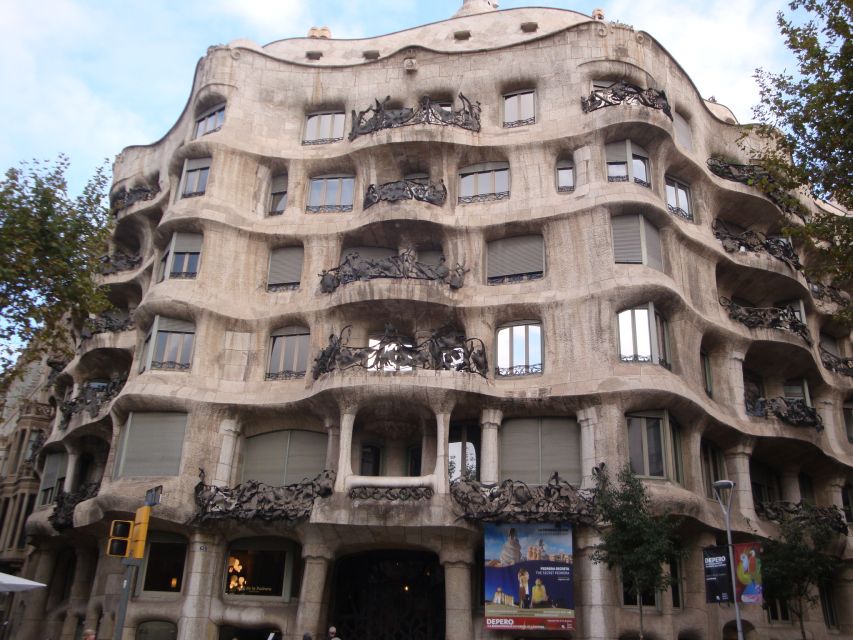
Casa Milà, also called La Pedrera, is an important point in the story because it shows Gaudí pushing past conventional architectural rules. The tour presents it as part of his movement from Historicism and Modernism toward more fantastic, almost surreal forms.
You’ll study the building from the outside, looking at the qualities that made it so controversial and memorable. Its unusual appearance is easier to understand after you have heard about Gaudí’s earlier work and his growing interest in nature, movement, and structures that seem less fixed than ordinary apartment buildings.
The value here is interpretive. You may already recognize Casa Milà from photographs, but the guide helps explain where it fits within Gaudí’s career. The building is not treated as a standalone oddity. It becomes one stage in a longer process of experimentation.
Do not book this tour expecting a full Casa Milà visit. Interior exploration is generally not included, with only a couple of exceptions elsewhere in the program. If you want the courtyards, rooms, roof, or museum displays, allow time and money for a separate visit.
Same city, a different building to stand in front of:
- Barcelona: Sant Pau Recinte Modernista Entry Ticket
★ 4.6 · 2,567 reviews - Barcelona: Sagrada Familia, Modernism, and Old Town Tour
★ 4.7 · 1,621 reviews - Complete Gaudi Tour: Casa Batllo, Park Guell & Sagrada Familia
★ 5.0 · 1,152 reviews - Park Güell: Guided Tour with Optional Gaudí Experience Entry
★ 4.1 · 832 reviews
Colònia Güell, the crypt, and the road to the Sagrada Família
The church at Colònia Güell is important to Gaudí’s development, particularly its crypt, which he completed. The project gave him room to test ideas for the sacred architecture that later became central to his work.
The tour uses this part of Gaudí’s career to explain how he began experimenting with concepts that would shape the Sagrada Família. You should understand this as part of the larger story rather than assume the 4.5-hour city walk includes a full excursion to Colònia Güell. The stated route focuses on Barcelona’s streets and squares, and you should confirm the precise stops when booking if seeing the crypt itself is essential to you.
This distinction is useful because Gaudí’s church work can otherwise seem to appear from nowhere. His religious architecture grew through years of thought and trial. The crypt becomes a key step in that process, linking his structural experiments with his spiritual aims.
The guide also explains that the Sagrada Família occupied 43 years of Gaudí’s life. The building contains evidence of several phases because Gaudí kept developing his style rather than repeating one formula. The idea that he reinvented himself roughly every ten years gives you a practical way to read the monument as a record of change.
Seeing the Sagrada Família as a career-long project
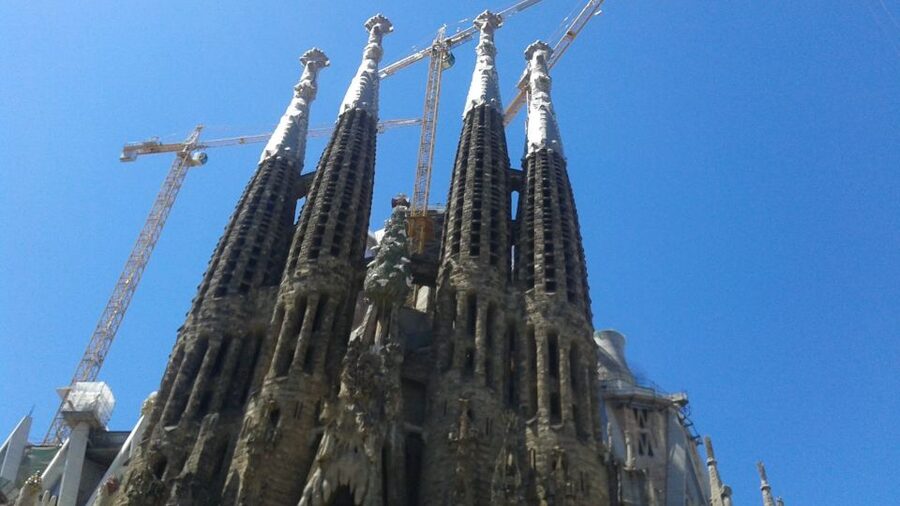
The Sagrada Família is likely the emotional center of the tour’s story, even though the experience is not primarily an interior visit. Instead of treating the basilica as a single finished style, you learn how it reflects Gaudí’s different periods and his long commitment to the project.
That approach helps explain why the building can feel so complex. It is not only a famous church with elaborate decoration. It is also a record of Gaudí’s early ideas, later structural thinking, sacred aims, and continual reinvention.
The Sagrada Família began when Gaudí was 31, and he devoted much of the rest of his life to it. That fact gives the monument a human scale. You are looking at work shaped by decades of attention, not just a grand project attached to a famous name.
Again, the outdoor focus is both a strength and a limit. From the exterior, you can compare forms and hear the story without waiting in admission lines. But you will miss the interior space and the close view of details unless you arrange a separate entry.
A relaxed 4.5-hour format, with public transit included
The tour lasts 4.5 hours, long enough to build a real narrative but short enough to fit into a busy Barcelona visit. It is described as a relaxed walk, not a forced march. You can stop for photographs, ask questions, and take a bathroom break without feeling that the group is being pushed along.
You will use public transit twice. Tickets for those journeys are included, but you should bring them with you. This is a small practical point that can easily be missed during a city tour, so keep the tickets handy rather than packing them away.
The experience runs in sun, rain, wind, and strong showers. Barcelona’s weather can change, and much of the tour takes place outdoors, so your comfort depends on basic preparation. In summer, bring a hat, sunglasses, sunscreen, and a small bottle of water. In winter, a jacket or light coat should be enough according to the tour information.
Because this is a private group of up to three, you avoid the crowd-management problems that can affect a large walking tour. The format suits you if you want to ask detailed questions, adjust the pace for photographs, or discuss a particular Gaudí work. It is less suitable if you want a lively party atmosphere or prefer to move rapidly from one major attraction to the next.
What the price means for a small private group
The listed cost is $294 per group of up to three. Shared by three people, that works out to $98 each. For two people, it is $147 each, and for one person, the price becomes a serious splurge.
That cost can make sense if German-language guiding is important to you, especially when you want a private conversation rather than a large scheduled group. The price also includes public transit tickets for the two planned journeys. Still, the tour does not generally include museum admission or interior access, so you should count those costs separately if you want to go inside Casa Milà, the Sagrada Família, or other sites.
One older comment put the price at €270 and called it too high despite praising Johannes. That is a fair warning. The guide quality may be excellent, but a high price does not automatically mean more included sightseeing. You are paying mainly for private attention, language, interpretation, and a carefully connected story.
Free cancellation up to 24 hours before the tour and the option to reserve now and pay later make planning less risky. Starting times vary, so check availability before building the rest of your day around it.
Who will get the most from this Gaudí tour?
I would choose this experience if you want Gaudí explained in German and prefer a private, question-friendly format. It is especially suitable for couples, families, or small groups of up to three who care more about understanding the buildings than collecting interior visits.
It also suits you if you are curious about artistic development. The tour does not stop at the familiar highlights. It connects Gaudí’s student work, early commissions, nature-based ideas, Modernist period, Casa Milà, the Colònia Güell connection, and the long Sagrada Família project.
Families with teenagers may appreciate the stories and examples. The feedback about keeping younger people interested is encouraging, though the tour still depends on your group’s interest in architecture and history.
You may want another option if you need step-free access details, dislike walking outdoors in poor weather, or want a tour built around indoor admissions. No accessibility information is provided, and the route uses streets, squares, and public transit, so ask the provider directly about your specific needs.
Should you book it?
Book it if you want private German-language insight into how Gaudí’s style changed and you are willing to pay for interpretation rather than admission tickets. Johannes appears to be the main strength, with praise for his German, clear explanations, detailed answers, and entertaining storytelling.
Skip it if $294 feels too steep for an exterior-focused walk, or if your top priority is entering Gaudí’s major buildings. In that case, use the tour as a possible introduction only if the cost fits your plans, then reserve separate timed visits for the interiors.
For the right small group, this is a thoughtful way to see Barcelona through one architect’s working life. It gives you a better question to ask at every building: not just what is this, but what was Gaudí trying next?
FAQ
Where does the tour meet?
It meets at Plaça Reial, by the Three Graces Fountain, near Liceu metro station.
How long does the tour last?
The tour lasts 4.5 hours.
What languages are available?
The tour is offered in German and English. The listed experience includes a German-language tour.
How many people can join the private group?
The price covers a private group of up to three people.
Is public transportation included?
Yes. Public transit tickets for the tour are included, and you will use public transportation twice. Bring the tickets with you.
Are museum visits included?
No. Museum visits and interior exploration are generally not part of the program, with a couple of exceptions.
Will I go inside Gaudí’s major buildings?
The tour mainly views monuments from the outside. Interior visits are not generally included.
Does the tour run in bad weather?
Yes. It runs in sun, rain, wind, and even strong showers.
Can I cancel for a full refund?
Yes. You can cancel up to 24 hours in advance for a full refund.
Just added in Barcelona
- Self-Guided Audio Tour-The Surrealist Barcelona of Dalí and Gaudí★ 3.5 · 8 reviews
- Visit to the Modernist houses of the Americans★ 5.0 · 2 reviews
- Roman & Gotic & Gaudi in Barcelona: private walking tour★ 4.5 · 2 reviews
- Barcelona Gaudi Tour: Sagrada Familia, Casa Batllo & Casa Mila★ 5.0 · 4 reviews
- Barcelona Street Escape: Gaudi and the Hidden Treasure★ 5.0 · 17 reviews
- Gaudi’s Casa Batlló and La Pedrera with Chocolate Tasting★ 5.0 · 5 reviews
- Gaudí & Catalan Modernism Private Walking Tour★ 5.0 · 11 reviews
- Sagrada Familia Private Tour – Unlock the mysteries of Gaudi★ 5.0 · 10 reviews
Gaudí Tours, compared.
Park Güell and Gaudí House Museum Entry Ticket
Read our review →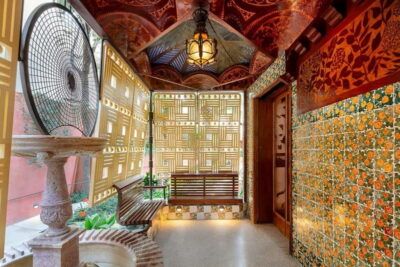
Gaudi’s Casa Vicens Skip-the-Line Entrance Ticket
Read our review →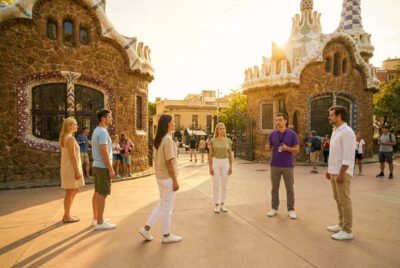
Gaudí’s Park Güell Tour with Fast-Track Ticket
Read our review →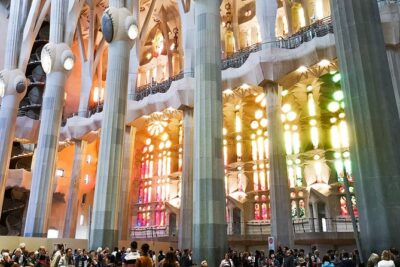
Sagrada Familia & Gaudi Tour Private or Small Group with Tickets
Read our review →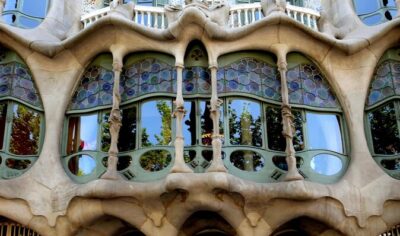
Complete Gaudi Tour: Casa Batllo, Park Guell & Sagrada Familia
Read our review →
Park Güell: Guided Tour with Optional Gaudí Experience Entry
Read our review →
Barcelona e-Bike Tour: Gaudí & Old Town Small Group
Read our review →
Ramblas, Old Town, Gothic and Gaudi Architecture Walking Tour
Read our review →Browse the lists this tour appears in