
REVIEW · SEGWAY AND BIKE ARCHITECTURE TOURS
Sopot Private City Walking or Bike Tour with a local architect
Sopot rewards slow looking. This private tour pairs architectural insight with local stories, taking you from Monte Cassino Street through elegant villas, spa buildings, parks, the beach, and the lighthouse. I especially like the use of old historical pictures, which helps you see how Sopot changed over time, and the personal route into quieter corners that many visitors could miss. The main consideration is the short length: at 90 minutes to two hours, the tour covers a lot, so some stops receive only a quick look.
Guide Agnieszka Lasota brings a warm, flexible approach shaped by her architectural training and local ties. She has been praised for explaining buildings without burying you in technical detail, and for noticing when a group needs a coffee break or a slower pace. The price is $204.04 for up to nine people, which is high for one person but can be fair for a private group.
Key points to know before booking
- Sopot’s architecture takes center stage: You will see villas, spa buildings, changing rooms, a grand hotel, and a lighthouse through an architectural lens.
- Old photographs add useful context: Images show how central Sopot changed from a small seaside settlement to the Riviera of the North.
- The route includes quieter streets: Villas Street and the area around Goyki 3 offer a calmer side of town away from the main pedestrian road.
- Agnieszka Lasota personalizes the experience: Her background as an architect helps explain design, while her local knowledge supplies stories about residents and artists.
- The private format suits small groups: Up to nine people can participate, making it easier to ask questions and adjust the pace.
- The lighthouse is optional: You can decide if you want to climb the steps for the view.
Starting on Monte Cassino Street
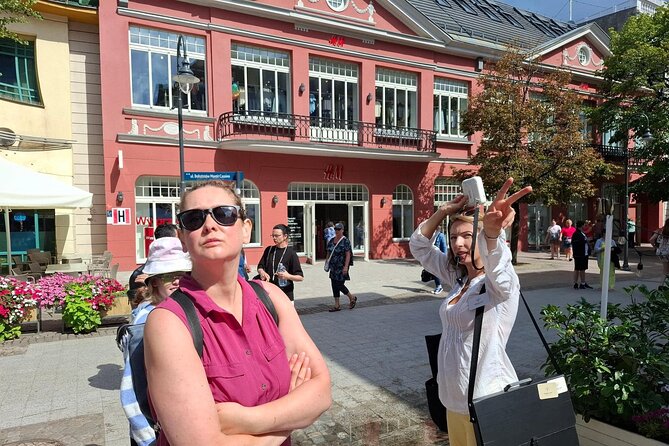
The tour begins at the McDonald’s on Bohaterów Monte Cassino 21, an easy landmark on Sopot’s best-known pedestrian street. This is not just a commercial strip. It was once the main road from the village to the sea, used by local fishermen on their way to the shore.
Agnieszka uses historical pictures here to show how the center changed across the centuries. That visual comparison gives the opening a clear purpose. Instead of hearing a string of dates, you can compare the old village with the resort town in front of you.
The street is also a useful introduction to Sopot’s changing identity. It links the inland center with the beach, and the tour follows that basic movement. You begin with the town’s everyday past, then move toward the grand resort architecture that made Sopot famous.
Because the tour starts in a busy public area, this is a good place to meet and get oriented. If you prefer a quiet start, keep in mind that Bohaterów Monte Cassino is one of the livelier parts of Sopot. The private format helps here, since you can ask Agnieszka to pause or clarify points rather than trying to keep up with a large group.
More architecture tours by bike and segway in the world:
- Palm Springs Modernism Architecture & History Bike Tour
★ 5.0 · 359 reviews - Historical and Modernist Bike Tour Barcelona
★ 5.0 · 262 reviews - Munich 3-Hour Segway Tour: Nazi Munich & Royal Architecture
★ 4.9 · 194 reviews
The calm setting of Dworek Sierakowskich
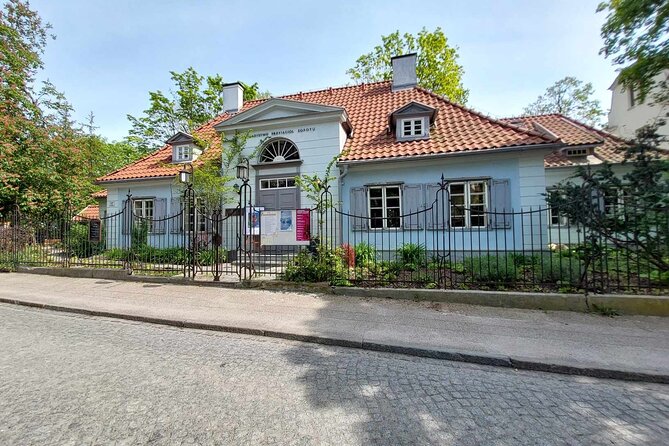
The next stop is Dworek Sierakowskich, an 18th-century building that once served as a guest house for a large manor. Its appeal is not grand scale. The building offers a more intimate view of Sopot, with interesting interiors and a peaceful back garden.
This stop lasts about six minutes, so you should expect an introduction rather than a long interior visit. The value comes from the contrast with Monte Cassino Street. Sopot is not only a seaside resort with polished facades. It also has quieter buildings that preserve a sense of an earlier town.
The connection with Fryderyk Chopin adds another layer. A bust marks the place, and Agnieszka explains why Chopin probably stayed there while on holiday and played the piano. The wording matters: this is presented as a strong possibility, not a claim that can be treated as certain fact.
I like this stop for its atmosphere. The garden and older structure provide a breather early in the walk. You will not be asked to pay an admission fee here, and the tour does not turn into a formal museum visit.
Villas Street and Sopot’s Montmartre years
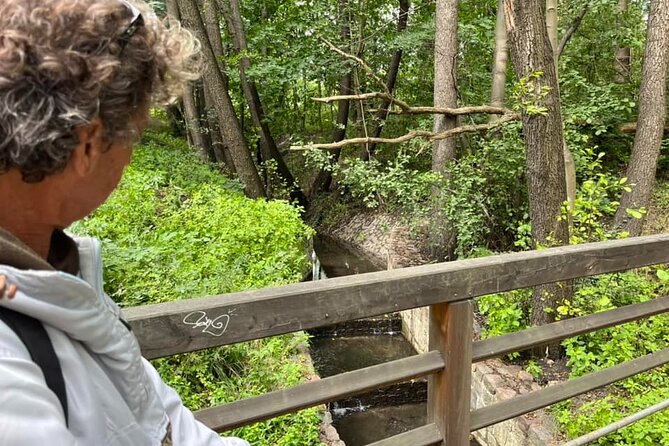
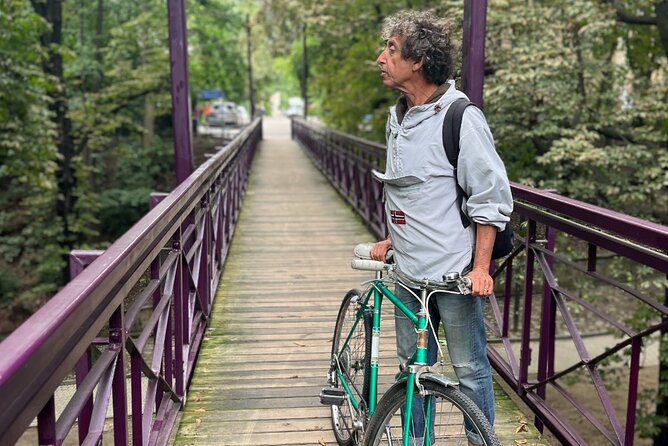
From Dworek Sierakowskich, the route crosses a picturesque bridge over a deep ravine and reaches a street first known as Villas Street. The oldest house dates from 1881, and the street is valued for its classical architecture.
This section is about reading the town through its houses. You will hear stories connected with the buildings and the people behind them. In the second half of the 20th century, the street was nicknamed Poland’s Montmartre, a memorable comparison that hints at its artistic reputation.
The route does not simply point at a facade and move on. Agnieszka’s architectural training helps explain why these houses look the way they do. She also brings attention to details you might otherwise pass without noticing.
This is one of the strongest parts of the tour for anyone who enjoys residential architecture. It is less useful if your main goal is to enter museums or spend time inside every building. The itinerary gives you an informed outdoor look, with a few interiors available at no extra charge, but museums are best visited separately.
Goyki 3 and the Tower Villa
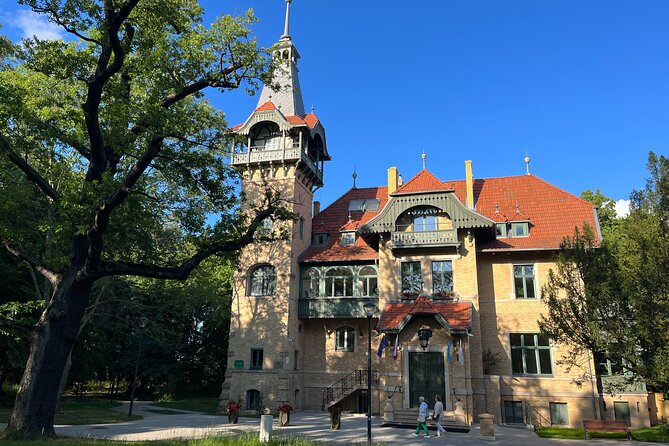
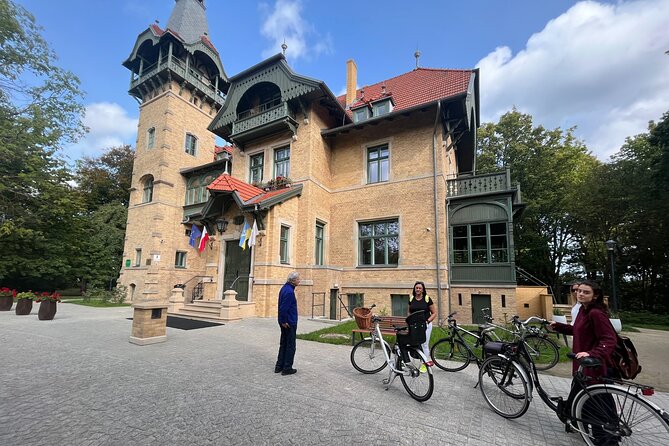
Goyki 3 Art Inkubator occupies one of Sopot’s most distinctive villas, known as the Tower Villa. Built in the late 19th century for a merchant’s family, it has an Alpine Resort style that seems surprising in a seaside town.
That design choice gives Agnieszka a chance to explain the European spa resort trend that began in the 18th century. The building’s style makes more sense once you understand that Sopot was part of a broader European fashion for health resorts, leisure, parks, and carefully designed public spaces.
The villa’s story is described as long and sad, with music woven into its past. The details are part of what makes this stop more than an architecture lesson. You get a sense of how buildings carry the marks of changing owners, uses, and fortunes.
Goyki 3 is also an art institution today. The stop lasts about 13 minutes and is free, but it does not promise a full visit to the institution. Think of it as a focused look at the building and its setting.
More walking tours in the world:
- Lecce: Baroque Architecture and Underground Walking Tour
★ 4.6 · 1,248 reviews - Chicago in a Day: Food, History & Architecture Walking Tour
★ 5.0 · 1,153 reviews - Ramblas, Old Town, Gothic and Gaudi Architecture Walking Tour
★ 5.0 · 723 reviews - Chicago’s Secret Interiors Architectural Walking Tour
★ 5.0 · 635 reviews
Spa architecture, art, and the artist Per Oscar Gustav Dahlberg
Sopot is said to have the largest complex of spa architecture in Europe. The tour uses this neighborhood to explain what spa architecture means in practice: not one grand building, but a connected group of villas, parks, public facilities, hotels, and seaside structures designed around a resort lifestyle.
You will also hear about Per Oscar Gustav Dahlberg, a Swedish artist who moved to Sopot in 1996 after falling in love with the town. His house and studio may be visited if you are interested, and a meeting may possibly be arranged in advance.
That optional detail gives the tour a personal edge. You are not limited to famous landmarks. You may also see the place where a working artist lives and creates, and potentially buy his graphics or an album about Sopot or Gdańsk architecture.
Dahlberg’s influence is also linked to Sopot’s famous Crooked House, whose design was inspired by his drawings. The tour does not make the modern attraction the main event. Instead, it connects a familiar building with the artistic life of the town.
Haffner, parks, and the road to the beach
At the Jan Jerzy Haffner Monument, the tour shifts from buildings to the person credited as Sopot’s godfather. Haffner had been a surgeon in Napoleon’s army before choosing Sopot as his home, long before the area became a major resort.
The stop is brief, around three minutes, but the story helps explain why Sopot developed as a leisure town. The surrounding tennis courts, large parks, sandy beaches, and mature trees show the resort as a planned setting for recreation, not simply a strip of sand beside a town.
I like the way this part connects a person with the physical town. You hear about Haffner, then see the public spaces that helped shape Sopot’s identity. It also gives the route a pleasant change of pace after several villa-focused stops.
The Grand Hotel and Sopot’s seaside ambition
The Sofitel Grand Sopot is one of the tour’s major visual moments. The hotel sits directly on the beach, and its position is striking because the city of Sopot itself decided to make the investment in the 1920s.
That decision says a lot about the town’s ambitions. Sopot was not content to remain a small coastal settlement. It wanted the kind of grand seaside setting associated with major European resorts.
The stop lasts about 15 minutes and focuses on the building’s splendor and related stories. You will look around rather than check in or take a formal hotel tour. The experience is strongest from the outside, where the relationship between the hotel, the beach, and the town is easy to understand.
This is also a good moment to consider the tour’s architectural focus. A standard sightseeing walk might point out the hotel and move on. Here, you learn why its location mattered and how a public investment helped shape Sopot’s image.
Kuracyjny Square and the Riviera of the North
Skwer Kuracyjny was created in 1925 and forms another key part of Sopot’s resort center. The plaza offers a place to think about how people once spent time here, not just what the buildings looked like.
Agnieszka again uses old photographs, this time from the period when Sopot was known across Europe as the Riviera of the North. The images reveal the attractions that drew people to the resort and help you picture the plaza in its best-known years.
The stop lasts about 12 minutes, enough for a focused explanation and a look around. If you enjoy social history, this may be one of the most useful sections. It shows that spa towns were built around a full program of leisure, not just medical treatment.
The plaza also leads naturally toward the pier. You pass by the famous pier during the tour and hear enough about it to visit on your own afterward. That arrangement makes sense because the pier can deserve more time than the schedule allows.
Fishermen’s houses, changing rooms, and the end of the route
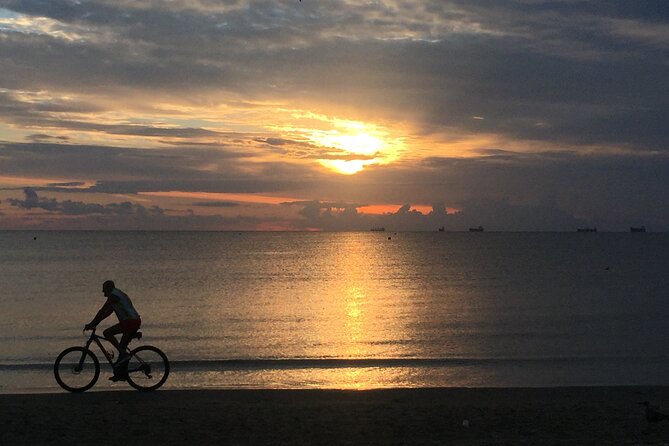
The final outdoor section takes you toward the former changing rooms built in 1905. There are amusing stories connected with the building, which offers a lighter close after the heavier architectural and historical material.
The tour may also end at a plaza surrounded by small fishermen’s houses. These houses were gently relocated from the site in 1905. That detail brings the route back to Sopot’s earliest identity and shows how the resort town made room for new public facilities.
This ending is especially useful because it sets two versions of Sopot beside each other. You have seen hotels, villas, parks, and spa buildings. Now you see traces of the fishing village that existed before the resort took shape.
The exact end point should be confirmed when booking, since the activity finishes in a different location from the start. That is not a problem, but it matters if you have a train, restaurant reservation, or another timed plan afterward.
The lighthouse climb and what the schedule allows
The Sopot Lighthouse is an optional final stop. You can climb its steps if you want the view, or skip the climb if your legs have had enough. The listed time is about 14 minutes, including the stop.
This flexibility is valuable. The tour already covers a lot in a short window, and not everyone wants to add stairs at the end. If you do climb, the view is considered worth the effort, but the choice remains yours.
The schedule is fairly tight. Several stops last only three to six minutes, while the Grand Hotel, lighthouse, Goyki 3, and Monte Cassino sections receive more time. You should expect a brisk overview rather than a slow photographic walk.
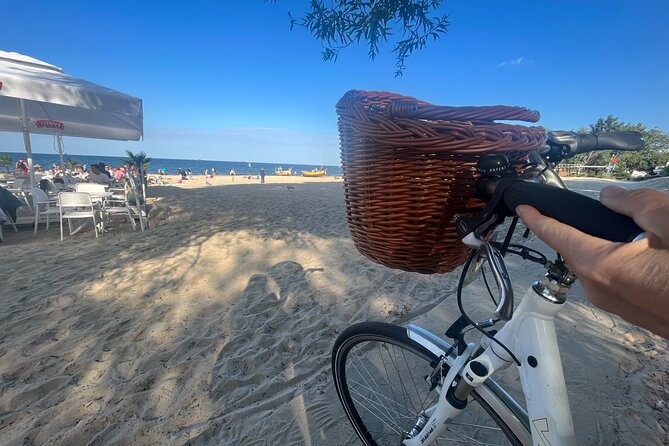
The title allows for a private walking or bike tour. The detailed route is built around a walking sequence through central Sopot, so ask about the bike option when arranging the experience if that is important to you.
What the private price buys you
The price is $204.04 per group of up to nine people. For one or two people, that can feel expensive compared with a shared city walk. For a larger family or group of friends, the cost spreads across everyone and becomes easier to justify.
The main value is not admission savings. Most stops are free, and the tour includes a licensed guide rather than entrance tickets to major museums. You are paying for a private route, local attention, architectural interpretation, old photographs, and the ability to ask questions as you go.
Agnieszka’s style appears particularly well suited to groups that want substance without a lecture. One useful detail from her approach is that she can notice when people need a coffee or refreshment and adapt the experience. She has also guided in Polish, with the language described as understandable even for people who do not speak Polish well, though this booking is offered in English.
The tour is usually booked about eight days ahead, so I would not leave it until the last minute if you want a specific date. Free cancellation is available up to 24 hours before the start time. Changes or cancellations inside that window are not refunded.
Who should book this Sopot tour?
I would choose this experience if you care about architecture, local stories, historic photographs, and the way a town changes over time. It is also a strong choice if you have already seen Sopot’s pier and beach and want something more thoughtful than a basic landmark checklist.
Families and small friend groups may get good value from the private format. Up to nine people can join, and most participants can take part. Service animals are allowed, and the meeting point is near public transportation.
You should think twice if you want long museum visits, extensive free time, or a slow beach walk. The tour enters a few buildings for free, but museums are best handled separately. You also need to be comfortable with a route that includes several short stops and optional lighthouse stairs.
Should you book it?
Book it if you want to understand why Sopot looks the way it does. The best parts are the old photographs, the quieter villa streets, the spa architecture, and Agnieszka Lasota’s ability to connect buildings with artists, residents, and resort life.
Skip it if you only have time for the pier and beach or if the group price does not work for your party. For everyone else, this is a useful private introduction to Sopot, especially when you want to see beyond the famous pedestrian street and understand the town as both a former fishing village and a grand European spa resort.
FAQ
Where does the tour start?
It starts at Restauracja McDonald’s, Bohaterów Monte Cassino 21, 81-706 Sopot, Poland.
Where does the tour end?
The activity ends at a different location from the starting point. The route may finish near the 1905 changing rooms or at the plaza surrounded by relocated fishermen’s houses. Confirm the exact end point when booking.
How long does the tour last?
The approximate duration is between one hour and 30 minutes and two hours.
Is the tour private?
Yes. Only your own group participates, with a maximum group size of nine people.
Is the tour offered in English?
Yes. The experience is offered in English.
Is the lighthouse climb required?
No. The lighthouse visit and climb are optional, so you can decide if you want to take the stairs.
Are entrance tickets included?
The listed stops are free, and the lighthouse admission ticket is included. Museum visits are not part of the included experience and are suggested as separate visits.
Can I cancel for a full refund?
Yes, if you cancel at least 24 hours before the experience start time. Cancellations or changes made less than 24 hours before the start are not accepted for a refund.
More bike tours in the world
- Electric Bike Art and Architecture Guided Tour in Jacksonville
★ 5.0 · 155 reviews - Bike Tour in Barcelona: History, Architecture and Culture
★ 3.5 · 29 reviews - Barcelona: Guided tour e-bike Barcelona historical and modernist Barcelona
★ 4.5 · 5 reviews - Barcelona e-Bike Tour: Gaudí & Old Town Small Group
★ 5.0 · 769 reviews
Just added in the world
- Wilmington History and Architecture Tour★ 4.8 · 18 reviews
- New Orleans : Garden District Architecture Walking tour★ 4.8 · 5 reviews
- Washington DC: Dupont Circle & Embassy Row Architecture Tour★ 5.0 · 6 reviews
- Washington, DC: Georgetown Architecture Walking Tour★ 5.0 · 8 reviews
- Vicenza: Palladian Architecture Private Walking Tour★ 3.3 · 3 reviews
- Walk & Discover KL’s Architectural and Heritage Gems★ 5.0 · 7 reviews
- Private Colonial Williamsburg Architectural Tour★ 5.0 · 5 reviews
- Unveiling Brno: History, Culture & Architectural Delights★ 5.0 · 2 reviews
Segway and Bike Architecture Tours, compared.

Barcelona e-Bike Tour: Gaudí & Old Town Small Group
Read our review →
Palm Springs Modernism Architecture & History Bike Tour
Read our review →
Munich 3-Hour Segway Tour: Nazi Munich & Royal Architecture
Read our review →
Barcelona Bike tour, Gaudí houses or beach bike or eBike tour
Read our review →
Miami Beach Art Deco & History Bike Tour with Design Enthusiast
Read our review →Browse the lists this tour appears in