
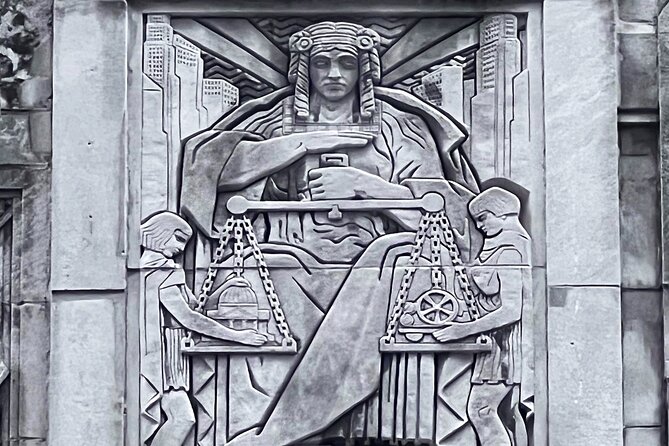
REVIEW · ART DECO TOURS
Chicago Art Deco Madness Walking Tour
Look up, and Chicago changes completely. This 105-minute walk through the Loop and toward North Michigan Avenue brings the city’s 1920s design into focus, with guide Ronnie Frey pointing out details most people hurry past. I especially like the small group, limited to 10 people, and the chance to see selected interiors when buildings are open. The main drawback is that access inside some buildings cannot be guaranteed, so the experience depends partly on the day’s conditions.
I also like the mix of grand office towers, public sculpture, department-store design, and a Gothic church. You get more than a parade of façades. Ronnie connects the decoration to Chicago’s Roaring Twenties, including stories tied to the city’s art, architecture, and mob-era past. Bring comfortable shoes and a weather-friendly attitude, since this is an outdoor walk and it may be canceled in poor weather.
Key points at a glance
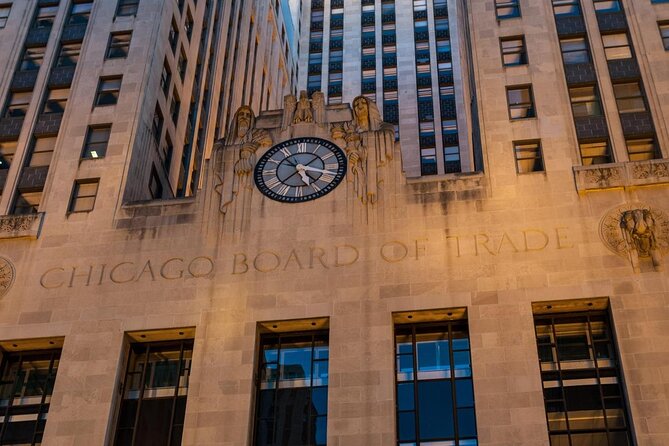
- About seven Art Deco buildings: The walk focuses on some of the Loop’s strongest examples from the 1920s.
- A guide who notices the small stuff: Ronnie Frey points out ornamental details, materials, symbols, and design features that are easy to miss.
- Small group, maximum 10 people: You get a better chance to hear explanations and ask questions than on a large city tour.
- Interiors when open: The Board of Trade lobby, LaSalle Street arcades, Macy’s interior, and Carbide and Carbon lobby add depth to the walk.
- More than Art Deco: The route includes Picasso and Miró sculptures, the First United Methodist Church, and the old Marshall Field clocks.
- A short, manageable city walk: At about 1 hour 45 minutes, it fits neatly into a morning or afternoon in downtown Chicago.
Why Chicago is so good for Art Deco
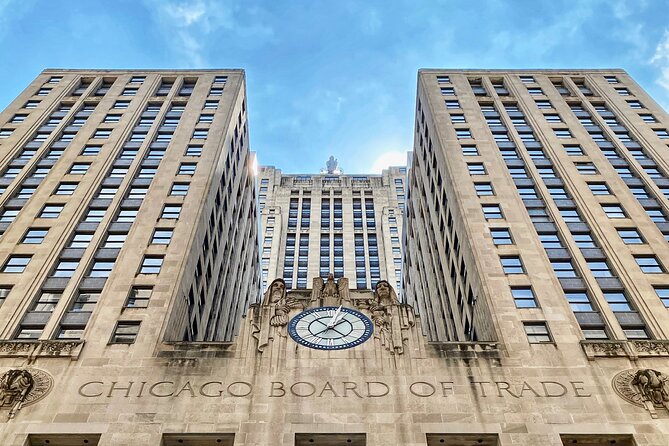
Chicago’s Loop can feel like a canyon of office towers when you first walk through it. The trick is to stop looking only at street level. Art Deco appears in geometric metalwork, stylized figures, patterned stone, bold lettering, decorative elevator surrounds, and carefully planned lobbies.
The buildings on this walk date mainly from the 1920s, when new construction carried a sense of speed, money, machinery, and modern life. Chicago was already famous for architecture, but Art Deco gave its commercial buildings a different mood. The decoration was not shy. It announced progress.
That is where a guide adds real value. I can walk past the same tower several times and notice only its height. Ronnie Frey’s approach, based on interior design and historic architecture, is to make you stop and examine the surface. Once someone points out a repeated pattern or a symbolic figure, the building becomes easier to read.
The route also helps you see that downtown design did not develop in one tidy style. Gothic, Art Deco, modern sculpture, department-store interiors, and civic buildings all share the same few blocks. That variety keeps the walk from becoming a technical lesson in façade decoration.
More Art Deco tours in Chicago:
- Chicago Walking Tour: Art Deco Skyscrapers Loop
★ 5.0 · 138 reviews - Chicago Architecture Walking Tour: Incredible Art Deco Interiors
★ 5.0 · 85 reviews - Chicago Walking Tour: Art Deco Skyscrapers Riverfront
★ 5.0 · 53 reviews
Starting at the Board of Trade
The tour begins at 11 a.m. near 231 South LaSalle Street. The first major stop is the Chicago Board of Trade Building, one of the route’s headline sights.
You begin with exterior details, then move to the interior lobby if it is open. The building gives Ronnie plenty to work with: strong vertical lines, formal ornament, and the kind of carefully planned decoration that rewards a close look. The lobby is especially useful because Art Deco is not just an outside style. Interior walls, floors, ceilings, doors, and lighting can carry the same design language.
Plan on about 20 minutes here. That may sound brief for such a major building, but a focused explanation is better than a rushed attempt to cover every detail. This is also where the small group matters. With no more than 10 people, you should be able to stay close enough to see what the guide is indicating.
The Board of Trade is likely to be the most memorable stop for anyone who already loves 1920s architecture. If you have limited interest in design, Ronnie’s stories and the building’s connection to Chicago’s financial district help give the ornament a wider setting.
A distant look at a striking red sculpture follows. The stop is quick, but it gives the walk a change of pace before returning to LaSalle Street buildings.
LaSalle Street’s decorated interiors
At 135 South LaSalle Street, the tour spends about 15 minutes examining the exterior and the interior arcade when open. Arcades are valuable stops because they let you see how an architect carried a building’s visual identity from the street into a shared public space.
You might notice the contrast between the practical purpose of an office building and the care given to its decoration. These were working buildings, not museums, yet their entrances and public areas were designed to impress. That tension is part of what makes Chicago’s old commercial architecture so interesting.
The next stop, One North LaSalle Street, also includes the exterior and interior lobby when access permits. Again, the focus is on the details rather than simply taking a photograph and moving on. Ronnie’s explanations help you separate Art Deco from the many other forms of early 20th-century ornament seen downtown.
At 33 North LaSalle Street, the attention stays outside for about 10 minutes. That is a useful reminder to keep looking upward. You do not need a ticket for these stops, but you do need to pay attention to traffic, pedestrians, and the pace of the group.
The interiors are a bonus, not a promise. Building access can change, and the tour information specifically notes that lobby and arcade visits happen when open. If seeing every interior is essential to you, keep your expectations flexible.
A Gothic church in the middle of the walk
The First United Methodist Church of Chicago brings a different architectural language into the route. You spend about five minutes looking at the exterior Gothic details and viewing photographs of the interior.
The church is described as the tallest church in America and as a chapel in the sky. Even with a short stop, it broadens the tour. You see how the city’s vertical ambition was expressed through religious architecture as well as office towers.
This is not a full church visit, and the interior is represented through photographs. Still, the stop keeps the tour from becoming too narrow. You are not simply comparing one Art Deco façade with another. You are seeing how different buildings used height, decoration, and symbolism to shape Chicago’s streets.
More walking tours in Chicago:
- Chicago in a Day: Food, History & Architecture Walking Tour
★ 5.0 · 1,153 reviews - Chicago’s Secret Interiors Architectural Walking Tour
★ 5.0 · 635 reviews - Chicago: Secret Interiors Architecture Walking Tour
★ 4.9 · 498 reviews - Chicago Architecture Walking Tour: What’s New
★ 5.0 · 64 reviews
Picasso, Miró, and public art
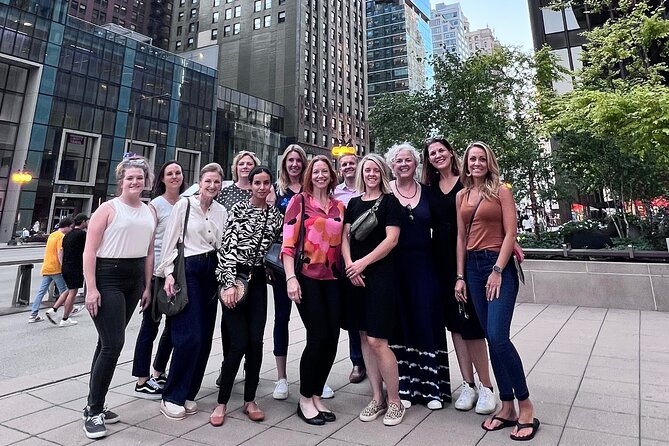
The route then shifts outdoors to Miro’s Chicago and the Picasso, two famous public sculptures. Each stop takes about two minutes, so do not expect an extended sculpture lesson.
These brief pauses work well as visual punctuation. After several buildings filled with geometric ornament and historic detail, the sculptures remind you that Chicago’s public art scene extends beyond its older architecture.
The Picasso is particularly useful in this context because it is one of the city’s best-known public artworks. Miro’s Chicago adds another major name and another bold form. If you already know these sculptures, the stops may be quick photo opportunities. If you do not, Ronnie can place them within the broader art-and-design character of downtown.
The short timing also keeps the walk moving. You are not spending 10 minutes at every point, which helps the 1-hour-45-minute format feel manageable.
Macy’s and the old Marshall Field interior
Macy’s on State Street is one of the most varied stops. Inside the former Marshall Field department store, you see Art Deco motifs, the famous Tiffany Glass atrium, and the old Field’s bronze clocks associated with the meet me under the clock meeting place.
This stop adds a different kind of atmosphere. Office towers can feel formal and distant. A department store interior was designed for people to linger, shop, meet, and look around. The decorative elements were part of the experience, not just an architectural afterthought.
The 7-ton bronze clocks are a memorable detail because they connect grand design with ordinary city life. They were not merely decorative objects. They became a practical landmark for people arranging to meet downtown.
You get about 10 minutes here. That is enough for a pointed introduction, though anyone fascinated by Tiffany glass or department-store history may wish for more time afterward. If you want to explore Macy’s independently, the tour gives you a useful starting point and a reason to look up instead of heading straight for the merchandise.
Finishing at the Carbide and Carbon Building
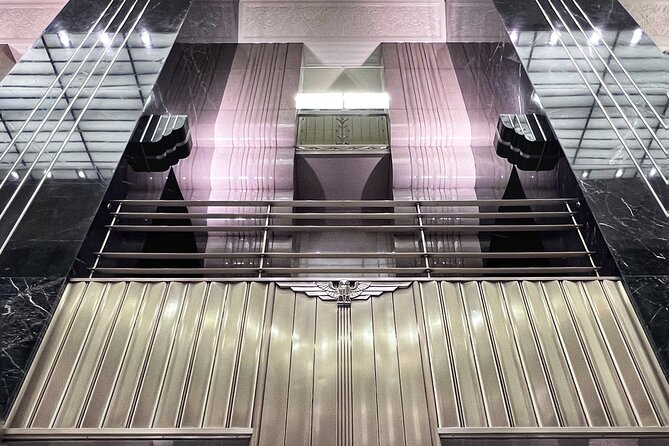
The final major stop is the Carbide and Carbon Building, near the tour’s endpoint at 68 East Wacker Place. The building is known for its green terra-cotta exterior, an unusual color that makes it easy to spot among Chicago’s stone and steel towers.
You examine the Art Deco details outside and visit the interior lobby when open. This is a strong finish because the building has an instantly recognizable personality. The green terra cotta, ornament, and vertical form make it a satisfying last chapter in a tour built around surface details.
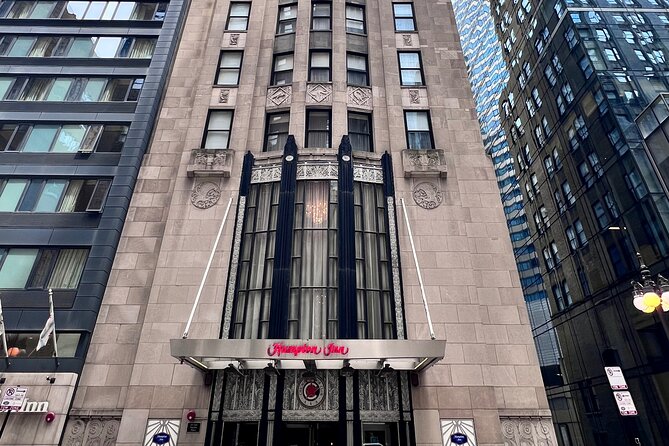
The finish near the Chicago Motor Club Building, now associated with Hampton Inn Loop, also leaves you in a useful downtown location. The tour does not return you to the starting point, so think of it as a one-way walk. That is convenient if you plan to continue toward the river, Michigan Avenue, or other central sights.
What the guide adds
Ronnie Frey is repeatedly praised for being engaging, organized, funny, and enthusiastic about Chicago design. Those qualities matter here because Art Deco can become a vocabulary exercise if the explanation is too technical.
A good guide helps you connect a decorative motif to its purpose and period. Ronnie’s style appears to lean toward stories, specific observations, and the thrill of turning a corner to find another carefully designed building. He also brings in Chicago history, art, architecture, design, and some mob-era context tied to the 1920s.
That broad approach suits you if you enjoy learning why a place looks the way it does. You do not need to arrive as an architecture specialist. The tour is also useful for locals who have seen these buildings many times but have never stopped to examine them.
The strongest praise centers on three things: Ronnie’s enthusiasm, his ability to point out overlooked details, and the sense that the walk is both informative and fun. Several people also describe it as an easy walk, though you should still be comfortable walking outdoors for nearly two hours.
Price, group size, and practical value
At $45 per person, this is not the cheapest way to walk through downtown Chicago. You can see most of the buildings from public streets without paying an admission fee.
The value comes from the interpretation. You are paying for a planned route, access to a specialist guide, historical context, and the chance to see selected interiors when open. For someone who would otherwise pass these buildings without noticing their decoration, that can be money well spent.
The maximum group size of 10 is another part of the value. A small group makes it easier to hear, ask a question, and gather around a detail without standing at the back of a crowd. It also gives the experience a more personal feel.
The tour uses a mobile ticket and begins near public transportation. Service animals are allowed. You should have a moderate level of physical fitness, wear comfortable shoes, and allow for outdoor conditions. Since the experience requires good weather, poor conditions may lead to a new date or a full refund.
The booking is non-refundable and cannot be changed for personal reasons. That makes weather and scheduling worth checking before you commit.
Who should book this walk
I would recommend this tour most strongly if you:
- Like architecture, interior design, public art, or Chicago history.
- Want a focused downtown walk rather than a broad city sightseeing tour.
- Enjoy learning how to notice details you would otherwise miss.
- Prefer a small group and a guide-led experience.
- Have already seen the Loop and want a new way to read it.
- Want a compact activity that fits into a morning.
It may be less suitable if you want extensive time inside every building, a fully sheltered activity, or a long stop at each sculpture. The interior portions depend on access, and several stops are short by design.
Should you book the Chicago Art Deco Madness Walking Tour?
Book it if you want Chicago’s downtown buildings to become more legible. The route is short enough for most city visitors, the group is capped at 10, and the mix of Art Deco towers, old department-store interiors, public sculpture, and Gothic architecture gives you plenty to look at.
I would be especially keen to take it early in a Chicago visit. Once Ronnie has shown you the patterns, lobbies, clocks, terra-cotta details, and decorative symbols, you can keep spotting them on your own for the rest of your stay.
Skip it only if you need guaranteed interior access or dislike walking in uncertain weather. For architecture fans, design-minded visitors, and curious first-time visitors, $45 buys more than a stroll. It teaches you how to see the Loop.
FAQ
How long is the Chicago Art Deco Madness Walking Tour?
The tour lasts approximately 1 hour and 45 minutes.
How much does the tour cost?
The price is $45 per person.
Where does the tour begin?
It begins at Wintrust Mortgage, 231 South LaSalle Street, on the fourth floor, in Chicago, Illinois.
What time does the tour start?
The scheduled start time is 11 a.m.
Where does the tour end?
The tour ends at 68 East Wacker Place, near the Chicago Motor Club Building and Hampton Inn Loop.
How large is the group?
The tour has a maximum of 10 people.
Are the building interiors guaranteed to be open?
No. Interior visits at places such as the Board of Trade, 135 South LaSalle Street, One North LaSalle Street, Macy’s, and the Carbide and Carbon Building take place when those areas are open.
What happens if the weather is poor?
If the tour is canceled because of poor weather, you are offered a different date or a full refund.
Just added in Chicago
- Private Frank Lloyd Wright Architectural Tour by Luxury Vehicle★ 3.5 · 7 reviews
- Private Chicago Architecture Tour★ 5.0 · 5 reviews
- Chicago Luxury Minibus City Tour and Architecture River Cruise★ 4.5 · 8 reviews
- Chicago History and Architecture Walking Tour with Boat Cruise★ 4.5 · 10 reviews
- Private Chicago Architecture Walking Tour★ 5.0 · 6 reviews
- Small Group History And Architecture Walking Tour of Chicago★ 4.5 · 8 reviews
- Chicago Walking Tour: See Inside Art Deco Masterpieces★ 4.9 · 8 reviews
- Chicago: Icons Guided Architecture Walking Tour★ 4.4 · 4 reviews
Art Deco Tours, compared.

The Official Art Deco Walking Tour by The Miami Design Preservation League
Read our review →

Guided 10am Morning Art Deco Walk From Napier Art Deco Trust
Read our review →
Award-winning Art Deco & Neon Lights Walking Tour in Miami Beach
Read our review →
Browse the lists this tour appears in