
REVIEW · SELF-GUIDED AUDIO TOURS
Woodlawn Cemetery: A Self-Guided Audio Tour of Gilded Age Art and Architecture
Cemeteries can tell the best New York stories. This self-guided walk through Woodlawn Cemetery combines grand Gilded Age architecture with juicy tales about Irene Castle, Alva Vanderbilt Belmont, Claude Fitch, and Barbara Hutton. I like the freedom to start when you want and linger as long as you please. I also like the easy GPS directions, offline audio, and background music that adds atmosphere without drowning out the narration.
The main drawback is that this is an audio tour, not a live guided walk. You need your own smartphone and headphones, and the non-refundable $14.99 price leaves little room for a change of plans. Still, for a two to two-and-a-half-hour outing just minutes from Manhattan by subway, it offers an unusual look at New York’s wealthy, famous, eccentric, and sometimes unlucky past.
Five things to know before you go
- The stories are the main attraction: The tour focuses less on dates and funerary customs and more on the remarkable lives behind the monuments.
- Tom Darbyshire provides the narration: His New York advertising background and taste for scandal give the tour a lively storytelling style.
- You control the pace: GPS playback starts as you reach each location, and you can pause, linger, or finish later.
- The setting is an arboretum: More than 390 tree species share the grounds with sculpture, mausoleums, and memorials.
- It ends at Barbara Hutton’s crypt: Her seven marriages, including five to royals, make a fitting final chapter for this tour of wealth and status.
Why Woodlawn Cemetery is worth the subway ride
Woodlawn Cemetery sits at 3800 Jerome Avenue in the Bronx, a short subway trip from Manhattan. That location matters. You get a major New York experience without the crowds and noise that often follow the city’s better-known attractions.
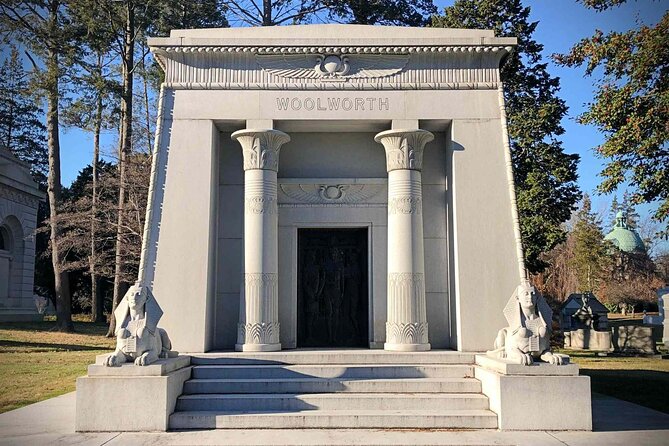
The cemetery is a National Historic Landmark, but this tour does not treat it as a silent parade of dates and names. Instead, it uses the buildings as entry points into New York society. The grand mausoleums matter because of the people who built them, the fortunes behind them, and the ambitions they reveal.
I like that balance. You see art, sculpture, trees, and architecture, but the narration keeps asking the more interesting question: who was this person, and what did he or she do with money, fame, or social influence?
Woodlawn also works well for visitors who prefer an independent outing. There is no group to keep up with and no guide waiting for late arrivals. You simply install the VoiceMap app, enter the code supplied after booking, follow the directions to the starting point, and tap start when you are ready.
More self-guided audio tours in the USA:
- Self-Guided Audio Tour – Miami Art Deco
★ 3.0 · 7 reviews - Philadelphia Architecture: Discover Every American Style on a GPS Audio Tour
★ 5.0 · 2 reviews - Gaudi and La Sagrada Familia Exterior Self-Guided Audio Tour
★ 3.5 · 25 reviews
Starting at Woodlawn Conservancy
The tour begins at Woodlawn Conservancy. This gives you a practical place to get oriented before the route moves among the cemetery’s monuments and trees.
The app provides turn-by-turn directions and automatic GPS playback. As you approach the correct point, the next section begins. That feature is useful here because a large cemetery can feel confusing at first. You do not need to keep checking a written route every few minutes.
The audio is produced and narrated by Tom Darbyshire, a New York advertising creative director whose interest in Woodlawn led him to create the tour. His approach is story-first. Rather than giving you a dry list of burial dates, he introduces characters, personal drama, social ambition, and forgotten careers.
The route points out sculpture and architectural details along the way. It also calls attention to the cemetery’s more than 390 tree species. That makes the walk feel less like a museum visit and more like a slow outdoor tour, with monuments appearing among carefully planted greenery.
Bring headphones that are comfortable for a long walk. You will also want a fully charged phone, since your device handles the app, audio, maps, and GPS data. The tour works offline once the material is available, which is helpful if your signal becomes unreliable inside the grounds.
Gilded Age architecture without the museum admission
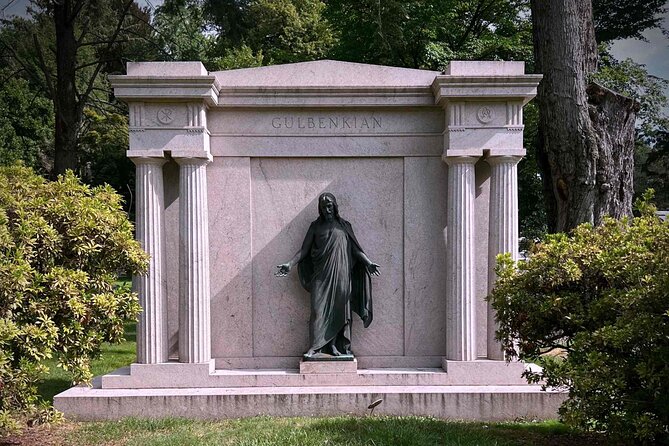
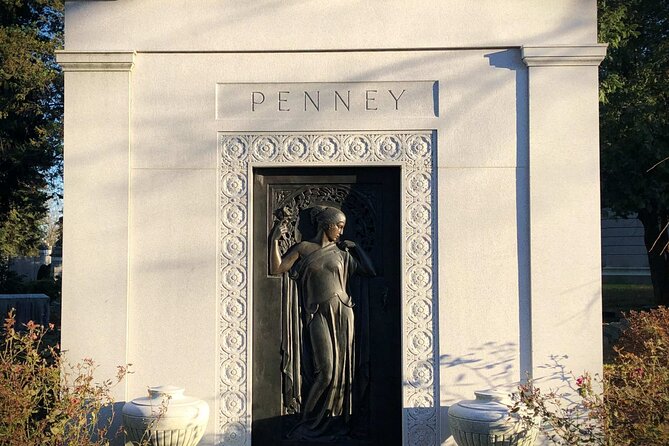
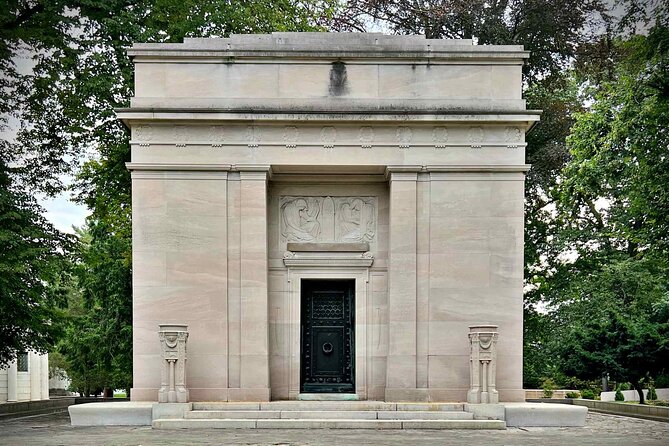
Woodlawn’s large crypts and mausoleums are the visual draw. These buildings reflect the era when New York fortunes were turned into private monuments. Some are restrained, while others make a grand public statement about family name and social rank.
I find the self-guided format well suited to this subject. You can stop to study a carved detail, photograph a memorial, or simply sit beneath a tree without holding up a group. The audio can continue when you are ready.
The tour also helps you see why the cemetery is more than a collection of graves. The sculpture and buildings are part of the story. They show how wealthy New Yorkers wanted to be remembered, and how the language of art, architecture, and family prestige worked together.
The route’s central idea is clear: the largest structure is not always the most interesting stop. A modest memorial can become memorable when you hear the life connected to it. That shift in attention is one of the tour’s strengths.
Still, you should know what this experience is not. It does not include entry to museums or other attractions along the way. It is also not a formal architectural lecture. If you want detailed information about every design feature, you may find the storytelling approach selective. The tour chooses the most colorful people and episodes rather than trying to explain every monument.
Irene Castle and the invention of a modern image
One of the most memorable figures on the route is Irene Castle. She was a dancer credited with inventing major parts of the 1920s flapper look.
That detail gives the tour a lively connection to fashion and popular culture. Her story is not just about a person buried in an impressive cemetery. It shows how a performer could shape the way women dressed, moved, and presented themselves in public.
This is exactly the sort of connection that makes the route work. You may arrive expecting old tombs and Victorian stonework. Instead, you find links to dance, celebrity, fashion, and changing social habits.
The story also adds a human scale to the architecture. A mausoleum can seem distant or severe when viewed alone. Once the audio explains the person associated with it, the building becomes part of a larger story about fame and influence.
A few more architecture tours in the USA worth a look
- Self-Guided Tour of Ísafjörður: Art, History, and Architecture
★ 5.0 · 23 reviews - Bastille’s Architecture & Artisans Self-Guided Walking Tour
★ 4.5 · 18 reviews - Palau Guell by Gaudi with Audio Guide in Barcelona
★ 4.5 · 13 reviews - Self-Guided Audio Tour-The Surrealist Barcelona of Dalí and Gaudí
★ 3.5 · 8 reviews
Alva Vanderbilt Belmont and New York society
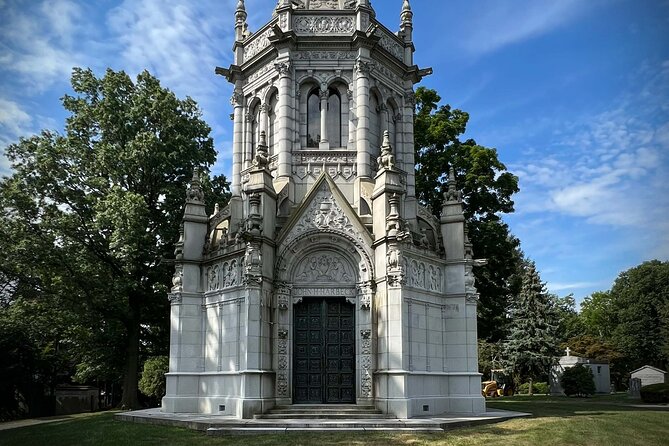
Alva Vanderbilt Belmont is another major stop. She is presented as a real-life inspiration for HBO’s The Gilded Age, which gives her story an immediate connection to modern popular culture.
Her inclusion helps explain the social world represented at Woodlawn. This was an age of fortunes, family names, carefully managed reputations, and fierce competition for status. The cemetery becomes a quiet record of those ambitions.
I appreciate that the tour does not limit itself to men who built businesses or made money. Alva Vanderbilt Belmont represents the powerful social figures who shaped New York through family connections, public identity, and personal force.
For fans of The Gilded Age, this stop may be the strongest reason to book. You get a real place connected to the type of society portrayed on screen, without pretending that television drama and historical life are identical. The audio uses her as a doorway into the period rather than as a simple celebrity reference.
Claude Fitch and the forgotten side of Broadway
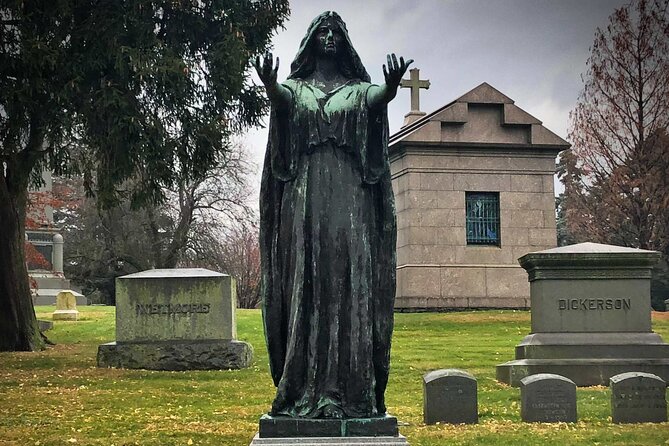
Claude Fitch provides a different kind of story. He was Broadway’s most successful and now largely forgotten playwright.
That description points to one of the cemetery’s pleasures: fame does not last evenly. Some people remain household names, while others fade even after major success. Woodlawn gives both types of figures a permanent setting.
I like this part of the tour because it encourages you to question the usual New York history. Broadway has always produced stars, writers, producers, and hitmakers, but public memory keeps only a fraction of them. Claude Fitch’s presence adds a note of rediscovery without turning the tour into a list of famous names.
It also gives the route a useful change of pace. Irene Castle connects to dance and fashion. Alva Vanderbilt Belmont connects to social power. Claude Fitch brings in theater and the short life of public fame.
Anna Bliss and the Titanic Memorial
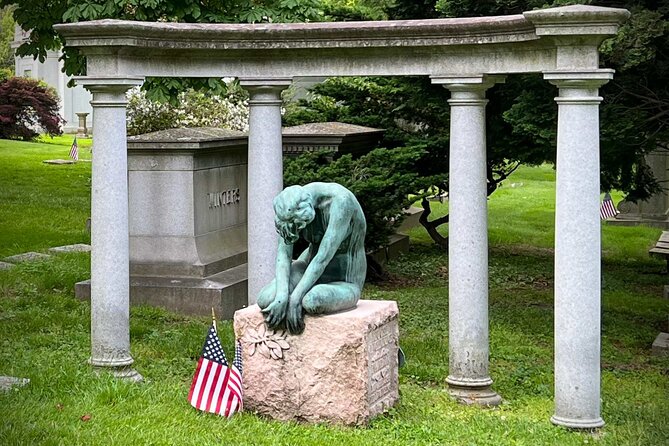
The Anna Bliss Titanic Memorial adds a more solemn moment. Titanic memorials carry an emotional weight that grand family mausoleums do not. They connect one person to a widely remembered disaster and to the many ways people tried to preserve its memory.
This stop helps prevent the tour from becoming only a procession of wealthy personalities. The cemetery holds stories of public tragedy as well as private fortune. The memorial offers a pause between the more theatrical stories of dancers, social leaders, and playwrights.
You may also find this section useful if you enjoy memorial art. The tour points out the work as part of the cemetery’s sculpture and architecture, so you are encouraged to look closely rather than merely pass by.
Ending with Barbara Hutton’s fortune and seven marriages
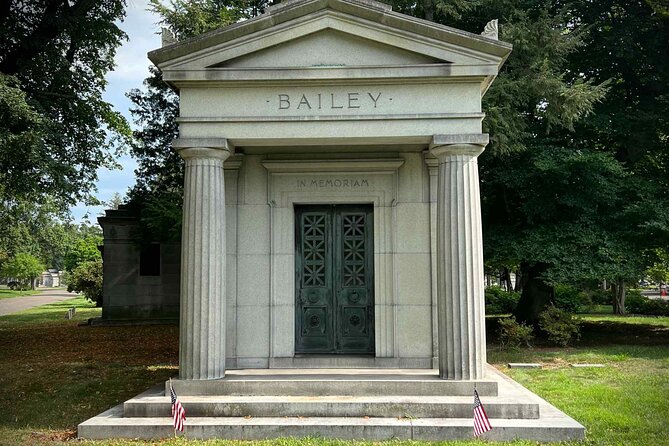
The route ends at the crypt of Barbara Hutton. Known as the Poor Little Rich Girl, Hutton inherited a vast fortune and married seven times, including five marriages to royals.
It is a very New York ending: money, titles, glamour, and unhappiness all in one biography. Her crypt gives the tour a final reminder that wealth does not guarantee a simple life, and that social status can become its own kind of burden.
Ending here also gives the walk a strong narrative shape. You begin with Woodlawn as a place of art and architecture, meet a series of famous and forgotten characters, and finish with one of the cemetery’s most striking stories of inherited wealth.
The final stop is in front of the crypt, not inside it. You should expect to view the exterior and listen to the narration outdoors. As with the other stops, the experience depends on the setting, the audio, and your willingness to pause and look.
How the GPS audio format works in practice
VoiceMap supplies the audio, maps, geodata, and offline access through its Android and iOS app. After booking, you receive a ticket with instructions and a unique code under Before You Go.
Once the app is installed and the code is entered, it directs you to the starting point. When you reach the right place, you put on your headphones and tap start. The GPS system then plays the relevant sections as you move.
That format gives you genuine control. The estimated duration is two to two-and-a-half hours, but you can pause at any stop or spend longer with the trees, sculptures, and buildings. You can also use the tour again before your booking date and after it, and a virtual version is available at home.
The tradeoff is that the app does not replace a person standing beside you. If you have a question about a monument, there is no live guide to answer it. The tour works best for someone who enjoys listening, looking, and setting their own rhythm.
The audio includes background music and sound effects. They add atmosphere without overwhelming the stories, which is important in a place where silence and natural sounds are part of the experience.
Price, timing, and practical value
At $14.99 per person, this is reasonably priced for an outing lasting up to two-and-a-half hours. You are paying for lifetime English access, offline materials, and the freedom to use the tour more than once, rather than for a timed group admission.
The value is strongest if you care about storytelling and independent sightseeing. A live private tour would likely cost more, while a simple walk through the cemetery would give you the setting but not the context supplied by the audio.
You should bring your own smartphone and headphones. Food, drinks, transportation, and admission to any museums or other attractions are not included. Since the experience is non-refundable and cannot be changed after booking, check your schedule before paying.
The published opening hours run from midnight to 11:59 p.m. every day during the stated operating period. Even so, I would choose daylight for a cemetery walk, since the architecture, trees, and sculpture are central to what you are seeing.
Who will enjoy this Woodlawn tour most?
I would recommend it to:
- People who enjoy New York history told through personal stories
- Fans of Gilded Age society, Broadway, fashion, and old fortunes
- Visitors who prefer small-scale outings away from the busiest attractions
- Independent walkers who like to pause, restart, and set their own pace
- Anyone interested in sculpture, mausoleums, memorials, and historic cemeteries
- Fans of The Gilded Age who want a real-world connection to its social setting
It may be less suitable if you want a live guide, a short one-hour activity, or a detailed explanation of every architectural feature. It is also not the best choice if you dislike using your phone while sightseeing.
Should you book it?
I think this is a smart buy for a curious visitor who wants an unusual New York afternoon. The strongest parts are the storytelling, the easy directions, and the way the tour links architecture to people such as Irene Castle, Alva Vanderbilt Belmont, Claude Fitch, Anna Bliss, and Barbara Hutton.
Book it if you can spare two to two-and-a-half hours and enjoy exploring at your own speed. Skip it if you need a flexible cancellation policy or want a live expert beside you. For $14.99, the combination of Gilded Age buildings, famous names, forgotten careers, and a quiet Bronx setting offers solid value.
FAQ
Where does the Woodlawn Cemetery audio tour start?
The tour starts at Woodlawn Conservancy, at Woodlawn Cemetery, 3800 Jerome Avenue, Bronx, New York 10467.
Where does the tour end?
It ends in front of the Barbara Hutton Mausoleum in the Bronx, at ZIP code 10470.
How long does the self-guided tour take?
The estimated duration is two to two-and-a-half hours.
How much does the tour cost?
The listed price is $14.99 per person.
Is transportation included?
No. Transportation to and from Woodlawn Cemetery is not included.
Do I need a smartphone and headphones?
Yes. You need your own smartphone and headphones to listen to the audio through the VoiceMap app.
Does the tour work offline?
Yes. Offline access includes the audio, maps, and geodata.
Can I use the tour more than once?
Yes. The tour includes lifetime access in English, with unlimited use before and after your booking date. A virtual tour option is also available at home.
Is the tour refundable or changeable?
No. The experience is non-refundable and cannot be changed for any reason after booking.
More Audio Tours in the USA
Just added in the USA
- Wilmington History and Architecture Tour★ 4.8 · 18 reviews
- New Orleans : Garden District Architecture Walking tour★ 4.8 · 5 reviews
- Washington DC: Dupont Circle & Embassy Row Architecture Tour★ 5.0 · 6 reviews
- Washington, DC: Georgetown Architecture Walking Tour★ 5.0 · 8 reviews
- Private Colonial Williamsburg Architectural Tour★ 5.0 · 5 reviews
- Tulsa: Art Deco Walking Tour of Tulsa★ 5.0 · 8 reviews
- Monuments and Memorials Architectural Walking Tour★ 5.0 · 17 reviews
- Castle to Capitol: Museums of the National Mall Architecture Tour★ 4.5 · 9 reviews
Self-Guided Audio Tours, compared.

Gaudi and La Sagrada Familia Exterior Self-Guided Audio Tour
Read our review →
Self-Guided Tour of Ísafjörður: Art, History, and Architecture
Read our review →
Bastille’s Architecture & Artisans Self-Guided Walking Tour
Read our review →
Palau Guell by Gaudi with Audio Guide in Barcelona
Read our review →
Self-Guided Audio Tour-The Surrealist Barcelona of Dalí and Gaudí
Read our review →

Riga’s Architecture: A self-guided audio tour of the city’s art nouveau history
Read our review →
Philadelphia Architecture: Discover Every American Style on a GPS Audio Tour
Read our review →Browse the lists this tour appears in