
REVIEW · BARCELONA ARCHITECTURE TOURS
Visit to the Modernist houses of the Americans
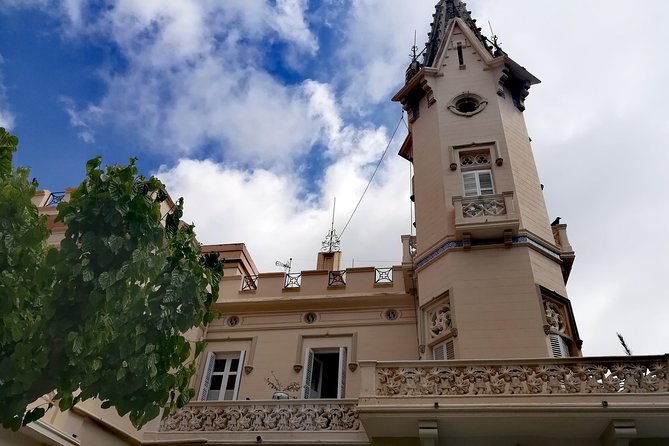
Look up in Sitges and history appears. This private walking experience connects the town’s striking modernist houses with the stories of local people who went to Cuba and returned with money, new ideas, and grand ambitions. I like the focus on ordinary streets and personal stories, and I like the chance to see a garden inside one of these former homes when access is possible. The main drawback is the unclear duration: the booking information says approximately 1 to 30 minutes, while the actual experience may last about 90 minutes or, with food and drinks, closer to three hours.
The walk begins at Sitges railway station at 6:00 pm and finishes by the Monument to El Greco on the seafront. This is a private outing, so your group has the guide’s attention rather than being folded into a large crowd. The route is easy to reach by public transport, but you should confirm the expected length and whether tapas, cava, and beer are included before paying the $34.70 per person.
Key points at a glance
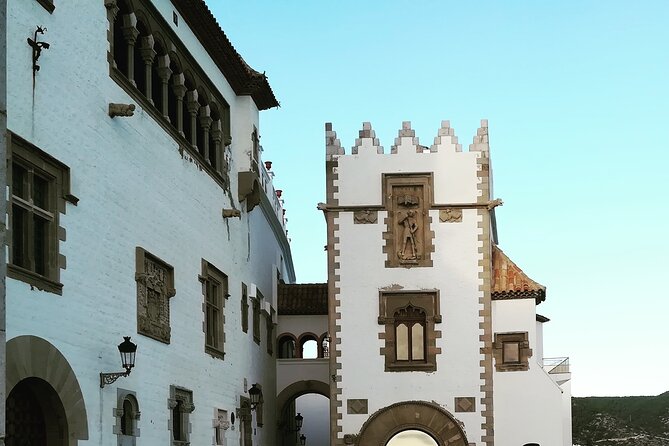
- Isla de Cuba street: See some of Sitges’ most memorable Americanos houses along a street named for the destination that shaped their fortunes.
- House Bartomeu Carbonell: Admire the famous modernist trencadís decoration at one of the town’s best-known buildings.
- Stories behind the façades: Learn how Sitges residents who went to Cuba returned in the late 19th century and changed the look of the town.
- Possible garden access: The route may include entry to a garden now connected with a hotel, though access is not guaranteed.
- Private evening timing: Meet at Sitges station at 6:00 pm and walk to the Monument to El Greco on the Passeig de la Ribera.
- Optional food and drinks: A longer version has included three tapas stops with cava and beer, enough to turn a short architecture walk into a relaxed evening.
Why the Americanos houses matter in Sitges
Sitges is often treated as a sunny seaside escape, but its grand houses tell another story. In the late 19th century, some residents left for Cuba and other parts of the Americas hoping to make money. Those who returned successfully were known locally as Americanos.
Their fortunes changed more than their bank accounts. They came home with money to build large houses, decorate them in fashionable styles, and display their success on central streets. The result is a town where a short walk can reveal elaborate façades beside ordinary shops and apartment buildings.
I find this context useful because it keeps the architecture from becoming a parade of pretty fronts. You are not simply checking off buildings. You are looking at the public face of a social change: people left a small Catalan town, made their fortunes overseas, and returned determined to show what they had achieved.
The experience also gives you a different way to read Sitges. Instead of focusing only on the beach, nightlife, or art scene, you see how ambition and overseas connections shaped the town. The houses become clues to the lives of their owners.
A few more architecture tours in Barcelona worth a look
- Barcelona: Sant Pau Recinte Modernista Entry Ticket
★ 4.6 · 2,567 reviews - Barcelona: Sagrada Familia, Modernism, and Old Town Tour
★ 4.7 · 1,621 reviews - Ramblas, Old Town, Gothic and Gaudi Architecture Walking Tour
★ 5.0 · 723 reviews
Starting at Sitges station at 6:00 pm
The meeting point is Estació Renfe Sitges, at 08870 Sitges, Barcelona. This is practical if you arrive by train, and the fixed evening start gives you time to reach town earlier in the day.
You should arrive a little before 6:00 pm. The experience is private, so finding the guide promptly matters more than it would on a large group tour. The destination is easy to identify, but the available information does not name a precise sign, café, or meeting landmark at the station.
The timing works well for a walking route through town. You begin after the heat of the afternoon, and the experience ends near the seafront. If your booking includes food and drinks, the evening schedule may feel more natural than a quick daytime architecture lesson.
Still, I would clarify the timing before setting other plans. The stated duration is unusually vague, listed as approximately 1 to 30 minutes, while the experience descriptions indicate a 90-minute walk and, in one version, a three-hour outing with food and drinks. Those are very different commitments.
Isla de Cuba street and the Americanos façades
The first major part of the route is Isla de Cuba street. Its name points directly to the overseas connection behind many of Sitges’ grand houses. This is where the subject becomes especially clear: the street is not just attractive, it is part of the story.
You can expect to pause outside some of the most emblematic modernist homes in Sitges. The guide explains the owners, the journey to Cuba, and the reasons these returning residents built houses that looked so different from the older town around them.
The value here is in the details that are easy to miss alone. A façade can look decorative from a distance, but a guide can connect its form to the person who commissioned it and the wider fashion of the period. I like this kind of walking tour because it gives you a reason to slow down and look above street level.
You should not expect every building to function as a museum. Much of the route takes place outdoors, and some properties are private or have been converted to other uses. The pleasure comes from understanding the street as a whole rather than entering every address.
That also means the experience suits people who enjoy architecture but do not need a formal museum visit. You get a compact introduction to Sitges’ modernist character while walking through the town’s real streets.
The possible garden visit
One particularly appealing feature is the chance to enter a garden belonging to one of these houses. The property is now connected with a hotel, and access is not always possible.
That qualification matters. You should treat the garden as a possible bonus, not a guaranteed part of the ticket. Hotel operations, private events, or access rules may prevent entry on a particular evening.
If the garden is open, it adds something that a street-level walk cannot provide. You may see how the house relates to its private outdoor space, and the setting can help you picture how these wealthy families lived away from the public façade.
I would ask about access when booking or shortly before the tour. Even if the garden is closed, the main route still covers the houses and their stories. The important point is to arrive with realistic expectations rather than assuming you have bought a full interior tour.
Same city, a different building to stand in front of:
- Barcelona: Park Güell and Gaudí House Museum Entry Ticket
★ 4.5 · 6,326 reviews - Barcelona: Gaudí’s Park Güell Tour with Fast-Track Ticket
★ 4.8 · 4,512 reviews - Sagrada Familia & Gaudi Tour Private or Small Group with Tickets
★ 4.5 · 1,188 reviews - Complete Gaudi Tour: Casa Batllo, Park Guell & Sagrada Familia
★ 5.0 · 1,152 reviews
House Bartomeu Carbonell and its trencadís decoration
The route continues to House Bartomeu Carbonell, one of Sitges’ most recognizable modernist buildings. Its decoration includes trencadís, the broken-tile mosaic style associated with Catalan modernism.
Trencadís is easy to appreciate even if you know little about architecture. Instead of using large, uniform tiles, builders arrange irregular pieces to create color, texture, and pattern. On a building such as House Bartomeu Carbonell, the effect gives the façade a lively surface that changes as the light shifts.
This stop is also important because it sits at a central meeting point in town. Many of Sitges’ festivities take place here, and the area connects with the town’s commercial streets. You therefore get both architecture and a sense of how the building functions in local life.
I like that combination. A house can be historically important, but it becomes more memorable when you understand where it sits in the daily rhythm of the town. This is not an isolated monument at the edge of Sitges. It occupies a place people pass through, use, and recognize.
At the same time, expect a public view rather than a guaranteed interior visit. The details of the façade do most of the work, and the guide’s explanation helps you notice the decoration instead of walking past it on the way to the shops.
From a 90-minute walk to a three-hour evening
The core experience appears to be a historical walk of about 90 minutes. That is a sensible length for visitors who want a focused introduction without giving up the whole evening.
A longer version has included three stops for tapas, cava, and beer. The food and drinks were described as generous enough that some people found there was more than they could finish. If your booking includes this arrangement, the outing becomes part architecture tour and part social evening.
You should confirm this detail carefully because the published duration and the food description do not line up neatly. The price is $34.70 per person, which can be fair for a private guided walk, especially if the guide provides access to a garden and the fee includes several tastings. It is less compelling if you expect a long tour with food but receive only a short outdoor route.
I would ask two direct questions before booking:
- How long will the walking portion last?
- Are the tapas, cava, and beer included in the $34.70 price?
Those answers will tell you how to judge the value. For a private 90-minute architecture walk, the price pays for a personal guide and a carefully chosen theme. For a three-hour food and history evening, the same price may be especially attractive if the drinks and tapas are included.
The food element also changes the pace. You are not rushing from one façade to the next. You can stop, talk, and let the stories settle. If you prefer a brisk architectural tour, however, the longer version may feel less focused.
What the private format changes
Only your group takes part. That gives the guide room to adjust the pace and explain details that interest you. You can ask about a particular house, the Americanos, modernist decoration, or the changes Sitges has seen since the houses were built.
A private format also means the experience may feel more personal than a standard town walk. The route can be easier to follow, and the guide can spend more time on questions rather than moving a large group along.
The tradeoff is that private tours often work best when the group arrives with some curiosity. If everyone wants a different kind of outing, the guide may need to balance architecture, local history, food, and sightseeing. You should tell the guide at the beginning if you want the emphasis placed on buildings or on the food stops.
Rosa is named in the tour correspondence, so you can ask whether she will be leading your visit. One account describes her as very pleasant, while another thanks her for opening access to several properties and explaining the lives behind them. Since guide assignments can change, treat Rosa’s participation as something to confirm rather than a promise.
Practical walking advice for your evening
The start and finish are in different parts of Sitges. You begin at the railway station and finish at the Monument to El Greco on the Passeig de la Ribera, directly in front of the monument.
That makes the route useful if you plan to continue along the seafront afterward. It also means you should not arrange to collect belongings at the station immediately after the tour unless you have allowed time to return.
The outing is described as accessible to most participants, and service animals are allowed. It is near public transportation. The available information does not specify step-free access at every stop, the condition of sidewalks, or the exact walking distance, so you should contact the provider if you have mobility concerns.
Good weather is required. If poor weather cancels the experience, you can choose another date or receive a full refund. For a route centered on façades, gardens, and town streets, that policy makes sense, but you should avoid scheduling it as your only fixed activity in Sitges.
Who will enjoy this Sitges experience most
I would recommend the walk to you if you enjoy architecture, local stories, and a slower look at a town beyond its headline sights. It is especially useful if you have already seen the beach and want to understand why Sitges has such an unusual collection of grand houses.
It also suits couples, families with older children, and small groups who prefer a private guide. The straightforward subject gives children a clear visual task: find the unusual tiles, towers, balconies, and decorative details.
Food-focused visitors may also like the longer format. Three tapas stops with cava and beer can turn the experience into a full evening, but only if those inclusions are confirmed before booking.
I would hesitate if you want a guaranteed interior tour, a fixed three-hour schedule, or a fully specified museum-style visit. Garden entry is not always possible, and the duration needs clarification. You may also find the experience too short if you want detailed coverage of many buildings rather than a focused introduction to two main areas.
Should you book the modernist houses tour?
Book it if you want a personal introduction to Sitges’ Americanos houses and like the idea of linking architecture with real people and overseas fortunes. The Isla de Cuba street stop, House Bartomeu Carbonell, the trencadís details, and the possible garden visit give the route more character than a simple photo walk.
At $34.70 per person, the value depends on the final format. I would consider it a good buy for a private 90-minute walk with a strong guide, and an even better one if the price includes three tapas stops, cava, and beer. Confirm the duration, food, and garden access before you commit.
If you prefer a compact, story-led evening in Sitges, this is a sensible choice. If you need a guaranteed interior visit or a precise schedule, ask questions first. That small bit of planning will tell you if this unusual look at Sitges fits your evening.
FAQ
Where does the experience start?
It starts at Estació Renfe Sitges, 08870 Sitges, Barcelona, Spain.
Where does the experience finish?
It finishes at the Monument to El Greco on the Passeig de la Ribera, in front of the monument.
What time does the experience start?
The start time is 6:00 pm.
Is this a private tour?
Yes. Only your group participates in the activity.
Can I enter the gardens of the houses?
Garden access is possible because one garden is now connected with a hotel, but entry is not always available.
Can I cancel for a full refund?
Yes, if you cancel at least 24 hours before the local start time. Cancellations made less than 24 hours in advance are not refunded, and poor weather may lead to a different date or a full refund.
Just added in Barcelona
- Self-Guided Audio Tour-The Surrealist Barcelona of Dalí and Gaudí★ 3.5 · 8 reviews
- Roman & Gotic & Gaudi in Barcelona: private walking tour★ 4.5 · 2 reviews
- Barcelona Gaudi Tour: Sagrada Familia, Casa Batllo & Casa Mila★ 5.0 · 4 reviews
- Barcelona Street Escape: Gaudi and the Hidden Treasure★ 5.0 · 17 reviews
- Gaudi’s Casa Batlló and La Pedrera with Chocolate Tasting★ 5.0 · 5 reviews
- Gaudí & Catalan Modernism Private Walking Tour★ 5.0 · 11 reviews
- Sagrada Familia Private Tour – Unlock the mysteries of Gaudi★ 5.0 · 10 reviews
- 3-Hour Private Gaudi Bike Tour★ 5.0 · 4 reviews
Barcelona Architecture Tours, compared.
Park Güell and Gaudí House Museum Entry Ticket
Read our review →
Gaudí’s Park Güell Tour with Fast-Track Ticket
Read our review →

Sagrada Familia, Modernism, and Old Town Tour
Read our review →
Sagrada Familia & Gaudi Tour Private or Small Group with Tickets
Read our review →
Complete Gaudi Tour: Casa Batllo, Park Guell & Sagrada Familia
Read our review →
Park Güell: Guided Tour with Optional Gaudí Experience Entry
Read our review →
Barcelona e-Bike Tour: Gaudí & Old Town Small Group
Read our review →Browse the lists this tour appears in