
REVIEW · BARCELONA ARCHITECTURE TOURS
Sant Pau Recinte Modernista Entrance Ticket in Barcelona
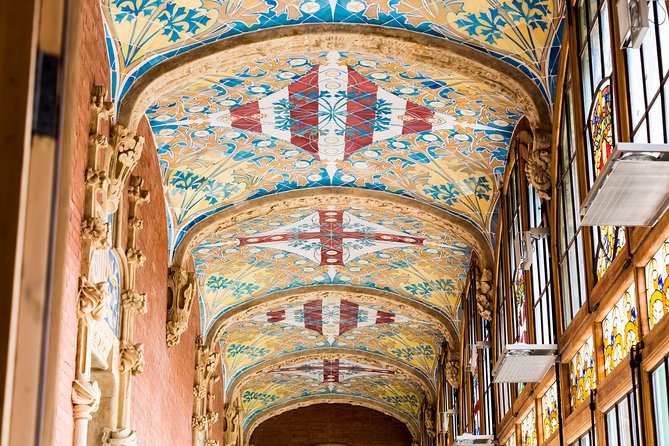
Barcelona hides a hospital masterpiece. Sant Pau Recinte Modernista gives you a calm, self-guided look at one of Europe’s largest Art Nouveau complexes, with restored pavilions, tiled tunnels, gardens, stained glass, and sculpture. I like the freedom to move at your own pace, and I like the way the visit connects beautiful design with the practical story of medical care.
The prepaid ticket costs $21.78 per person and usually takes one to two hours. It is a good fit if you want guaranteed entry without joining a group. My main reservation is the self-guided layout: signs can be unclear, some areas may be closed, and the audio guide costs an extra €4.
Key points to know before you go
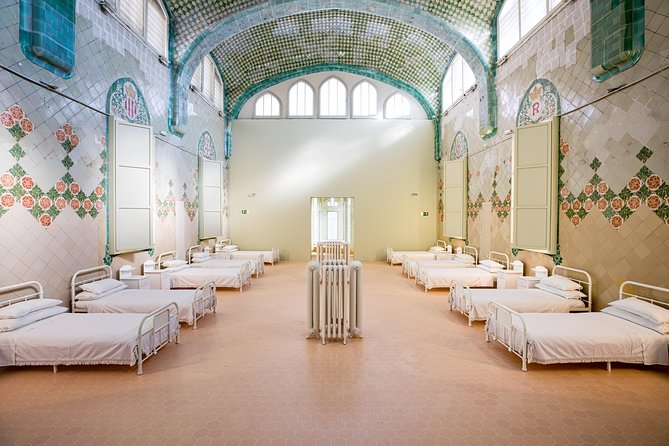
- The Sant Rafael Pavilion and old Surgery Room show how the former hospital worked as a place of treatment, not simply as an architectural display.
- Underground tunnels connect the pavilions and add a surprisingly practical side to the ornate complex.
- Sant Salvador Pavilion traces the hospital’s story from 1401 into the 21st century.
- The Lluís Domènech i Montaner Room and Main Hall reveal the architect’s grand vision in the heart of the complex.
- A €4 audio guide can make the self-guided route easier to follow and more rewarding.
- The site is close to the Sagrada Família, making Sant Pau a smart companion visit rather than a separate cross-city trip.
Why Sant Pau feels different from Barcelona’s other grand sights
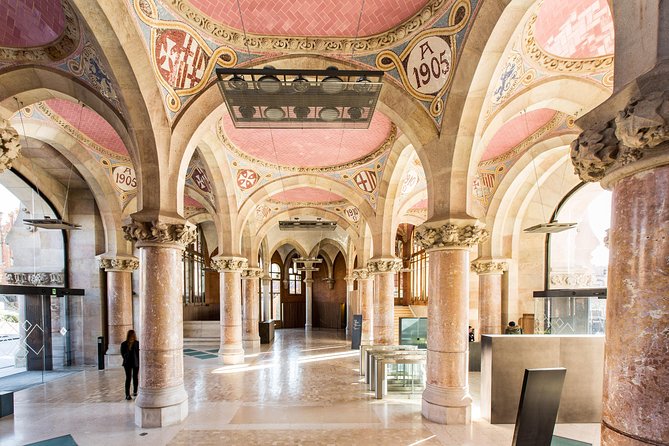
Barcelona has no shortage of famous Modernisme buildings. Sant Pau offers something different because it was designed as a working hospital, not as a private home, church, or commercial building.
The complex was created by architect Lluís Domènech i Montaner, one of the key figures in Catalan Modernisme. Its decorative surfaces are spectacular, but the layout also had a serious purpose. Separate pavilions, gardens, and underground passageways were part of a plan for patient care, ventilation, movement, and recovery.
That combination makes the visit more interesting than a simple architecture stop. You can admire colorful mosaics and elaborate roofs, then walk below ground and see how patients and staff could move between buildings without crossing the open gardens.
I especially like that the visit gives equal weight to design and medicine. The site tells you about the hospital’s contribution to care while also showing the artistic ideas behind the buildings. It is a fine choice if you enjoy architecture but want more than a room-by-room palace tour.
More tickets in Barcelona:
- Barcelona: Park Güell and Gaudí House Museum Entry Ticket
★ 4.5 · 6,326 reviews - Barcelona: Gaudí’s Park Güell Tour with Fast-Track Ticket
★ 4.8 · 4,512 reviews - Barcelona: Sant Pau Recinte Modernista Entry Ticket
★ 4.6 · 2,567 reviews
Starting at the Administration Pavilion
Your visit begins at the Administration Pavilion, where you exchange the mobile voucher and start the self-guided route. The ticket is designed to let you enter during the facility’s opening hours, so you are not tied to a guide’s schedule or a large group moving from room to room.
The administration building sets the tone. Look for stained glass, sculpture, mosaics, domes, and carefully decorated surfaces. The details are not limited to one famous façade. They continue across the complex, so give yourself time to look upward and sideways rather than walking only toward the next sign.
Inside the exhibition area, an interactive touch table and video presentation explain the hospital’s artistic and medical background. This is useful early in the visit because it gives context to what you will see in the pavilions and tunnels.
The self-guided format is both a strength and a weakness. You can pause whenever you want, take photographs at your own speed, and spend extra time on the details that interest you. But the route is not always perfectly clear. A printed guide helps, and several people found the audio guide worth the additional €4.
Sant Salvador Pavilion and the hospital story
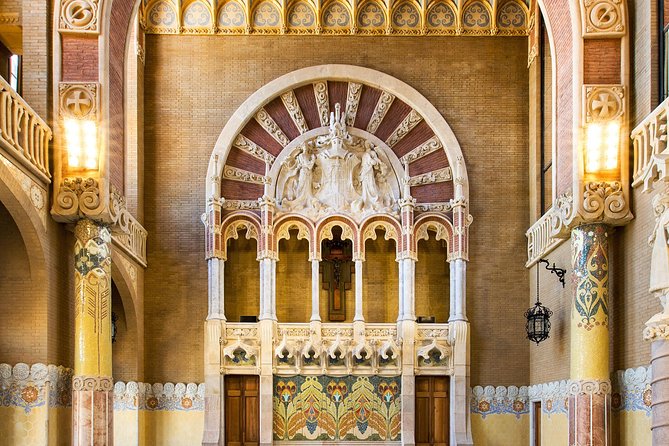
Sant Salvador Pavilion is the best place to understand the institution’s long timeline. The exhibition follows the Hospital de la Santa Creu i Sant Pau from its founding in 1401 through the 21st century.
That date matters. The buildings you see are part of a much older hospital story, even though the Modernisme complex belongs to a later period. The exhibition helps connect the medieval institution with the purpose-built pavilions designed for modern medical care.
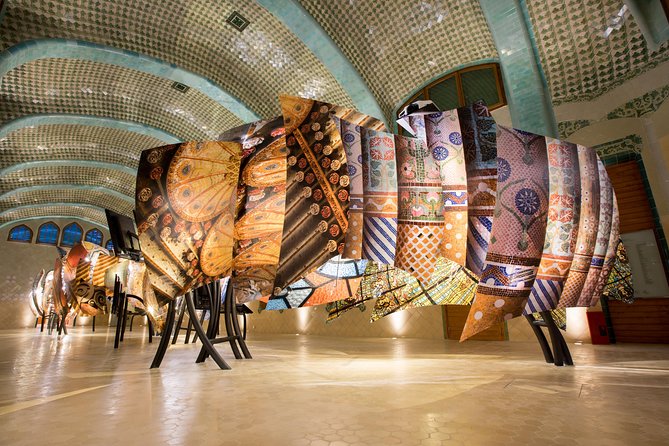
On the upper floor, you will find a contemporary installation shaped like a dragon. It pays tribute to Lluís Domènech i Montaner and his role in Catalan Modernisme. The piece is a change of pace from the historical displays and gives the pavilion a more modern voice.
I would not rush through Sant Salvador. The architecture is easy to admire without explanation, but the hospital’s development makes the whole site easier to understand. Without this background, you might see only a collection of beautiful buildings. With it, the pavilions become part of a long attempt to improve treatment and hospital life.
The underground tunnels reveal the practical plan
The underground passageways are one of Sant Pau’s most memorable features. They connect the pavilions and extend into the gardens, creating a network beneath the decorative buildings.
These tunnels show that the complex was carefully planned for daily hospital work. They were used to move patients between buildings, and they provide a useful contrast to the ornate exteriors above. You get both the grand public face of the hospital and its practical working system.
The tiled passageways are attractive in their own right, but their value comes from understanding why they exist. This is not a decorative basement added for visitors. It was part of the hospital’s operating plan.
Allow enough time to find and follow the tunnels. The route can feel less direct than expected, and unclear signs may cause you to miss a section if you hurry. A map from the entrance is useful here, especially if you want to see as many pavilions as possible.
A few more architecture tours in Barcelona worth a look
- Barcelona: Sagrada Familia, Modernism, and Old Town Tour
★ 4.7 · 1,621 reviews - Ramblas, Old Town, Gothic and Gaudi Architecture Walking Tour
★ 5.0 · 723 reviews - Historical and Modernist Bike Tour Barcelona
★ 5.0 · 262 reviews - Barcelona Architecture Walking Tour With Casa Batlló Upgrade
★ 5.0 · 137 reviews
Sant Rafael Pavilion and the old Surgery Room
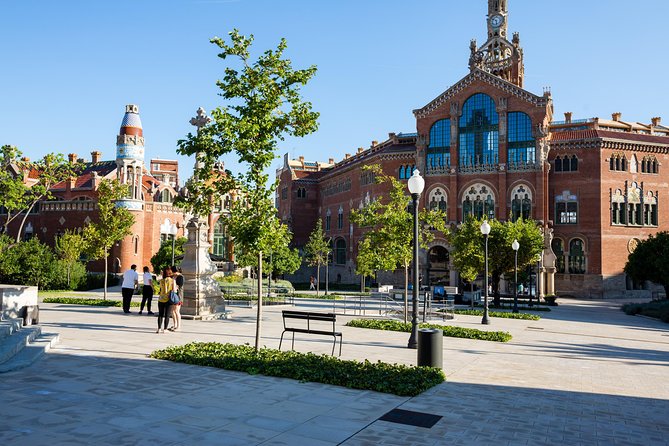
The restored Sant Rafael Pavilion gives you a closer look at a hospital building as a place of treatment. The old Surgery Room adds another layer by showing the medical setting rather than only the architectural shell.
You may also see old hospital equipment during the visit. These objects help prevent the complex from becoming just a backdrop for photographs. They remind you that the buildings were used for real medical work and remained part of hospital operations surprisingly late, into the 1990s.
The restored rooms are effective because they bring together two very different impressions. The hospital was designed with beauty and dignity, yet it still served patients, doctors, and staff. The artistic decoration was not separate from the institution’s purpose.
If you are interested in hospitals, medical history, or the development of patient care, this section deserves more than a quick look. If your main interest is architecture, it still adds useful context without taking over the visit.
Domènech i Montaner’s rooms and the Main Hall
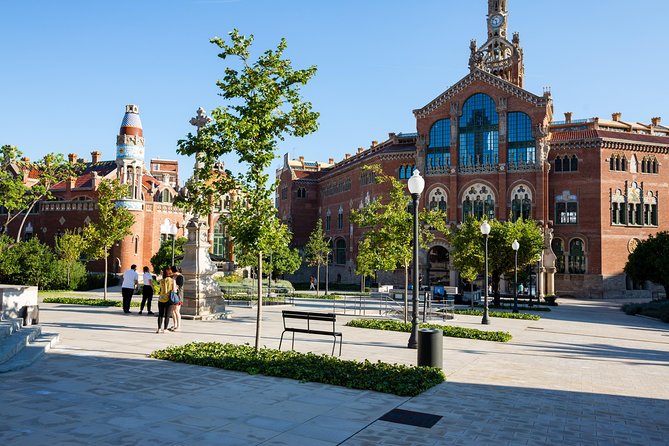
The Lluís Domènech i Montaner Room, Pau Gil Room, and Main Hall give the visit its grandest interior moments. These rooms show how the architect used structure, color, light, and ornament to create a hospital complex that felt more humane than a plain institutional building.
The Main Hall is a natural place to pause. Rather than simply passing through, look at the relationship between the surfaces, windows, and decorative details. Sant Pau rewards close attention. Its best features are often small mosaics, tile patterns, or sculptural touches rather than one single overwhelming view.
The Pau Gil Room adds another named space to the route, while the Domènech i Montaner Room connects the building directly with its architect. If you bring the audio guide, these rooms are likely to make more sense because the device can explain what you are seeing and why particular spaces mattered.
The self-guided route does not always make the sequence obvious. You may need to check the map and backtrack. That is not a major problem if you treat the visit as a slow exploration, but it can frustrate you if you expect museum-style signs pointing clearly to every next stop.
Sant Jordi Pavilion and temporary exhibitions
The Sant Jordi Pavilion hosts temporary exhibitions. Its content can change, so it is best viewed as an additional part of the visit rather than the main reason to buy your ticket.
This final section gives the complex a changing element. The permanent buildings and hospital displays explain Sant Pau’s identity, while the rotating material adds something different on another visit.
Keep in mind that special events or private functions can affect access. One visit was disrupted by an influencer event that blocked several areas. That kind of interruption may not be typical, but it is a useful reason to check the conditions on the day and allow some flexibility in your plans.
How much time you need at Sant Pau
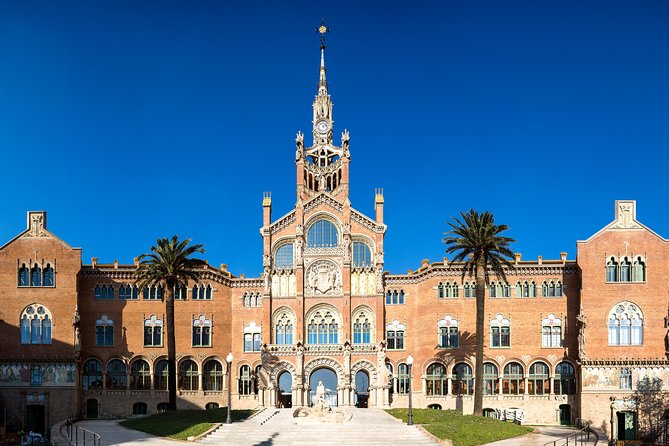
The stated visit length is about one to two hours. An hour is enough for a brisk look at the main buildings, but I would plan closer to 90 minutes if you want the exhibition, tunnels, rooms, gardens, and architectural details to feel unhurried.
The site is large enough that the pace matters. You may spend several minutes studying tilework, then pause for the hospital displays, then take a wrong turn while looking for a pavilion. That is part of the character of the place, but it means you should not squeeze Sant Pau into a ten-minute gap between other appointments.
The complex also gives you a quieter break from Barcelona’s busiest sights. The gardens and open spaces make the visit feel less crowded than many headline attractions, although the number of people and accessible areas can vary.
The building interiors offer useful shelter in hot or rainy weather. Some indoor sections have air conditioning, and seats are available in places, which makes the visit easier if you need occasional rest.
Is the $21.78 ticket good value?
At $21.78 per person, the ticket is not a bargain admission to a single small monument. It is fair value for a large complex with multiple pavilions, exhibitions, tunnels, gardens, and restored rooms.
You are paying for access to an entire former hospital campus rather than one decorated interior. The experience also has more variety than many architecture visits. You can learn about medicine, examine Modernisme details, walk underground, and see how the buildings were arranged for hospital use.
The price makes the most sense if you will spend at least 90 minutes here. If you only want a quick exterior photograph, you may not feel you received enough for the cost. The outside architecture is impressive, but the ticket’s real value comes from entering the pavilions and understanding the plan.
The prepaid ticket also removes some uncertainty at a popular attraction. Direct admission may sometimes be available, but advance booking guarantees entry during busy periods. The ticket price has been reported as similar to booking directly, while the online option may offer more flexibility to change or cancel.
Getting there and fitting Sant Pau into your day
Sant Pau is on Sant Antoni Maria Claret in central Barcelona and is close to public transportation. The green line of the hop-on hop-off bus has a stop directly outside, listed as stop 12.
The complex is also a short distance from the Sagrada Família, so you can pair the two sights without creating a complicated day. I would avoid treating them as one quick stop, though. The Sagrada Família can absorb a lot of time, and Sant Pau deserves enough space for the tunnels and hospital displays.
Arrive with the mobile ticket ready. Confirmation is provided at booking, and the voucher is used for admission. Food and drinks are not included, and there is no guide included with the ticket.
The attraction is suitable for most people, and service animals are allowed. If stairs are difficult for you, ask about lift access when you arrive. One visitor with bad knees found access to lifts less straightforward than hoped, so it is wise to raise the issue at the entrance rather than assume every route will be effortless.
Who will enjoy Sant Pau most
I would recommend this visit to you if you enjoy:
- Catalan Modernisme, Art Nouveau, mosaics, stained glass, and sculpture
- Historic buildings that still show their original purpose
- Medical history and the development of hospital care
- Quiet gardens and open spaces away from the busiest attractions
- Self-guided sightseeing with time to stop, read, and photograph
- Pairing a major architectural visit with the Sagrada Família
Families with older children may also find the tunnels and dragon installation more engaging than a standard museum display. The touch table and video give younger visitors something interactive, though the amount of reading may not suit very young children.
You may want to skip it if your Barcelona schedule is already packed with major sights and you have no interest in architecture or hospital history. It is also not the best choice if you need a perfectly marked route or prefer a guide to explain every room in person.
Practical tips for a smoother visit
Buy ahead if your schedule is tight or you are visiting during a busy period. The main benefit is guaranteed admission, not a guided experience.
Use the printed map. The route can be confusing, and a few visitors felt they missed buildings or sections. Do not assume that reaching one pavilion means you have completed the complex.
Consider paying €4 for the audio guide. It is not included, but it can add useful explanation to the architecture and medical displays. The written information is available in English, but the audio option may help you connect the rooms and the larger story.
Allow extra time for photographs. Sant Pau has mosaics, tiled roofs, frescoes, stained glass, domes, and exterior sculpture. A rushed walk will miss much of what makes the place special.
Check for closures or private events on the day. Temporary exhibitions and special functions can affect the route, and not every area is guaranteed to be open at every moment.
Free cancellation is available if you cancel at least 24 hours before the experience start time. Changes or cancellations made later are not accepted for a refund.
Should you book Sant Pau Recinte Modernista?
Yes, if you want a substantial architectural visit with a clear connection to Barcelona’s medical past. The restored buildings are beautiful, but the tunnels, old Surgery Room, hospital equipment, and long institutional story give the site real purpose.
Book it if you can spare 90 minutes, especially if you are already visiting the Sagrada Família. Bring patience for the self-guided route, use the map, and consider the €4 audio guide. If you prefer a tightly organized tour led by a guide, this ticket may feel incomplete.
For most people who enjoy design, history, or unusual Barcelona sights, the $21.78 admission is worthwhile. Sant Pau offers a quieter, more thoughtful experience than many headline attractions, with enough detail to reward a slow walk.
FAQ
How long does the Sant Pau Recinte Modernista visit take?
The visit takes approximately one to two hours. Allow closer to 90 minutes if you want time for the exhibitions, pavilions, tunnels, gardens, and architectural details.
Is a guide included with the ticket?
No. The admission ticket is for a self-guided visit. An audio guide can be rented at the entrance for €4.
Is the audio guide included in the $21.78 ticket?
No. The audio guide costs an additional €4. The ticket includes admission to Sant Pau Recinte Modernista.
Can I use a mobile ticket?
Yes. A mobile ticket is offered, and you should arrive with your prepaid admission voucher ready for entry.
Is Sant Pau close to public transportation?
Yes. The complex is near public transportation. The green line of the hop-on hop-off bus stops directly outside at stop 12.
Are food and drinks included?
No. Food and drinks are not included in the admission ticket.
What is the cancellation policy?
You can cancel for a full refund if you do so at least 24 hours before the experience start time. Cancellations or changes made less than 24 hours in advance are not accepted for a refund.
Just added in Barcelona
- Self-Guided Audio Tour-The Surrealist Barcelona of Dalí and Gaudí★ 3.5 · 8 reviews
- Visit to the Modernist houses of the Americans★ 5.0 · 2 reviews
- Roman & Gotic & Gaudi in Barcelona: private walking tour★ 4.5 · 2 reviews
- Barcelona Gaudi Tour: Sagrada Familia, Casa Batllo & Casa Mila★ 5.0 · 4 reviews
- Barcelona Street Escape: Gaudi and the Hidden Treasure★ 5.0 · 17 reviews
- Sagrada Familia Private Tour – Unlock the mysteries of Gaudi★ 5.0 · 10 reviews
- Gaudi’s Casa Batlló and La Pedrera with Chocolate Tasting★ 5.0 · 5 reviews
- Gaudí & Catalan Modernism Private Walking Tour★ 5.0 · 11 reviews
Barcelona Architecture Tours, compared.
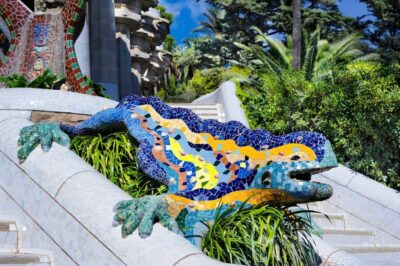
Park Güell and Gaudí House Museum Entry Ticket
Read our review →
Gaudí’s Park Güell Tour with Fast-Track Ticket
Read our review →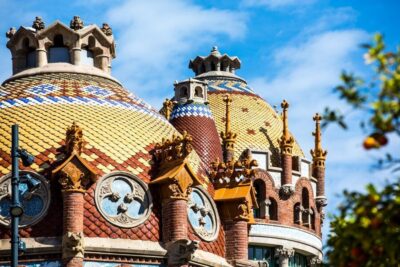

Sagrada Familia, Modernism, and Old Town Tour
Read our review →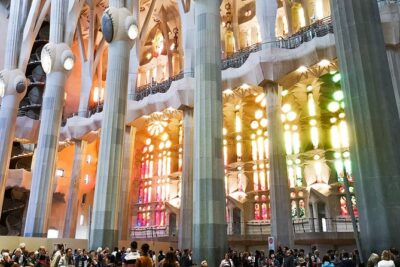
Sagrada Familia & Gaudi Tour Private or Small Group with Tickets
Read our review →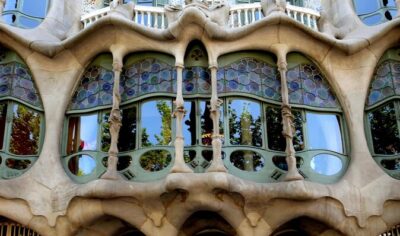
Complete Gaudi Tour: Casa Batllo, Park Guell & Sagrada Familia
Read our review →
Park Güell: Guided Tour with Optional Gaudí Experience Entry
Read our review →
Barcelona e-Bike Tour: Gaudí & Old Town Small Group
Read our review →Browse the lists this tour appears in