
REVIEW · WALKING TOURS
Santa Fe: Architectural Walking Tour & Wine Tasting
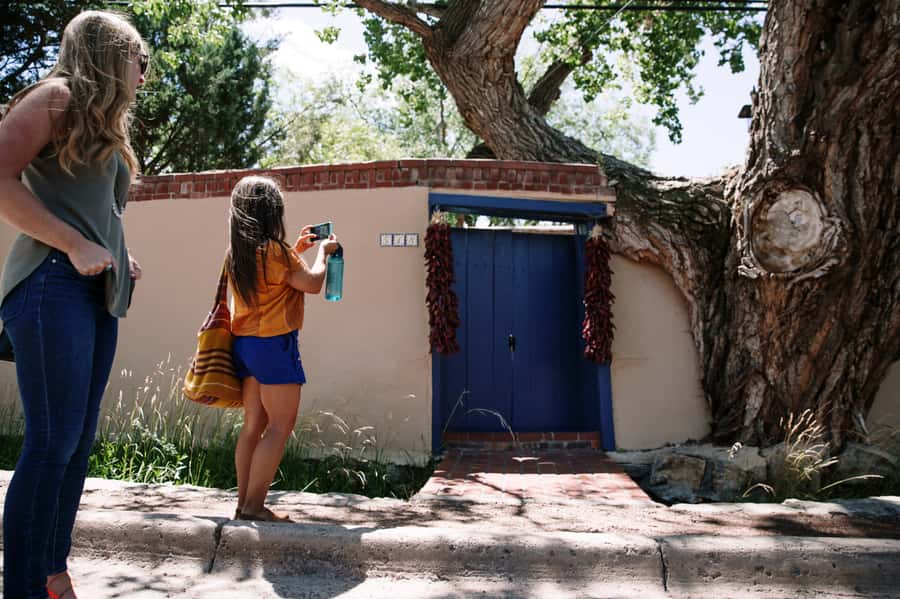
Santa Fe’s buildings tell stories in earth and wood. This three-hour walking tour offers a close look at Pueblo, Spanish Territorial, and Northern New Mexico architecture, while connecting each style to the city’s social and cultural past. I like that the tour goes beyond pretty façades, and I like the added wine tasting at Gruet, which gives the afternoon a relaxed finish.
The walk also follows an acequia, one of Santa Fe’s old watercourses. That detail matters: you are not just looking at buildings, you are seeing how water shaped daily life and still helps irrigate private gardens. Guide Sandy receives especially strong praise for her engaging, warm approach and her ability to explain Santa Fe’s past in a way that feels personal.
The main consideration is the three-hour walking format. You will spend much of the tour on foot along small residential backroads, so this suits you best if you enjoy a steady stroll and close observation rather than a quick sightseeing circuit.
Key points at a glance
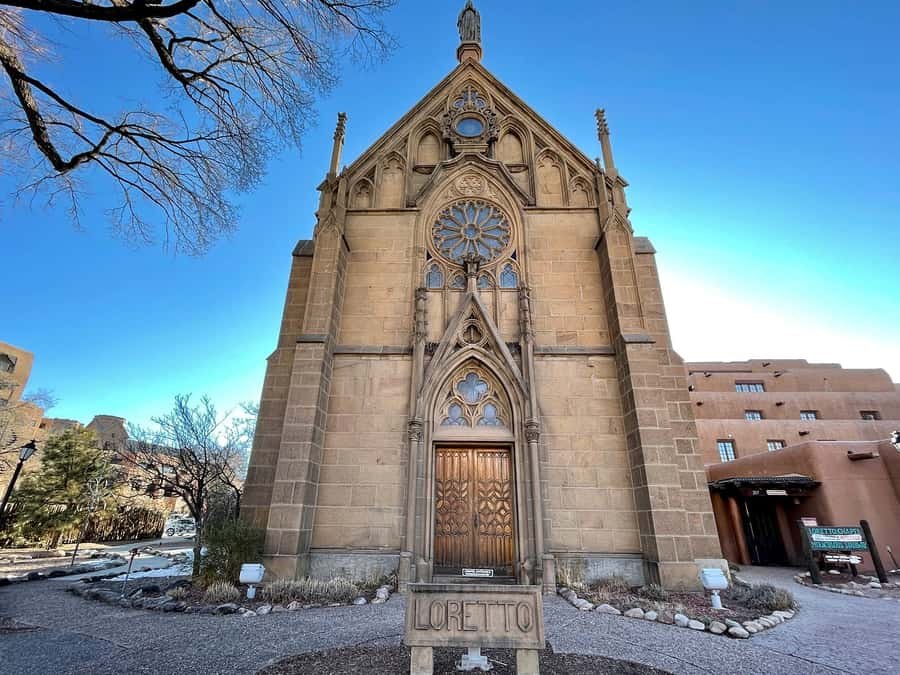
- Three distinct architectural styles: Compare traditional New Mexican Pueblo, Spanish Territorial, and Northern New Mexico designs during one guided walk.
- Canyon Road setting: Explore the residential backroads beside Santa Fe’s well-known Gallery district, rather than seeing the area only from a vehicle.
- Acequia history: Learn how controlled water flow supported gardens and remains part of local life.
- Gruet wine tasting: Finish with local wines at the Gruet Tasting Room.
- Small group format: With no more than eight participants, the guide has a better chance to answer individual questions.
- Strong guide appeal: Sandy is praised for being engaging, charming, relatable, and deeply interested in connecting with each person.
Starting at the Inn and Spa at Loretto

The tour begins at Heritage Inspirations Travel Hub and E-Bike Shop, located at the Inn and Spa at Loretto. This gives you a clear meeting point in central Santa Fe and keeps the experience focused on walking from the start.
The listed duration is three hours. That is long enough to compare several building styles and discuss the forces behind them, but short enough to fit into a larger day in Santa Fe. I would schedule it early in your visit if possible. The tour can give you a useful visual framework for the rest of your time in town, helping you notice details you might otherwise pass by.
The group is limited to eight participants. That small size is important on an architecture walk. You can stop to ask why a wall, roofline, or building shape looks a certain way without holding up a large crowd. It also gives a guide such as Sandy room to tailor explanations to the interests of the people in the group.
English is the stated tour language, and the tour is led by a live guide. Bottled water is included, which is a practical touch for a three-hour walk.
More walking tours in the USA:
- The Official Art Deco Walking Tour by The Miami Design Preservation League
★ 5.0 · 1,580 reviews - Chicago in a Day: Food, History & Architecture Walking Tour
★ 5.0 · 1,153 reviews - Miami South Beach Art Deco Walking Tour
★ 5.0 · 1,039 reviews
Reading Santa Fe through its architecture
Santa Fe can look simple at first glance. Adobe-colored walls, low buildings, and wooden details create a unified impression. This walk helps you see that the city’s appearance is not one single style. It reflects several periods, needs, and cultural influences.
The guide introduces three New Mexican architectural styles:
- Traditional New Mexican Pueblo style
- Spanish Territorial style
- Northern New Mexico style
The value here is comparison. Instead of hearing a list of dates or labels, you can look at the buildings around you and begin to sort out the differences. The tour description points to the Pueblo style’s traditional appeal, the classic character of Spanish Territorial design, and the tall, narrow pitched roofs associated with Northern New Mexico.
Those distinctions give you a better eye for Santa Fe. A building may appear modest, but its roof shape, wall treatment, or overall form can point to a particular regional tradition. The guide also connects architecture to historical, social, and cultural movements, so the walk is not limited to design vocabulary.
I especially like that the tour takes place on small residential backroads in the Canyon Road Gallery district. The setting adds context. You are not only viewing architecture as an isolated museum subject. You are seeing it in a lived-in part of town, alongside homes, gardens, and the watercourse that runs near the route.
Canyon Road beyond the galleries
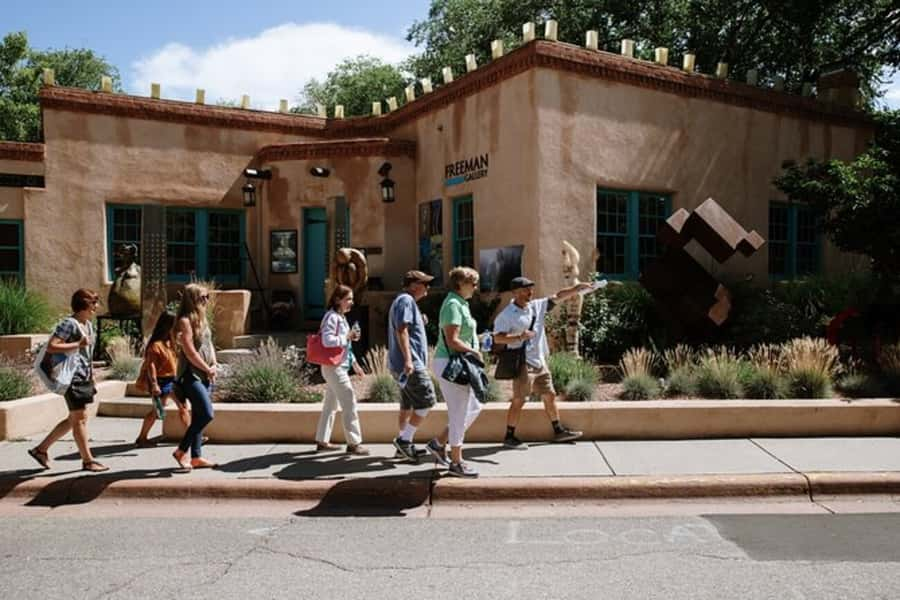
Canyon Road is associated with Santa Fe’s galleries, but this experience looks at another side of the area. The walk uses small residential backroads, where the focus shifts from browsing art to examining the built environment.
That change of pace can be useful. A gallery visit tends to pull your attention toward individual works and interiors. An architecture walk asks you to look at the relationship between buildings, streets, gardens, and local traditions. You get a sense of how the area functions as a neighborhood, not just as a sightseeing stop.
The tour’s architectural focus also gives you a reason to slow down. You may find yourself paying attention to proportions, rooflines, and the way traditional forms have shaped the streets around Canyon Road. The supplied details do not identify each individual building or provide a fixed list of stops, so you should expect the guide to choose examples along the route rather than follow a museum-style sequence of named monuments.
That flexibility can be a strength. A small group can spend more time on an especially useful example if questions come up. The tradeoff is that you should not book this expecting a formal tour of every major landmark in central Santa Fe. It is a focused neighborhood walk, with architecture and local context at the center.
Following the acequia beside the walkway
One of the more unusual parts of the experience is the discussion of the acequia. An acequia is a watercourse used to control and distribute water. The one that parallels the walkway continues to irrigate private residential gardens.
This is a small feature with a large lesson. Water management is easy to overlook when you are admiring buildings, yet it helps explain how homes and gardens functioned in a dry region. The guide covers the long-standing tradition of controlled water flow, giving you a practical link between Santa Fe’s environment and its settlement patterns.
I like this part because it adds a working piece of local life to the tour. You are not just hearing about architecture as decoration. You are learning about an old system that still has a purpose. That makes the walk feel more grounded and less like a tour of façades.
The acequia discussion may be especially worthwhile if you have already seen Santa Fe’s central plazas and churches and want a different angle on the city. It offers a look at the infrastructure behind residential life. The available details do not promise a technical lesson or a visit inside an acequia, so expect an on-foot explanation of its history and use along the route.
More wine tastings in the USA:
- Architectural Rioja Small Group Wine Tour with Lunch from Bilbao
★ 5.0 · 128 reviews - Alicante: Old Winery with Tastings & Gaudí’s style of Church
★ 4.9 · 91 reviews - From Bilbao: Rioja Architecture and Wine Tour
★ 4.9 · 58 reviews - Alicante: Old Winery with Tastings & Gaudí’s style of Church
★ 5.0 · 37 reviews
Finishing with wine at the Gruet Tasting Room
The final part of the experience is a wine tasting at the Gruet Tasting Room. Local wines from the area are included, adding a social and easygoing close to the walking portion.
This pairing makes sense. Architecture requires attention and conversation, while a tasting gives you time to sit with what you have seen. It also broadens the subject beyond buildings. You get a taste of a local product and a chance to end the tour at a measured pace.
The information provided does not list the wines, number of pours, food pairings, or length of the tasting. I would not book this expecting a full winery visit or a detailed production tour. The stated benefit is a tasting at the Gruet location, so think of it as a concluding experience rather than the main event.
Still, including wine makes the three-hour format feel well balanced. If you are traveling with someone who enjoys food and drink as much as history, this can make the tour more appealing than a standard architecture walk. It also gives you an easy way to compare the experience with other Santa Fe activities. You get a guided cultural walk first, then a local tasting without having to arrange a separate stop.
Why the guide matters
A tour like this depends heavily on the person leading it. Buildings do not explain themselves, and architectural terms can quickly become dry if they are presented as a lecture.
Sandy receives particularly strong praise for her approach. She is described as engaging, charming, and relatable, with a clear interest in both the subject and the people on the tour. That combination is useful here because the walk asks you to absorb several layers of information: architectural style, local history, cultural change, and the acequia tradition.
I would value a guide who can answer simple questions without making you feel that you need a background in architecture. Sandy’s praised ability to connect with each person suggests that the tour is intended to feel conversational rather than formal.
The small group limit of eight supports that style. If you want to ask why one roof differs from another, or how an acequia affected private gardens, there is a better chance of getting a thoughtful answer than on a large coach tour. The experience also suits you if you enjoy learning through stories and observation instead of collecting a long list of landmarks.
Value, timing, and practical fit
No tour price is provided in the supplied details, so I cannot judge the exact cost. I can assess what is included: a three-hour guided walk, a local guide, bottled water, and a wine tasting at Gruet.
That package offers good value when you want interpretation rather than simple transportation. You are paying for the guide’s ability to explain what you are seeing, plus the convenience of combining the walk and tasting in one booking. A self-guided walk would cost less, but it would not provide the same comparison between styles or the same explanation of the acequia.
The small group also matters to the value. A limited group can make an architecture tour feel more like a personal introduction to Santa Fe than a standard route through town. If the price is at the higher end of walking tours, the group size and guide-led content are the main reasons it may still be worthwhile.
Check the available starting times before booking, since the schedule varies. You can cancel up to 24 hours in advance for a full refund, and the reserve-now, pay-later option keeps your plans flexible. Those policies are useful if your Santa Fe schedule may change, but the bigger planning issue is the walking time. Wear comfortable shoes and bring sun protection as a sensible precaution, although the tour includes bottled water.
Who will enjoy this Santa Fe walk?
I would recommend this experience to you if you like:
- Architecture explained in plain language
- Small groups instead of large sightseeing crowds
- Residential neighborhoods and local details
- Guided walks with time for questions
- Cultural history connected to everyday life
- A wine tasting added to a history-focused outing
It is a particularly good fit for first-time visitors who want to understand Santa Fe before exploring more of the city on their own. It can also suit repeat visitors who have seen the main sights and want a closer look at Canyon Road’s residential side.
You may want a different activity if you dislike walking for several hours, have little interest in buildings, or want a winery-centered outing with extensive information about wine production. This tour gives architecture and local history the most attention. The wine is a pleasant finish, not the central subject.
My final take: book it for context, not just sightseeing
I would book this tour if you want Santa Fe to make more sense. The strongest feature is the way it links three architectural styles with the city’s cultural past, then adds the acequia as a reminder that practical systems helped shape residential life.
Sandy’s warm, engaging manner is another reason to choose it, especially if you enjoy a guide who connects with the group rather than reciting facts. The small group of up to eight makes that personal approach more likely.
Book it early in your stay if you can, and use the walk to sharpen your eye for the rest of Santa Fe. Skip it only if your priority is a fast overview, a major-landmark checklist, or a full wine excursion. For a thoughtful neighborhood walk followed by a local tasting, this is a focused and appealing three-hour choice.
FAQ
How long does the Santa Fe architectural walking tour last?
The tour lasts three hours.
Where does the tour meet?
The meeting point is Heritage Inspirations Travel Hub and E-Bike Shop at the Inn and Spa at Loretto.
What architectural styles are covered?
The tour covers traditional New Mexican Pueblo style, Spanish Territorial style, and Northern New Mexico style.
Does the tour discuss Santa Fe’s acequias?
Yes. You will learn about the history and importance of the acequia that parallels the walkway and continues to irrigate private residential gardens.
Is wine tasting included?
Yes. The tour includes a wine tasting at the Gruet Tasting Room, featuring local wines from the area.
How large is the group?
The tour is limited to eight participants.
What language is the tour conducted in?
The live guided tour is conducted in English.
Can I cancel the tour?
Yes. You can cancel up to 24 hours in advance for a full refund.
More food and drink tours in the USA
- Miami Beach Food and Art Deco Walking Tour
★ 4.5 · 245 reviews - South Beach Food & Fun Art Deco Miami Food Tour
★ 5.0 · 138 reviews - Chicago: Food, History and Architecture Tour
★ 4.8 · 104 reviews - Chicago in a Day: Food and Architecture Private Walking Tour
★ 5.0 · 53 reviews
Just added in the USA
- Wilmington History and Architecture Tour★ 4.8 · 18 reviews
- New Orleans : Garden District Architecture Walking tour★ 4.8 · 5 reviews
- Washington DC: Dupont Circle & Embassy Row Architecture Tour★ 5.0 · 6 reviews
- Washington, DC: Georgetown Architecture Walking Tour★ 5.0 · 8 reviews
- Private Colonial Williamsburg Architectural Tour★ 5.0 · 5 reviews
- Tulsa: Art Deco Walking Tour of Tulsa★ 5.0 · 8 reviews
- Monuments and Memorials Architectural Walking Tour★ 5.0 · 17 reviews
- Castle to Capitol: Museums of the National Mall Architecture Tour★ 4.5 · 9 reviews
Walking Tours, compared.

The Official Art Deco Walking Tour by The Miami Design Preservation League
Read our review →
Baroque Architecture and Underground Walking Tour
Read our review →
Chicago in a Day: Food, History & Architecture Walking Tour
Read our review →

Ramblas, Old Town, Gothic and Gaudi Architecture Walking Tour
Read our review →
Chicago’s Secret Interiors Architectural Walking Tour
Read our review →
Browse the lists this tour appears in