
REVIEW · LONDON ARCHITECTURE TOURS
London: Modern Architecture & Building Guided Walking Tour
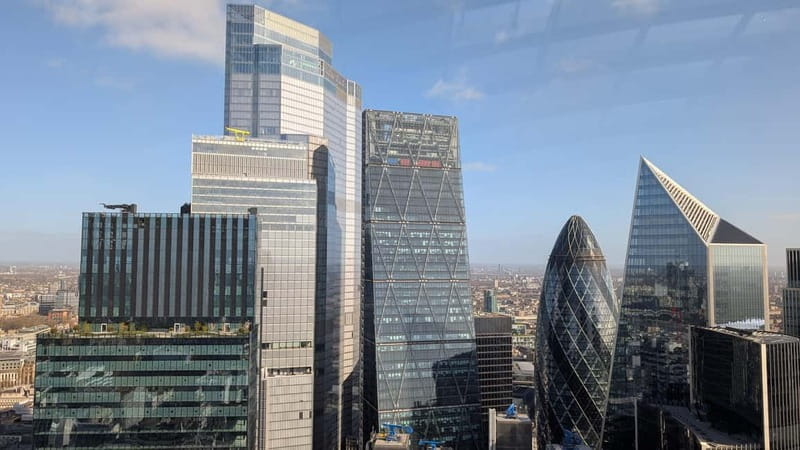
Modern London has a story overhead and underground. This two-hour walking tour links the Shard, Walkie Talkie, Gherkin, Lloyd’s of London, Barbican, and other major buildings with the engineering work beneath the streets. I like the way guide Sam connects bold design with practical construction, and I like the finish at the NLA, where scale models show how London is still changing. The main catch is that it is an outdoor tour in English, with no building interiors and limited suitability for people with mobility impairments.
The $52 price is fair if you care about how London works, not just how it looks. Sam’s background in construction management gives the walk useful technical detail without turning it into a lecture. Just check the NLA schedule before booking: it is open Tuesday through Saturday until 17:00, so Sunday, Monday, and evening tours cannot include that final indoor stop.
Key points at a glance
- Construction insight from guide Sam: His background in construction management in London and Sydney adds practical detail about engineering methods, building work, and city planning.
- A strong collection of skyline icons: The route includes the Shard, Walkie Talkie, Gherkin, Cheesegrater, Lloyd’s of London, City Hall, Barbican, and more.
- The city above and below: You hear about major engineering projects beneath London as well as the towers and public buildings overhead.
- A useful NLA finale: The London Centre has scaled models and information about London’s present and future development.
- Easy pace for mixed interests: Sam explains technical points clearly, while keeping the walk engaging for people who are not architecture specialists.
- Weather matters: Bring comfortable shoes, water, a camera, and clothing for rain, wind, or sun.
Why this modern London walk is different
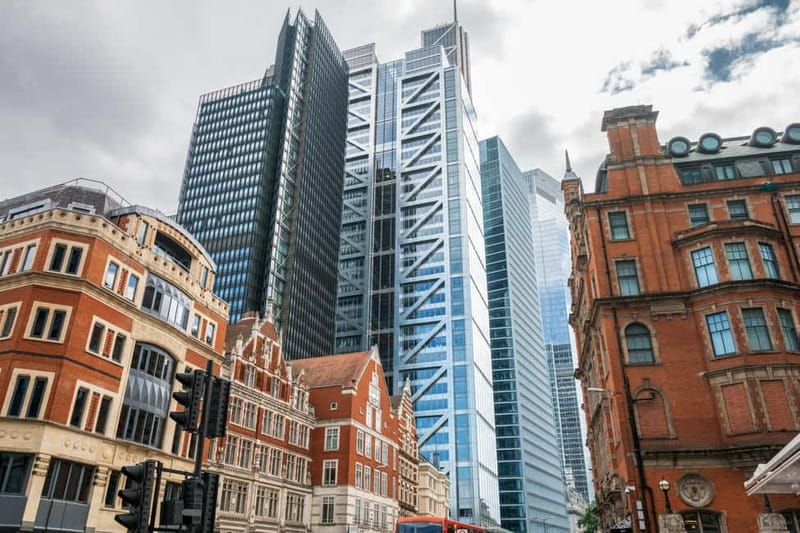
Many city walks treat buildings as backdrops for photographs. This one asks you to look up, then asks how the structure got there. That shift makes a difference. You are not simply collecting views of famous towers. You are learning why London’s skyline has taken its current shape and what still has to happen below ground to support it.
The route is led by Sam, whose construction management experience in London and Sydney gives him a useful point of view. He can talk about design, but also about building techniques, city development, and the practical problems involved in putting very large structures into a crowded historic center.
That mix works well for a group with different interests. A serious architecture fan can ask technical questions, while someone who normally gives modern buildings only a passing glance can still follow the larger story. One strong feature of Sam’s style is his use of a portable screen to show extra material during the walk.
The experience is also more than a tour of the Square Mile. It considers what lies beneath London, including past and current civil engineering projects. That matters because the City of London is a dense place. Every new tower has to fit around streets, transport routes, old structures, riverside infrastructure, and working commercial districts.
More walking tours in the world:
- Lecce: Baroque Architecture and Underground Walking Tour
★ 4.6 · 1,248 reviews - Chicago in a Day: Food, History & Architecture Walking Tour
★ 5.0 · 1,153 reviews - Ramblas, Old Town, Gothic and Gaudi Architecture Walking Tour
★ 5.0 · 723 reviews
Starting at Sugar Quay beside the Thames
Meet at Sugar Quay Jetty near the Tower of London, on the northern side of the Thames. The opening location gives you an immediate view of the river and a useful first look at several of the buildings that will shape the rest of the walk.
The Thames is not just scenery here. It helps explain London’s position as a city built around movement, trade, infrastructure, and changing development. From the riverside, you can begin to understand how the old city and the newer towers share a very tight space.
You should arrive ready to walk rather than wait around for a long introduction. The tour lasts about two hours, and the route crosses the City of London on foot. Comfortable shoes are important, especially if you plan to continue sightseeing afterward.
City Hall, the river, and the first skyline views
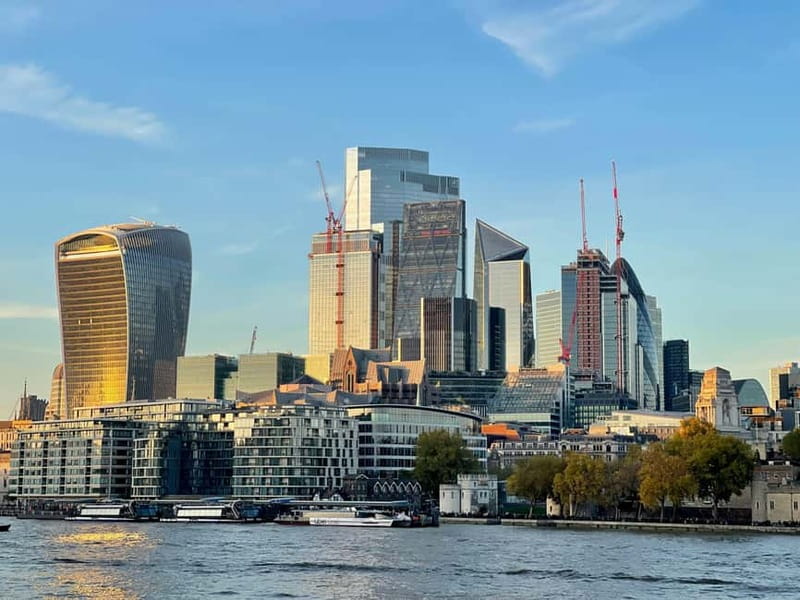
City Hall is one of the early stops. Its unusual modern form gives Sam a chance to explain how public buildings can make a statement through shape as well as function.
From this area, the Thames provides one of the better viewing corridors for London’s modern skyline. You get a sense of scale that is harder to find when you are standing directly beneath a tower. The river also lets you compare buildings from different periods rather than viewing each one in isolation.
The walk then brings you toward the Shard. The change in viewpoint is part of the appeal. You see the tower as a major marker in the city rather than simply as a place with an observation deck. Entry to the Shard, or any other building on the route, is not included, so this is an exterior sightseeing experience.
The Shard and the modern skyline from ground level

The Shard is an obvious highlight, but the tour’s value comes from the explanation around it. From the outside, you can study its height, form, and role in the skyline while Sam adds context about its design and construction.
You do not need to be an architecture specialist to enjoy this stop. The building is visually dramatic, and the technical information gives you a better reason for its appearance. If you have already seen the Shard from across the river, viewing it as part of a connected route makes it feel less like an isolated landmark.
This is also a good reminder about the tour’s limits. You will see major buildings up close, but you will not go inside them. If your priority is an observation deck, interior architecture, or access to a private building, you need a separate plan.
A few more architecture tours in the world worth a look
- Chicago River: 1.5-Hour Guided Architecture Cruise
★ 4.8 · 8,046 reviews - Charleston: History and Architecture Guided Walking Tour
★ 4.8 · 349 reviews - Vienna: Spanish Riding School Guided Architectural Tour
★ 4.8 · 333 reviews - Charleston History, Homes, and Architecture Guided Walking Tour
★ 5.0 · 267 reviews
The Walkie Talkie and London’s changing center
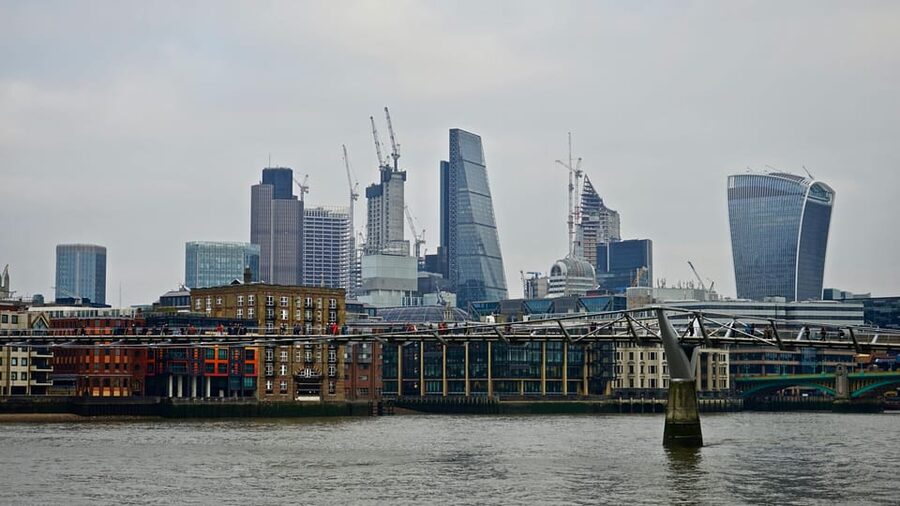
The Fenchurch Building, widely called the Walkie Talkie, is another major stop. Its distinctive shape has made it one of the easiest buildings to identify in photographs, but its appearance becomes more interesting when you hear about the design decisions and engineering concerns tied to large modern structures.
The building is useful for understanding how new architecture can change the feel of an older district. London does not replace one era with another in neat sections. Medieval streets, Victorian offices, postwar buildings, and glass towers sit close together. The tour keeps returning to that tension.
The focus is not only on whether you like the building. Sam’s explanations give you a way to think about how a structure affects the street, the skyline, and the future direction of the City.
Lloyd’s of London and the Leadenhall Building

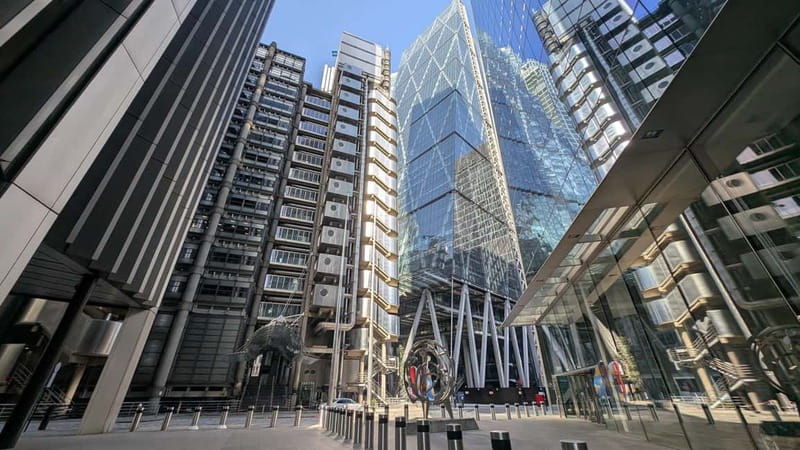
Lloyd’s of London brings a very different architectural character to the route. Its design is known for exposing elements that many buildings hide, giving you a chance to compare approaches to services, structure, and visual identity.
The Leadenhall Building follows with another memorable form. Its nickname, the Cheesegrater, is easy to remember, but the useful part of the stop is hearing how the building fits its difficult urban site.
These two buildings work well together because they show that modern architecture is not one single style. One may emphasize visible mechanical features, while the other is recognized by its sloping profile and relationship to nearby streets and protected views.
You also get time to ask questions along the way. That is a real advantage on a specialist walk. Rather than moving from landmark to landmark with a fixed script, the guide can respond to the level of interest in the group. The pace is relaxed enough for questions without making the two hours feel slow.
The Gherkin and the Can of Ham
At 30 St Mary Axe, the Gherkin, you see one of London’s most recognizable modern towers. Its curved shape has become shorthand for the city’s new skyline, yet it is even more useful as an example of how unusual form can become part of a building’s identity.
The route then includes 70 St Mary Axe, known as the Can of Ham. This less famous building adds variety. You are not only ticking off the biggest names. You are also learning to notice structures that might otherwise pass without a second glance.
That is one of the tour’s best habits: it trains your eye. After a few stops, you may begin looking at rooflines, shapes, materials, and the way buildings meet the pavement. Even if you have little interest in architecture at first, the walk can make the city feel more readable.
Liverpool Street Station and the practical city

Liverpool Street Station brings transport into the story. Modern London depends on more than offices and striking towers. Stations, underground routes, utility systems, and foundations all shape what can be built above them.
This is where the discussion of engineering beneath London becomes especially useful. The city’s visible skyline is only one layer. Major projects below ground can affect construction, transport, access, and the long-term use of the center.
The tour does not present London as a finished city. You hear about current and future development, which helps explain why cranes, construction sites, and new proposals are a normal part of the central London view.
Barbican and the route’s broader architectural story
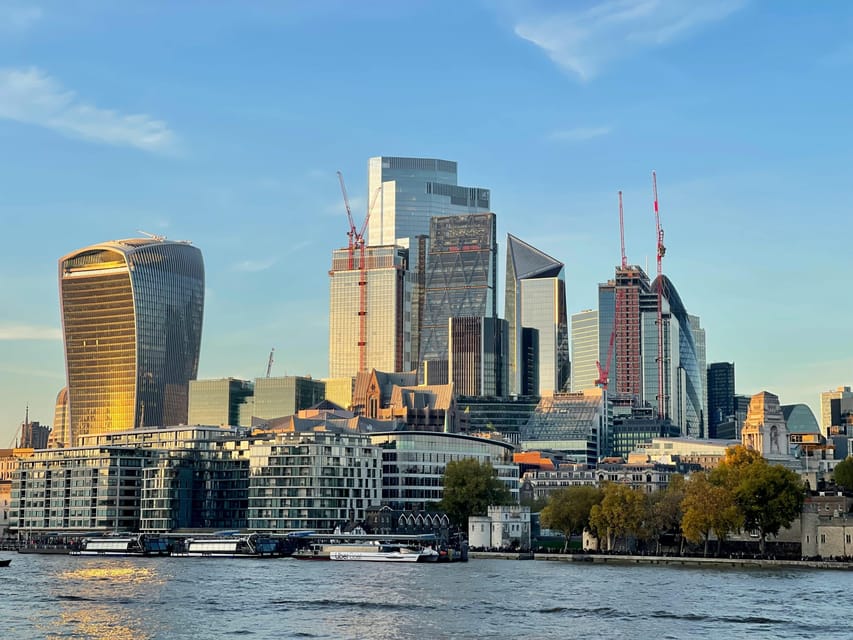
The Barbican provides a change in tone and material. Its large-scale concrete design shows a different vision of modern city living from the glass towers around the Square Mile.
Including the Barbican makes the tour more balanced. You are not only looking at commercial skyscrapers. You are also considering housing, cultural buildings, public space, and the legacy of postwar planning.
The stop can be especially useful if you want to understand how London’s ideas about urban design have shifted. The route connects buildings from several periods and helps you compare the goals behind them. Some structures aim to become skyline symbols. Others focus more on function, housing, transport, or public use.
Finishing at the NLA and London’s future
The tour ends at the NLA, within The London Centre. Entry is free, and the space includes information and scaled models of London. Allow an extra 15 to 30 minutes here if you can.
This final stop gives the walk a helpful sense of proportion. After spending two hours looking at individual buildings, the models let you see how the wider city fits together. You can also explore information about current and future development at your own pace.
The NLA finish is one of the strongest reasons to check the day and time of your booking. It is open Tuesday through Saturday until 17:00. Sunday, Monday, and evening tours cannot enter, so the tour will finish without this indoor component at those times.
If the NLA is important to you, choose a Tuesday through Saturday daytime departure that reaches the center before closing. If it is not available, the outdoor walk still includes the main buildings and explanations, but the ending will be less complete.
What the $52 price really buys you
At $52 per person, this is not the cheapest way to see London’s skyline. You are paying for a guided interpretation rather than transport, admission, or a viewpoint ticket.
The value is strongest if you want to understand the buildings. Sam’s professional background adds information you may not get from a general city walk, and the route covers a large number of important structures in two hours. The use of a portable screen also adds visual support when a building detail or construction point is easier to explain with an image.
The price is less convincing if you only want photographs. You can see several of these buildings from public streets without booking a tour. You also need to remember that no entries are included, so paid access to any interior attraction would cost extra.
For people interested in architecture, construction, city planning, or the future of London, the fee is reasonable. It is also a good choice if you have already seen the classic historic sights and want a different angle on the capital.
Pace, weather, and who should book
The walk takes approximately two hours and is described as relaxed. That gives you time to look up, listen, and ask questions instead of racing from one address to the next.
This is an outdoor experience, and it proceeds in most weather conditions unless conditions become extreme. Bring water, a camera, comfortable shoes, and clothing suited to the forecast. Rain or strong wind could affect how much you enjoy the long outdoor stretches.
The tour is in English, with a live guide. The explanations are intended to be clear, and Sam has been praised for making technical subjects accessible to people with different levels of interest. That makes the experience suitable for couples or families where one person loves architecture and another is only mildly curious.
It is not suitable for people with mobility impairments or wheelchair users. You should also consider the walking route if you have an injury or find extended standing difficult.
You can cancel up to 24 hours before the tour for a full refund, and reserve now while paying later. Those options are useful if London weather or your plans are still uncertain.
Should you book this London architecture tour?
Book it if you want London’s modern buildings explained rather than simply photographed. Sam’s construction background, the range of stops, the discussion of underground engineering, and the NLA models give the experience more substance than a standard skyline walk.
It is especially well suited to architecture fans, construction professionals, design students, curious first-time visitors, and anyone who wants to see the City of London from a different angle. It also works for a mild-interest companion because the guide keeps the information clear and the pace comfortable.
Skip it if you want interior access, a long visit to one landmark, or a fully covered activity for uncertain weather. Otherwise, choose a Tuesday through Saturday daytime tour if you want the NLA finale, wear good shoes, and leave with a sharper eye for the buildings around you.
FAQ
How long does the London modern architecture tour last?
The guided walk takes approximately two hours. You should allow another 15 to 30 minutes if you want to explore the NLA at the end.
Where does the tour start?
The meeting point is Sugar Quay Jetty near the Tower of London, on the northern side of the Thames.
Where does the tour finish?
The route finishes at the NLA, within The London Centre.
Which buildings are included?
The route includes City Hall, the Shard, the Walkie Talkie, Lloyd’s of London, the Leadenhall Building, the Gherkin, the Can of Ham, Liverpool Street Station, and the Barbican. You also hear about additional buildings and developments.
Is entry to the buildings included?
No. The tour provides exterior sightseeing and guided explanations. Entry into the buildings seen along the route is not included.
Is the NLA open on every tour?
No. The NLA is open Tuesday through Saturday until 17:00. Sunday, Monday, and evening tours cannot enter.
What language is the tour in?
The tour is conducted in English with a live guide.
What should I bring?
Bring comfortable shoes, water, a camera, and clothing suitable for the weather. The tour continues in most conditions unless the weather becomes extreme.
Is the tour suitable for wheelchair users?
No. The experience is not suitable for people with mobility impairments or wheelchair users.
Just added in the world
- Wilmington History and Architecture Tour★ 4.8 · 18 reviews
- New Orleans : Garden District Architecture Walking tour★ 4.8 · 5 reviews
- Washington DC: Dupont Circle & Embassy Row Architecture Tour★ 5.0 · 6 reviews
- Washington, DC: Georgetown Architecture Walking Tour★ 5.0 · 8 reviews
- Vicenza: Palladian Architecture Private Walking Tour★ 3.3 · 3 reviews
- Walk & Discover KL’s Architectural and Heritage Gems★ 5.0 · 7 reviews
- Private Colonial Williamsburg Architectural Tour★ 5.0 · 5 reviews
- Unveiling Brno: History, Culture & Architectural Delights★ 5.0 · 2 reviews
London Architecture Tours, compared.

Private Tour of Hampton Court Palace with Award-Winning Architectural Historian
Read our review →

Official Natural History Museum Tour – Architecture
Read our review →Browse the lists this tour appears in