
REVIEW · ART DECO TOURS
Tulsa Art Deco and Architecture with Expert Guide Walking Tour
Tulsa’s skyline tells a story. This two-hour walking tour makes that story easy to follow, from Neo-Gothic details to the bold geometry of Art Deco, while connecting the buildings to Tulsa’s oil-fueled growth. I like the clear focus on the Deco District, and I like that guides may take you inside buildings you could not normally enter alone.
The price is $52 per person, which feels fair if you care about architecture and local history rather than simply taking a stroll downtown. The main consideration is the weather: this is an outdoor walking tour, and there are some stairs, so hot days or limited mobility may affect your comfort.
Key details before you book
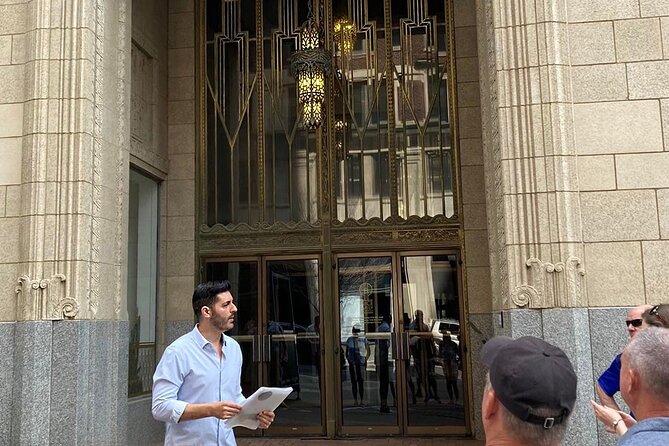
- Nine major Tulsa buildings: The route discusses Atlas Life, Philtower, Tulsa Club, Southwestern Bell, ARCO, PSO, Pythian, Sinclair, and Philcade.
- Art Deco in context: You learn how the style developed and why Tulsa has so many examples for a city of its size.
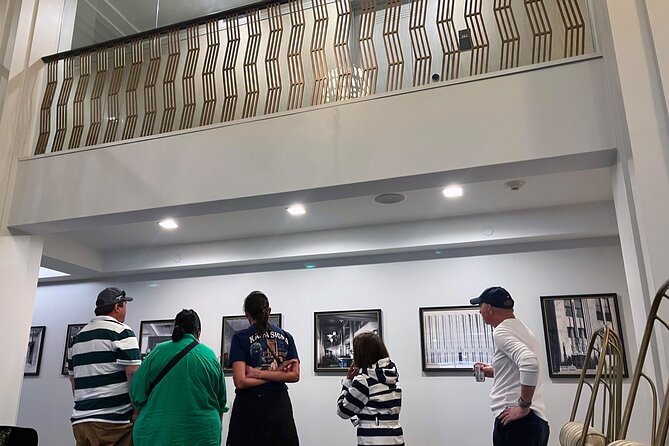
- Historic interiors may be included: Guides have taken groups inside locked buildings, adding something you cannot get from a sidewalk-only walk.
- A small-group feel: The maximum group size is 25 people, which helps the guide keep the conversation manageable.
- A steady two-hour pace: The walk is described as easy, though it includes some stairs and depends on good weather.
- Strong guide-led experience: Becky, Jeff, Jeffrey, and Wes are praised for clear explanations, humor, good pacing, and genuine enthusiasm for Tulsa.
Why Tulsa’s Deco District deserves two hours
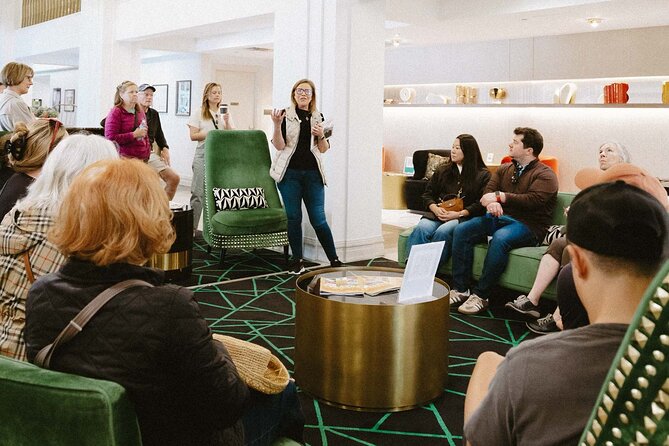
Tulsa is an excellent city for an architecture walk because its downtown buildings show several styles within a compact area. You are not just looking at old façades. You are watching a city change through its buildings.
The tour begins with the basic question: how did Art Deco come to Tulsa, and why did it take such a strong hold here? That question gives the walk a useful thread. Instead of treating every building as an isolated object, your guide can place each one in the larger story of Tulsa’s growth and the fortunes made by oil.
I like this approach because Art Deco is easier to understand when you see it beside other styles. Neo-Gothic buildings can feel formal and vertical, while Art Deco often favors bold shapes, ornament, and a more modern sense of movement. The contrast gives your eyes something to compare.
The tour also follows the changing design language of downtown in chronological order. That matters if you are new to architecture. You do not need to arrive knowing the difference between styles. The guide explains what to look for and helps you connect design changes with Tulsa’s development.
More Art Deco tours in the USA:
- The Official Art Deco Walking Tour by The Miami Design Preservation League
★ 5.0 · 1,580 reviews - Miami South Beach Art Deco Walking Tour
★ 5.0 · 1,039 reviews - Miami Beach Food and Art Deco Walking Tour
★ 4.5 · 245 reviews
Starting at 511 South Boston Avenue
The meeting point is 511 S Boston Ave, in downtown Tulsa. The activity returns to this same location, so you do not need to arrange a ride from a separate endpoint.
The walk lasts about two hours. That is long enough to cover a good number of buildings without turning the outing into an all-day commitment. I would place it early in a Tulsa visit if architecture interests you, since the route can help you get oriented to the downtown area.
A maximum of 25 people is listed for the tour. That is not a private tour, but it is still a more workable size than a large coach group. The guide can explain details, answer questions, and keep the group moving without the whole experience feeling like a distant lecture.
The tour is offered in English and uses a mobile ticket. Confirmation arrives when you book. The activity is weather dependent, so check the forecast before you go and keep your schedule flexible if storms are possible.
Atlas Life and the opening look at Tulsa design
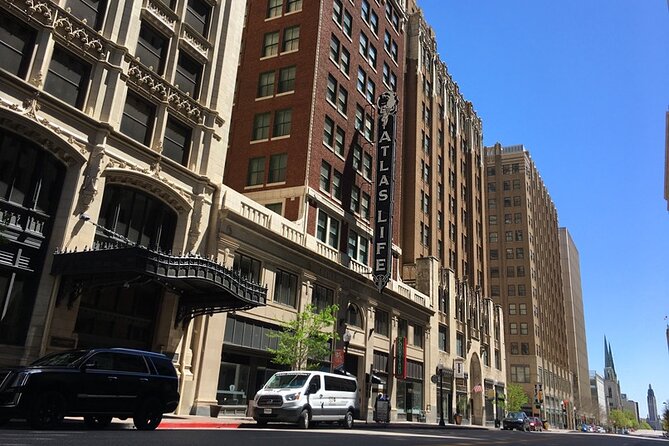
Atlas Life is one of the buildings discussed on the route. It helps set up the tour’s larger theme: downtown Tulsa contains architecture from several periods, and each building reflects a different stage in the city’s growth.
Your guide provides the meaning behind what you see. That is important because a building can look impressive without revealing why it was designed that way. The walk is not limited to naming façades. It explains architectural styles and connects them with Tulsa’s past.
This first part of the walk is also a good test of the guide’s approach. The strongest guides on this experience, including Becky, Jeff, and Jeffrey, are praised for speaking clearly and making room for questions. That back-and-forth helps the tour feel like a conversation instead of a memorized speech.
Philtower and Tulsa’s oil-era ambition
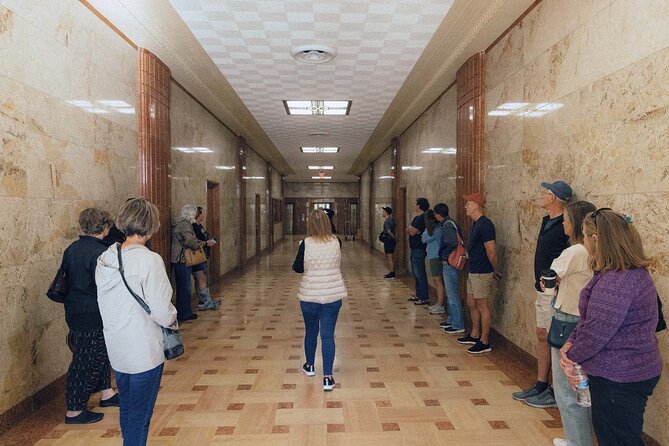
Philtower is among the major buildings covered. The building forms part of the tour’s discussion of Tulsa’s oil-era wealth and the powerful people who helped shape downtown.
The city’s oil story is not treated as a footnote. It gives the architecture a reason to exist. Large, carefully designed commercial buildings say something about the confidence and ambition of a growing city. Your guide helps you connect that economic story with the buildings around you.
I find this useful because it keeps the tour from becoming a catalog of names and dates. You are encouraged to think about why Tulsa invested in such elaborate structures and what the buildings meant to the people who commissioned them.
More walking tours in the USA:
- Chicago in a Day: Food, History & Architecture Walking Tour
★ 5.0 · 1,153 reviews - Chicago’s Secret Interiors Architectural Walking Tour
★ 5.0 · 635 reviews - Chicago: Secret Interiors Architecture Walking Tour
★ 4.9 · 498 reviews - Charleston: History and Architecture Guided Walking Tour
★ 4.8 · 349 reviews
Tulsa Club and the value of seeing inside
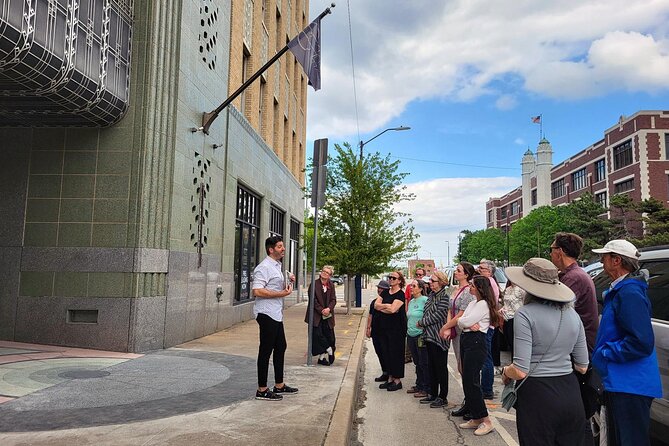
The Tulsa Club is another featured stop. One of the strongest parts of this experience is the possibility of entering historic interiors that are normally locked. A guide has taken groups inside buildings that they could not have accessed without the tour.
That detail can change the whole experience. From the sidewalk, you see the outer shell. Inside, you may get a closer look at the design choices and artwork that make the period memorable. The available information does not promise entry into every building on every departure, so you should treat interior access as a valuable possibility rather than a guarantee.
Still, the chance is a real advantage. Many city architecture walks stay outdoors from start to finish. Here, the guide’s local access may give you a closer look at Tulsa’s past.
Southwestern Bell, ARCO, and PSO
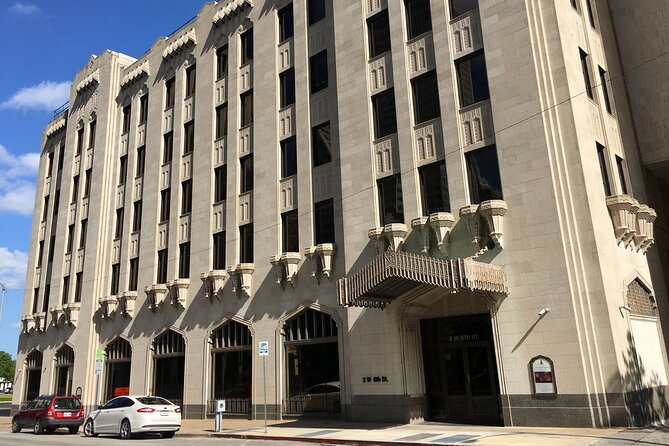
Southwestern Bell, ARCO, and PSO are also part of the route. Together, these stops broaden the picture beyond one famous building or one narrow version of Art Deco.
The guide discusses the different design periods represented in the district. You can expect attention to the ways buildings changed as Tulsa expanded and developed. The route is especially useful for people who want to learn how to spot broad differences in design rather than simply photograph attractive details.
The guide’s explanations are a major part of the value here. Jeffrey has been praised for covering the various segments of the Art Deco movement, while Jeff is praised for allowing plenty of conversation with the group. Those qualities matter because architectural terms can become dry if they are delivered too quickly or without examples.
This is also where the outdoor setting becomes practical. A recent guide kept the group in the shade, which can make a difference in warm weather. That is not a formal promise for every tour, but it suggests that guide judgment can improve comfort on the route.
Pythian, Sinclair, and Philcade
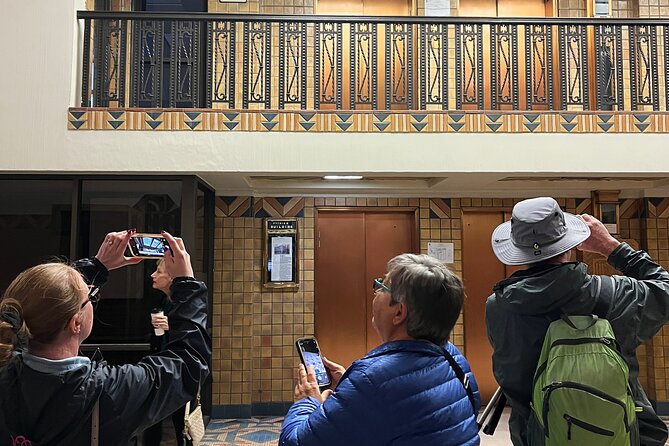
The final group of named buildings includes Pythian, Sinclair, and Philcade. These stops complete the tour’s survey of Tulsa’s Deco District and give the guide more chances to compare styles, ornament, and the city’s changing ambitions.
Philcade is especially useful as part of the closing stretch because the tour has already introduced the basic background. By this point, you can look at a building with more confidence. You may begin to notice design features that would have blended together at the start.
The tour is not presented as a technical architecture class. That is good news for most people. You do not need formal training to enjoy it, and you can ask questions as the walk proceeds. At the same time, anyone hoping for a highly specialized lecture should keep expectations in check. The experience is designed to be accessible, social, and grounded in the city itself.
What the guides do best
Guide quality is the clearest strength of this tour. Becky is praised for being extraordinary and for making the experience worth repeating. Jeff is described as well researched, funny, and open to questions. Jeffrey is praised for explaining the Art Deco movement and keeping the group comfortable. Wes is remembered for his friendly manner and strong local knowledge.
I pay close attention to guide feedback because architecture tours depend heavily on the person leading them. A dull guide can make beautiful buildings seem distant. A good guide gives you a reason to look up, pause, compare, and ask why.
Clear audio is another practical strength. One recent group found it easy to hear the guide, with little noise interfering. That is especially useful in a downtown setting where street sound can distract from detailed explanations.
The tone also appears relaxed. The walk has been described as fun, easy paced, and open to plenty of back-and-forth. That makes it a good choice for couples, families, solo visitors, and friends who want an activity with substance but not a formal classroom feel.
Walking comfort, stairs, and weather
The pace is described as easy, but this is still a walking tour. You will be outside for roughly two hours, and there are some stairs. Wear comfortable shoes and consider the weather before booking.
The tour requires good weather. If poor conditions force a cancellation, you are offered another date or a full refund. If the day is hot, shade can help, and one guide has made a point of keeping the group out of direct sun when possible. That said, shade and temperature control cannot be guaranteed.
Most people can participate, and service animals are allowed. The provided information does not promise a fully step-free route, so anyone who needs specific accessibility arrangements should ask before booking. The mention of stairs is worth taking seriously.
Is $52 a fair price?
At $52 per person, this is not the cheapest way to spend two hours in downtown Tulsa. You can walk past the buildings on your own for free. The question is what you want from the visit.
If you only need photographs of Art Deco façades, a self-guided walk may be enough. You can see the listed buildings from public streets without paying for an organized activity.
The paid tour earns its price through expert explanation, historical context, and possible interior access. A guide can explain why Tulsa has so many examples of the style, connect architecture with oil wealth, and point out details you might miss. Entry into locked buildings, when available, adds even more value.
The group size also matters. With a maximum of 25 people, you are paying for a guided experience that should remain reasonably personal, although it is not a private tour. I consider the price fair for architecture fans, first-time Tulsa visitors, and anyone who wants more than a quick look from the sidewalk.
The average booking time is 17 days ahead. That suggests you should reserve early if your Tulsa dates are fixed, especially if you want a particular day.
Who should book this Tulsa walking tour?
I would recommend it to anyone who enjoys historic buildings, urban design, or local stories about business and growth. It is also a smart choice for a first afternoon in Tulsa because the route gives you a useful sense of downtown while requiring only two hours.
Families can enjoy it if children are willing to walk and listen for that length of time. Couples and friends get an easy shared activity, and solo visitors can ask questions without feeling out of place.
This may not suit you if you dislike walking, have trouble with stairs, or are visiting during uncertain weather. It is also less useful if you prefer to explore silently at your own pace. The guide-led format is the point, so you should want interpretation rather than simply a list of locations.
Practical booking advice
Book ahead when possible, since the experience is often reserved more than two weeks before the date. Arrive at 511 S Boston Ave and plan to finish at the same spot.
Bring comfortable footwear and dress for outdoor conditions. Keep in mind that the tour is in English, uses a mobile ticket, and lasts about two hours.
Free cancellation is available if you cancel at least 24 hours before the start time. Changes or cancellations inside that 24-hour window are not accepted for a refund. The cut-off follows local Tulsa time.
Should you book it?
Book this tour if you want Tulsa’s buildings explained, not just photographed. The route covers a strong set of downtown landmarks, the guide stories connect architecture with the oil era, and the chance to enter normally locked buildings adds real value.
I would skip it only if weather, stairs, or a guided pace are likely to get in your way. For most architecture fans, history-minded visitors, and curious first-timers, $52 buys a focused and enjoyable introduction to one of Tulsa’s most distinctive parts.
FAQ
How long is the Tulsa Art Deco and Architecture Walking Tour?
The tour lasts approximately two hours.
Where does the tour begin?
It begins at 511 S Boston Ave, Tulsa, Oklahoma 74103.
Where does the tour end?
The activity ends back at the meeting point.
Which buildings are discussed?
The tour discusses Atlas Life, Philtower, Tulsa Club, Southwestern Bell, ARCO, PSO, Pythian, Sinclair, and Philcade.
Is the tour offered in English?
Yes. The tour is offered in English.
How many people can join the tour?
The maximum group size is 25 people.
What happens if bad weather cancels the tour?
If the experience is canceled because of poor weather, you are offered a different date or a full refund.
Just added in the USA
- Wilmington History and Architecture Tour★ 4.8 · 18 reviews
- New Orleans : Garden District Architecture Walking tour★ 4.8 · 5 reviews
- Washington DC: Dupont Circle & Embassy Row Architecture Tour★ 5.0 · 6 reviews
- Washington, DC: Georgetown Architecture Walking Tour★ 5.0 · 8 reviews
- Private Colonial Williamsburg Architectural Tour★ 5.0 · 5 reviews
- Tulsa: Art Deco Walking Tour of Tulsa★ 5.0 · 8 reviews
- Castle to Capitol: Museums of the National Mall Architecture Tour★ 4.5 · 9 reviews
- Monuments and Memorials Architectural Walking Tour★ 5.0 · 17 reviews
Art Deco Tours, compared.

The Official Art Deco Walking Tour by The Miami Design Preservation League
Read our review →

Guided 10am Morning Art Deco Walk From Napier Art Deco Trust
Read our review →


Award-winning Art Deco & Neon Lights Walking Tour in Miami Beach
Read our review →
Browse the lists this tour appears in