
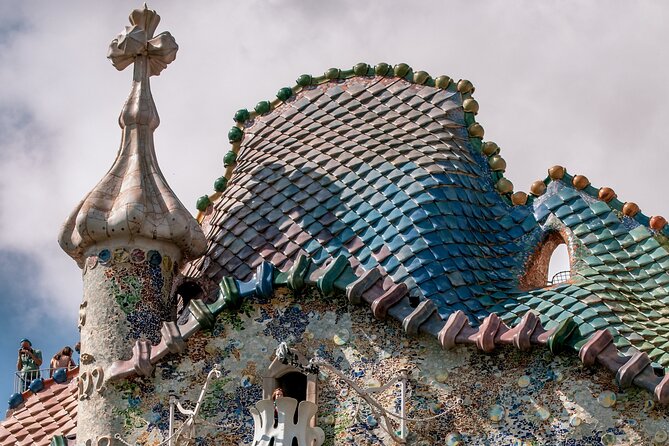
REVIEW · GAUDí TOURS
Gaudí & Catalan Modernism Private Walking Tour
Barcelona rewards travelers who look up. This three-hour private walk makes Gaudí and Catalan Modernism easier to understand by connecting famous buildings with the people, politics, and local identity behind them. I especially like the private format and the way the guide places Gaudí alongside other Modernist architects, rather than treating him as Barcelona’s only creative genius.
I also like the sensible route through Eixample and Passeig de Gràcia, with stops at Casa Batlló, Casa Amatller, Casa Lleó Morera, Casa Milà, Sagrada Família, and Hospital de Sant Pau. The main consideration is that every monument is viewed from the outside, so this is an architecture and context tour, not an entry ticket to Gaudí’s interiors.
Key points at a glance
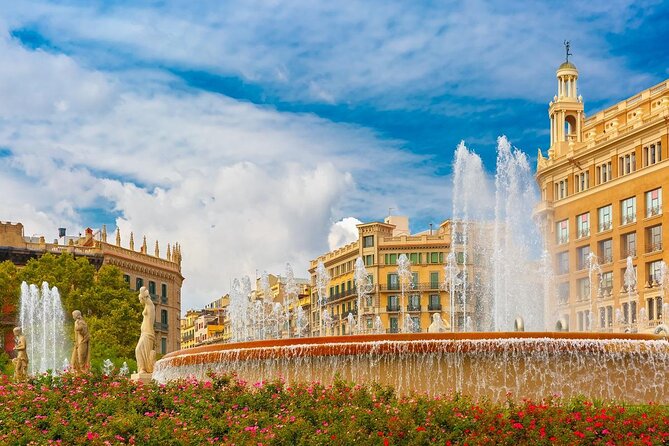
- Three hours and about 3 kilometers: A slow-paced route that covers major sights without turning into a forced march.
- Gaudí in context: You learn about Catalan Modernism as a wider movement, including architects beyond Gaudí.
- Private group of up to 10: The small setting gives you room to ask questions and set the pace.
- Exterior visits only: The guide explains the buildings from the street, while admission tickets are not included.
- A strong Passeig de Gràcia sequence: Casa Batlló, Casa Lleó Morera, Casa Amatller, and Casa Milà make this the tour’s architectural heart.
- Highly praised guiding: Alessandro was singled out for clear explanations, a friendly manner, good pacing, and patience with questions.
Why this short walk works so well

Barcelona’s Modernist buildings can look like a parade of unusual windows, sculpted balconies, and colorful tiles. Without context, you may admire the façades but miss the argument each architect was making.
This tour is designed to slow the story down. Your guide explains how Gaudí fits into the wider Catalan Modernist movement and links architecture to cultural, social, and political forces. That matters because Modernism was not simply a decorative style. It expressed a city and region thinking about identity, progress, wealth, and its place in Spain.
I like the emphasis on explanation rather than speed. The route covers approximately 3 kilometers in three hours, so you should have time to look carefully, ask questions, and compare buildings. It is still a city walk, but it should not feel like a race between photo stops.
The private format adds real value here. With no large group to manage, the guide can respond to your interests. If you care about structure, symbolism, urban planning, or local history, you can ask for more detail. If you prefer a simpler overview, you can keep the conversation moving.
The tour allows a maximum of 10 people, though the experience is presented as a private group. That makes it a good choice for couples, families, or friends who want a shared guide without joining a large public crowd.
More Gaudi tours in Barcelona:
- Barcelona: Park Güell and Gaudí House Museum Entry Ticket
★ 4.5 · 6,326 reviews - Barcelona: Gaudí’s Park Güell Tour with Fast-Track Ticket
★ 4.8 · 4,512 reviews - Sagrada Familia & Gaudi Tour Private or Small Group with Tickets
★ 4.5 · 1,188 reviews
Starting on Passeig de Gràcia
The meeting point is on the doorstep of Farggi Café at Passeig de Gràcia, 2, opposite the Apple Store and El Corte Inglés department store. This is a practical central location, but pay attention to the exact café entrance because Passeig de Gràcia is a busy avenue with plenty of distractions.
You begin in one of Barcelona’s grandest urban settings. Passeig de Gràcia cuts through the Eixample district, the carefully planned area that expanded beyond the old city. The avenue gives you an immediate sense of scale: broad streets, elegant façades, shops, traffic, and a steady flow of pedestrians.
Your guide uses this opening stretch to explain the city that allowed Modernist architecture to flourish. The value is not just in seeing individual houses. You start to understand why wealthy families commissioned ambitious façades and why architects were given unusual freedom to experiment.
The route is slow-paced, but comfortable shoes still matter. You will spend much of the three hours standing on pavements and crossing city streets. The walk covers about 1.8 miles, so it is manageable for many people, but it is not a seated sightseeing experience.
Eixample, the city’s grand urban experiment
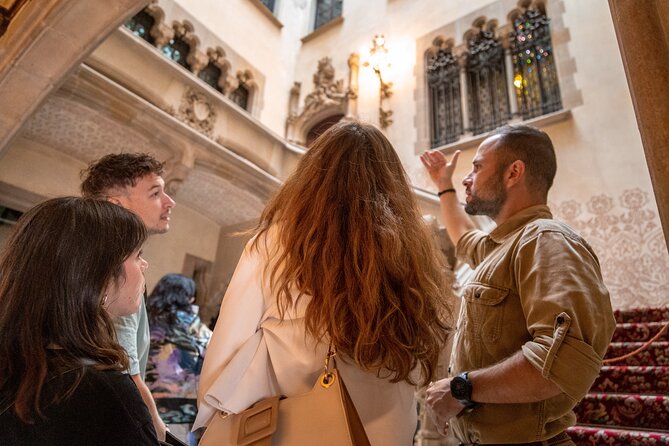
Eixample means expansion, and the district’s broad grid gives the tour a useful sense of order before the architecture becomes more theatrical. The contrast is part of the fun. Straight streets and regular blocks create a calm frame for buildings that twist, curve, and decorate nearly every surface.
This is where the guide can help you read Barcelona as a city rather than a collection of postcard façades. Urban planning, commerce, private wealth, and regional pride all meet here. You may find that the buildings make more sense once you understand the neighborhood around them.
The tour does not treat Modernism as Gaudí alone. That is one of its best features. Gaudí is the star for many first-time visitors, but the movement included several important architects with different styles and ideas.
Illa de la Discòrdia and a street full of rivalry
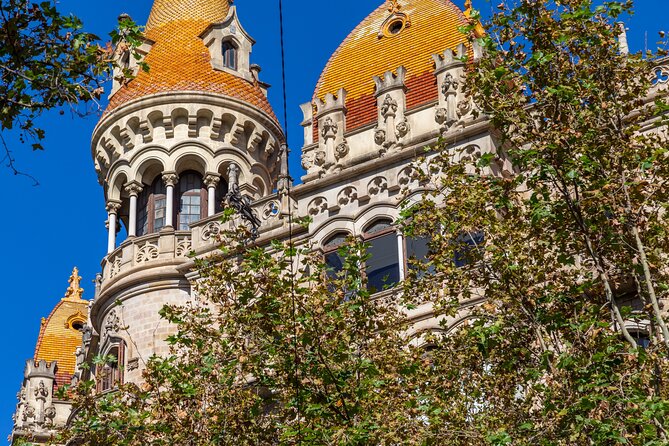
The Illa de la Discòrdia, or Block of Discord, is one of the most rewarding stops on the route. A short stretch of Passeig de Gràcia brings together buildings by major Modernist architects, creating an informal architectural contest.
The point is comparison. Instead of seeing one unusual house in isolation, you can examine several competing approaches side by side. Details in stone, balconies, windows, color, and ornament begin to reveal different personalities.
This is an excellent place to ask your guide to compare Gaudí with his contemporaries. The stop also gives the tour a little humor. The name suggests disagreement, and the façades certainly do not behave like polite neighbors.
Because the buildings are viewed externally, you will not get a full look at their interiors here. Still, the street setting makes comparison easy, and the guide’s commentary supplies the missing context.
More walking tours in Barcelona:
- Ramblas, Old Town, Gothic and Gaudi Architecture Walking Tour
★ 5.0 · 723 reviews - Barcelona 1.5h Private Old Town, Gothic & Ramblas Walking Tour
★ 5.0 · 318 reviews - Barcelona: Ramblas, Old Town & Gaudí Houses Walking Tour
★ 4.9 · 239 reviews - Barcelona Architecture Walking Tour With Casa Batlló Upgrade
★ 5.0 · 137 reviews
Casa Batlló, where the façade takes over
Casa Batlló is likely to be one of the tour’s most memorable exterior stops. Its curved forms, unusual surface treatment, and highly imaginative details make it easy to see why Gaudí attracts so much attention.
A good guide helps you move past the first reaction of that building looks strange. You can look at how the façade is organized, how the surfaces change as you move along the pavement, and how Gaudí used shape and decoration to challenge conventional ideas about a private city home.
The exterior-only approach works reasonably well at Casa Batlló because the street façade offers plenty to examine. If you want to walk through the interior, you will need to arrange a separate admission ticket and visit. That extra visit may be worthwhile for architecture enthusiasts, but it is not part of this tour’s $199 price.
Casa Lleó Morera and Casa Amatller
Casa Lleó Morera and Casa Amatller help widen the story beyond Gaudí. These buildings are important because they show that Catalan Modernism was a shared creative period, not a one-person show.
Casa Lleó Morera gives the route another chance to compare façades on the Illa de la Discòrdia. Look for the differences in ornament and composition rather than trying to decide which building is best. The contrast is more useful than a simple ranking.
Casa Amatller adds another distinct voice to Passeig de Gràcia. Its appearance differs from Casa Batlló, and that difference makes the guide’s wider explanation especially valuable. You can see how architects working in the same city and period made very different choices.
These two stops may be less familiar to you than Gaudí’s best-known works. That is precisely why they deserve attention. They keep the tour from becoming a greatest-hits walk and give you a better basis for understanding the period.
Casa Milà and Gaudí’s more daring side
Casa Milà, commonly called La Pedrera, is another major Gaudí landmark on the route. Its massive, flowing stone exterior feels very different from the ornate character of Casa Batlló.
Here, I would pay close attention to the relationship between the building’s overall shape and its smaller details. Casa Milà rewards a wider view first, followed by a careful look at windows, balconies, and the rhythm of the façade.
The guide’s role is important because Casa Milà can seem confusing from street level. A clear explanation helps you understand what makes it unusual and why it matters within Gaudí’s work.
Again, the tour does not include entry. If you want the interior spaces or rooftop experience, you need a separate ticket. That is not a flaw if your goal is a focused introduction, but it affects how you calculate the total cost of your day.
Traveling from Passeig de Gràcia to Sagrada Família
Transportation from Passeig de Gràcia to Sagrada Família is included. This is a useful break in the route and avoids making you navigate that connection on your own during the tour.
The exact transportation method is not specified, so you should confirm the practical details when booking or meeting your guide. The important point is that the tour does not require you to walk the entire distance between these two major areas.
This transfer also helps the three-hour schedule work. You get a concentrated architectural walk in Eixample, then continue with two important Gaudí-related sights in the Sagrada Família area.
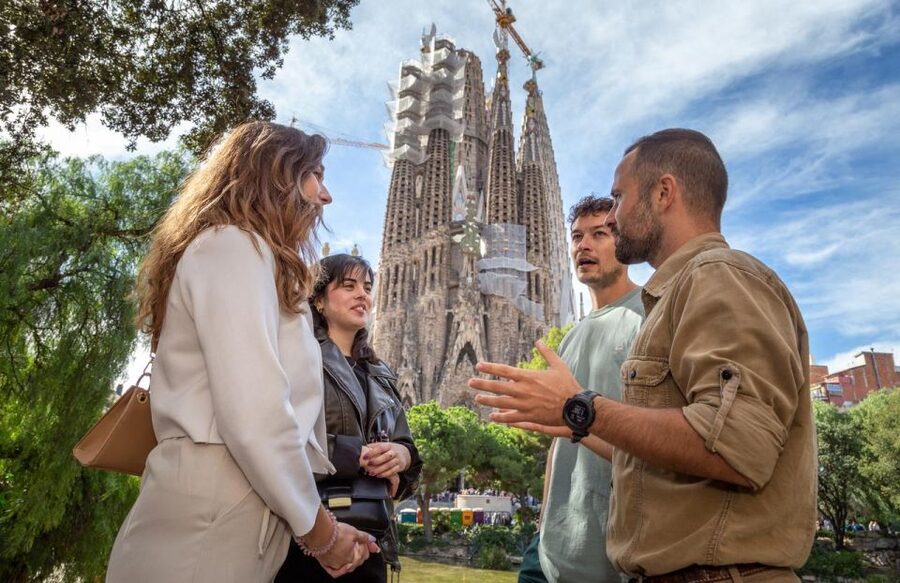
Sagrada Família from the outside
Sagrada Família is the tour’s biggest landmark and its natural climax. Even from the outside, the scale and detail make it difficult to take in all at once.
A guide can give you a framework for looking. Instead of wandering around the exterior and taking random photographs, you can ask what to notice, how the different sections relate to Gaudí’s work, and why the basilica became such a powerful symbol of Barcelona.
This stop is especially useful if you plan to visit the interior separately. The exterior explanation can give you a better starting point for that later visit. If you already have an admission time, tell your guide so you can plan your day around it.
The limitation is clear: your ticket is not included, and the tour does not take you inside. If entering Sagrada Família is your main reason for coming to Barcelona, this experience should be paired with a separate timed visit rather than used as a replacement.
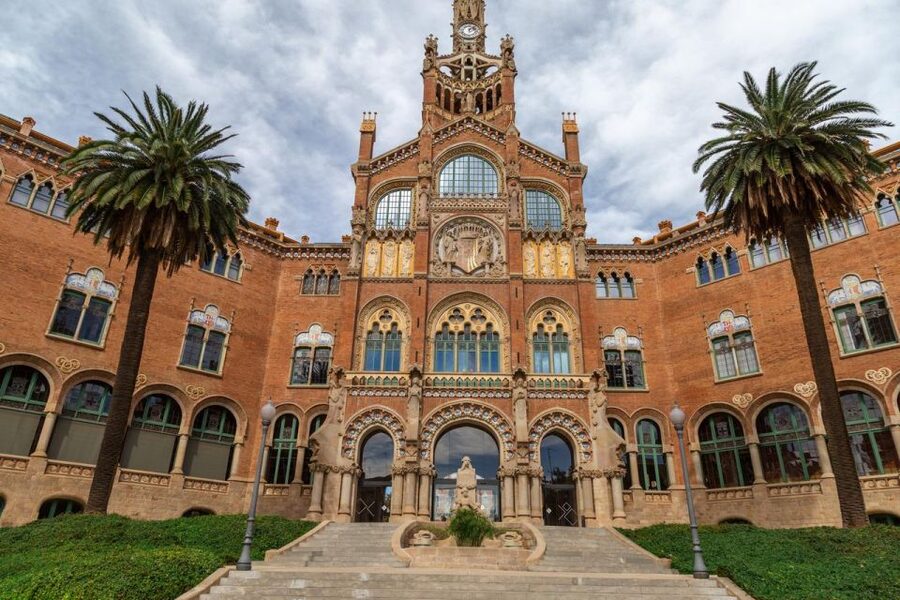
Hospital de Sant Pau, a final reminder that Gaudí was not alone
Hospital de Sant Pau adds an important final note. It shifts attention away from private residences and religious architecture toward a large public institution shaped by Modernist ideas.
This stop strengthens the tour’s central lesson: Catalan Modernism reached beyond Gaudí. The hospital gives you another way to think about design, civic purpose, and the role of architecture in everyday life.
The tour lists Hospital de Sant Pau before the finish at Sagrada Família, so the exact walking and transport sequence may vary slightly in practice. What matters is that you get a chance to see another major Modernist work near the basilica, rather than ending the day with Gaudí alone.
Like the other sites, the hospital is explored externally. Entry is not included, so plan a separate visit if you want to see more of its grounds or interiors.
What $199 per person really buys
At $199 per person, this is not a budget sightseeing walk. The price makes the most sense for people who value a private guide, flexible conversation, and clear architectural interpretation more than admission tickets.
The comparison is simple. A cheaper group tour may cover similar streets, but it may offer less room for questions and less control over the pace. This experience is priced around the guide’s time and attention, not around access to monuments.
For a full group of up to 10, the per-person price may feel more reasonable, especially if you are traveling with family or friends. For one or two people, it is a bigger investment. I would choose it if you want to understand what you are seeing and expect to ask plenty of questions.
The strongest praise has focused on the guide’s manner and pacing. Alessandro was specifically praised for being engaging, friendly, helpful, and clear, while also giving useful historical background and answering many questions. You cannot guarantee which guide you will receive, but you can request Alessandro if he is available.
Practical details before you book
The tour lasts three hours and runs in all weather. Barcelona’s weather can change, so bring protection suited to the forecast. Comfortable shoes are essential, even though the pace is deliberately easy.
The tour is listed as wheelchair accessible, but you should still communicate your specific needs when booking. The route uses city streets and public areas, and the guide can help you understand the practical flow.
English, Spanish, and Greek are available. Confirm your preferred language when arranging the tour.
Cancellation is free up to 24 hours before the start for a full refund. You can also reserve now and pay later, which is useful if you are still arranging the rest of your Barcelona schedule.
Who should choose this Barcelona walk?
I would recommend it to anyone who wants more than a quick photograph outside Casa Batlló or Sagrada Família. It is especially well suited to first-time visitors who want a clear introduction before visiting interiors on their own.
Architecture students, art lovers, and curious families may also appreciate the private format. The guide can adjust the conversation, and the slow pace leaves room for questions.
It is less suitable if you mainly want to enter the monuments. Since every site is viewed from the outside and no tickets are included, you will need a separate plan for Casa Batlló, Casa Milà, Sagrada Família, or Hospital de Sant Pau.
Should you book it?
Book this tour if you want Barcelona’s Modernist buildings explained rather than merely photographed. The route is well chosen, the pace is reasonable, and the private setting gives the guide room to connect Gaudí with the wider Catalan movement.
Skip it if your priority is interior access or the lowest possible price. For everyone else, the $199 cost can be worthwhile, especially when shared by a private group and paired with separate monument tickets. Ask whether Alessandro is available, wear good shoes, and arrive ready to look closely at the buildings that most people hurry past.
FAQ
How long does the Gaudí and Catalan Modernism tour last?
The tour lasts three hours.
How far does the walking route cover?
The tour covers approximately 3 kilometers, or about 1.8 miles, at a slow pace.
Are entrance tickets included?
No. The monuments are explored externally, and tickets to attractions are not included.
Is transportation included?
Transportation from Passeig de Gràcia to Sagrada Família is included.
Where does the tour begin?
Meet your guide at the doorstep of Farggi Café at Passeig de Gràcia, 2, opposite the Apple Store and El Corte Inglés department store.
Where does the tour finish?
The tour finishes at La Sagrada Família.
What languages are available?
The live tour guide is available in English, Spanish, and Greek.
Is the tour private and wheelchair accessible?
Yes. It is a private tour for a maximum of 10 participants, and it is listed as wheelchair accessible.
Just added in Barcelona
- Self-Guided Audio Tour-The Surrealist Barcelona of Dalí and Gaudí★ 3.5 · 8 reviews
- Visit to the Modernist houses of the Americans★ 5.0 · 2 reviews
- Roman & Gotic & Gaudi in Barcelona: private walking tour★ 4.5 · 2 reviews
- Barcelona Gaudi Tour: Sagrada Familia, Casa Batllo & Casa Mila★ 5.0 · 4 reviews
- Barcelona Street Escape: Gaudi and the Hidden Treasure★ 5.0 · 17 reviews
- Sagrada Familia Private Tour – Unlock the mysteries of Gaudi★ 5.0 · 10 reviews
- Gaudi’s Casa Batlló and La Pedrera with Chocolate Tasting★ 5.0 · 5 reviews
- Gaudí & Catalan Modernism Private Walking Tour★ 5.0 · 11 reviews
Gaudí Tours, compared.
Park Güell and Gaudí House Museum Entry Ticket
Read our review →
Gaudi’s Casa Vicens Skip-the-Line Entrance Ticket
Read our review →
Gaudí’s Park Güell Tour with Fast-Track Ticket
Read our review →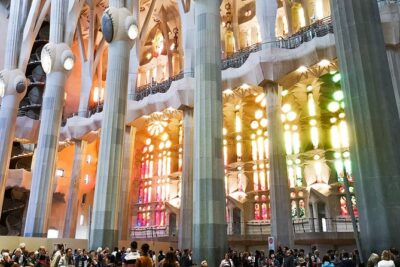
Sagrada Familia & Gaudi Tour Private or Small Group with Tickets
Read our review →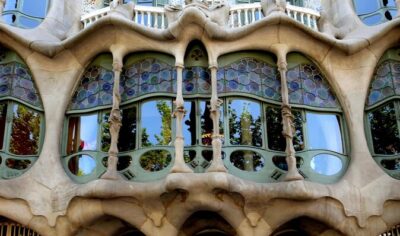
Complete Gaudi Tour: Casa Batllo, Park Guell & Sagrada Familia
Read our review →
Park Güell: Guided Tour with Optional Gaudí Experience Entry
Read our review →
Barcelona e-Bike Tour: Gaudí & Old Town Small Group
Read our review →
Ramblas, Old Town, Gothic and Gaudi Architecture Walking Tour
Read our review →Browse the lists this tour appears in