
REVIEW · GAUDí TOURS
Barcelona: Discover Gaudi Architectural Guided Tour
Gaudí makes Barcelona look alive. This three-hour morning walk links Gaudí’s major residential works with the wider Modernisme movement, so you see more than a string of fanciful façades. I like the practicing-architect guides, who explain structure and design in plain terms, and I like the way the tour connects buildings to Barcelona’s urban growth. The main limitation is simple: you do not enter the buildings, so this is a street-level architecture tour rather than an interior visit.
The $53 price is fair if you want context instead of quick photo stops. Guides such as Pia, Daniela, and Tomasz have been praised for mixing engineering, social history, urban planning, and art without making the walk feel like a classroom. Still, the value depends on your interests: if you mainly want access inside Casa Batlló or Casa Milà, you will need separate tickets.
Key points to know before you book
- Three hours on foot: The morning route gives you time to compare several Modernisme façades without rushing from one sight to the next.
- Practicing architects lead the walk: Guides can explain Gaudí’s visual ideas alongside the practical engineering that made his buildings possible.
- Six important architectural stops: Expect the Antoni Tàpies Foundation, Casa Lleó Morera, Casa Amatller, Casa Calvet, Casa Batlló, and Casa Milà.
- Courtyards reveal Barcelona’s urban planning: The walk shows how once-private spaces became public gardens.
- Gaudí is placed in context: You learn about his social concerns, religious turn, work for Eusebi Güell, Manhattan project, and early connection with the Sagrada Família.
- Wheelchair accessible, but weather matters: The full route is accessible, and tours are cancelled only when conditions create a safety risk.
Starting at Passeig de Gràcia and Gran Via
The meeting point is easy to identify if you know what to look for: meet beside Joan Brossa’s sculpture in front of the Comedia Cinema, at the intersection of Passeig de Gràcia and Gran Via. This is a useful place to begin because Passeig de Gràcia is not just a shopping avenue. It is also one of Barcelona’s best outdoor galleries of Modernisme.
The tour is conducted in English and lasts three hours. Since it is a walking route, wear comfortable shoes and bring clothing suited to the forecast. Barcelona often has pleasant weather, but the walk continues unless conditions become unsafe, so a light layer or rain protection can make the morning much more comfortable.
The route is wheelchair accessible. That matters here because accessible sightseeing is not always easy in old European city centers. The activity information describes the entire tour as accessible, though you should still allow time to meet the guide at the exact sculpture rather than searching along the avenue.
More Gaudi tours in Barcelona:
- Barcelona: Park Güell and Gaudí House Museum Entry Ticket
★ 4.5 · 6,326 reviews - Barcelona: Gaudí’s Park Güell Tour with Fast-Track Ticket
★ 4.8 · 4,512 reviews - Sagrada Familia & Gaudi Tour Private or Small Group with Tickets
★ 4.5 · 1,188 reviews
Why an architect guide changes the experience
A standard architecture walk may point at a balcony and tell you the architect’s name. This tour aims to explain why the balcony looks that way, how the building works, and what was happening in Barcelona when it was designed.
The guides are practicing architects, and many also teach architecture or work as critics. That background gives them a useful range. They can discuss a façade’s decoration, then shift to structure, city planning, engineering, social concerns, or the political setting behind Barcelona’s expansion.
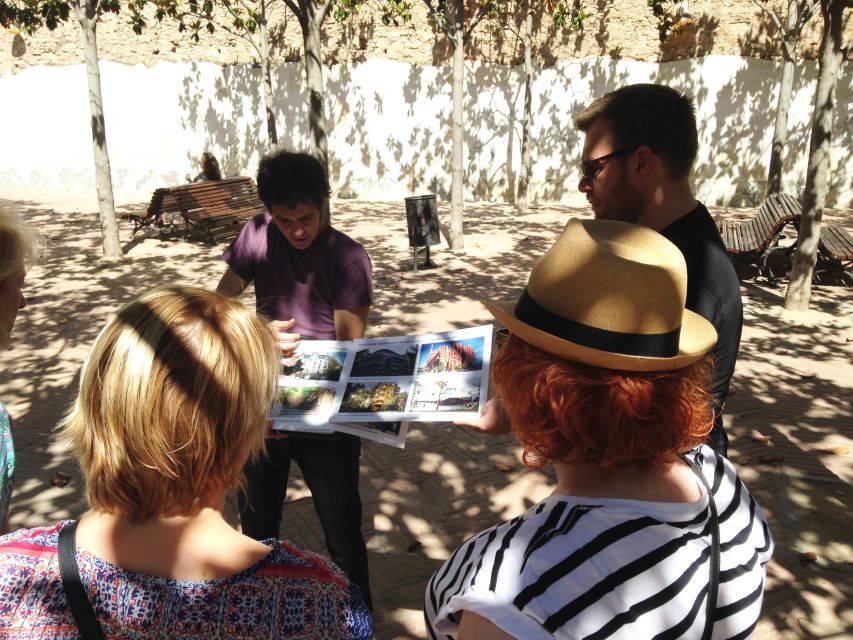
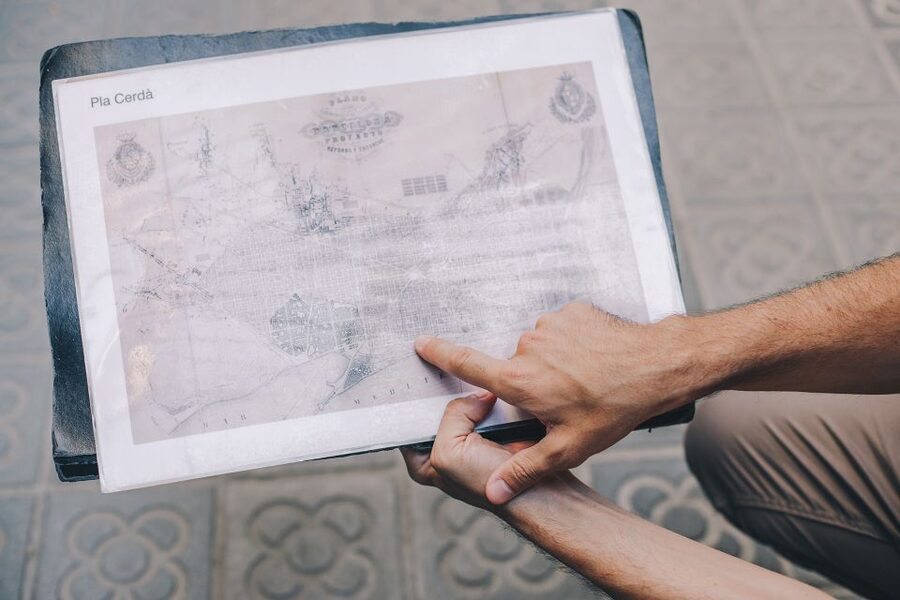
Pia receives especially strong praise for making complicated material easy to follow. Her approach includes city-layout sketches and photographs used to clarify what you are seeing. She also answers questions about social and political issues without letting the walk become a personal debate. That balance is valuable: you get real substance, but you do not need an architecture degree to keep up.
Tomasz has also been praised for using visual aids and for handling a particularly large group with energy and control. Group size can affect any walking tour, so this is worth noting. A large group may make it harder to hear or find a good viewing position, but a capable guide can keep the route moving.
Barcelona’s urban plan before Gaudí takes center stage
One of the strongest features of this walk is that Gaudí is not treated as an isolated genius dropped into the city without context. You first get a sense of how Barcelona grew and how modern urban planning shaped the streets around Passeig de Gràcia.
The tour explains the beginnings of modern urbanism and the city guidelines that aimed to improve daily life. This helps you read the broad blocks, planned streets, and repeated building patterns around you. Instead of seeing one ornate house after another, you start to understand how individual buildings fit into a larger civic plan.
I find this context especially useful for the rest of your Barcelona visit. Once you understand how the city was organized, you can look at other neighborhoods and buildings with more confidence. Several people who took the walk found that the explanations helped them appreciate architecture they encountered later, not just the buildings on this route.
This section also gives the tour a welcome balance. Gaudí gets the headline, but other architects and styles receive attention too. The discussion can include architectural traditions that are special or unusual within Spain, helping you see Modernisme as a broad movement rather than a one-man show.
Casa Lleó Morera, Casa Amatller, and the Modernisme contest
The route includes the Antoni Tàpies Foundation and two important buildings near Passeig de Gràcia: Casa Lleó Morera by Domènech i Montaner and Casa Amatller by Puig i Cadafalch.
Casa Lleó Morera lets you consider how Modernisme combined architecture, craft, and surface detail. Casa Amatller brings a different personality to the street, with Puig i Cadafalch’s own approach to form and ornament. Seeing these buildings together is more useful than seeing either one alone. The comparison helps you notice that Barcelona’s early twentieth-century architecture was not simply a collection of Gaudí imitations.
The guides explain how the buildings relate to their period and to the city’s changing ambitions. You may hear less about isolated decorative details and more about how the architects responded to materials, clients, technology, and the urban setting. That is exactly the kind of explanation that makes a city walk stick with you.
The Antoni Tàpies Foundation adds another layer. It is included as an example of modern architecture, giving you a reminder that Barcelona’s architectural story did not end with Modernisme. The stop broadens the walk beyond Gaudí and makes the route feel like a study of the city’s design culture, not just a pilgrimage to famous façades.
You will not go inside these buildings. That is important because exterior viewing can only take you so far. Still, the guide’s interpretation helps you understand details that are easy to miss from street level, especially when traffic, crowds, or the scale of the buildings make quiet observation difficult.
A few more architecture tours in Barcelona worth a look
- Park Güell: Guided Tour with Optional Gaudí Experience Entry
★ 4.1 · 832 reviews - Barcelona: Casa Vicens, Pedrera, and Casa Batlló Guided Tour
★ 4.6 · 260 reviews - Guided Gaudí’s Trencadís Mosaic Workshop in Barcelona
★ 4.8 · 259 reviews - Gaudi´s Casa Vicens Guided Tour
★ 5.0 · 235 reviews
Casa Calvet and the practical side of Gaudí
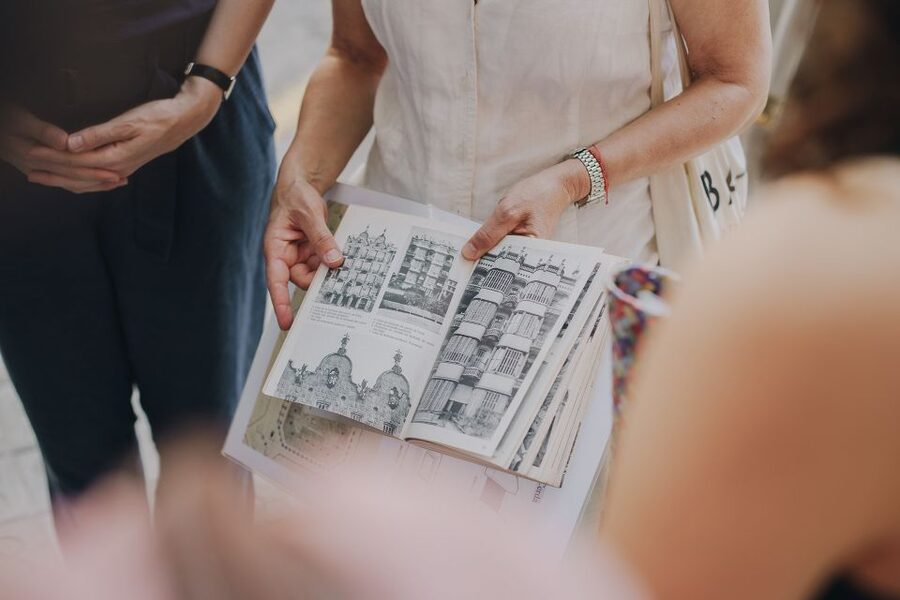
Casa Calvet is one of the three principal residential buildings by Antoni Gaudí included on the route. It is a good place to consider an earlier, more restrained side of his work.
The tour traces Gaudí’s changing ideas rather than presenting every building as if it came from the same moment. At Casa Calvet, the guide can help you see how his design language developed before the more famous, dreamlike forms associated with Casa Batlló and Casa Milà.
This is where the engineering discussion becomes especially helpful. Gaudí’s work is often reduced to curves, masks, bones, and colorful surfaces. The better explanation is that the decoration sits on top of serious structural thinking. Guides such as Pia have been praised for showing that these buildings were not only beautiful objects but also practical engineering achievements.
You may also learn how Gaudí’s social concerns shaped his early work. His career was not a straight line toward religious architecture. The walk follows the changes in his priorities, from social questions and practical commissions toward a stronger focus on faith and the divine.
Casa Batlló and the visual power of Gaudí
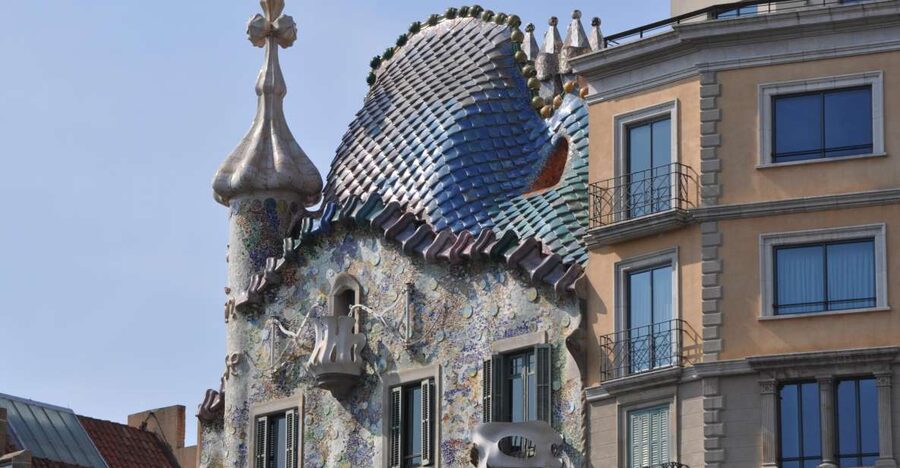
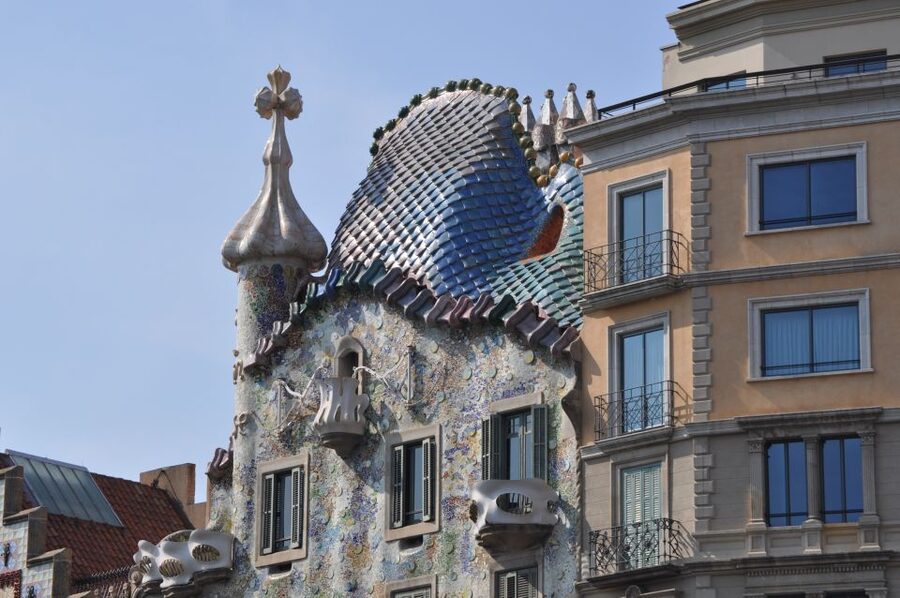
Casa Batlló is likely to be one of the tour’s most visually arresting stops, even though you see it from outside. Its façade gives the guide plenty to work with: unusual shapes, layered ornament, and details that seem to shift as you look upward.
The important point is not just that the building looks strange. The guide explains how Gaudí imagined his projects and how his visual power affected later artists. His work became a source of inspiration for the Surrealists because it seemed to blur the line between architecture, nature, sculpture, and fantasy.
I appreciate the way this tour connects the visual drama to the architect’s thinking. You are not asked simply to admire a strange façade. You are encouraged to consider how Gaudí used form, light, texture, and structure to create an experience for people moving through the city.
Since you do not enter Casa Batlló, you will miss its interior rooms and famous light well. If that interior is high on your Barcelona list, plan a separate visit. The walking tour still gives you a strong foundation, and it may help you understand what to look for when you later visit the building inside.
Casa Milà and the road toward sacred architecture
Casa Milà, often called La Pedrera, provides another chance to study Gaudí’s mature residential work. Its massing and flowing exterior show how far he had moved from conventional apartment-house design.
Here the story turns toward Gaudí’s growing absorption with religious ideas. The guide traces the path from his earlier social concerns to the period when he became known as the last great cathedral builder. That phrase is not just a grand label. It points to a major change in the scale and purpose of his ambitions.
The tour also covers key turning points in his career. These include an unrealized project in Manhattan, the final commission from his patron Eusebi Güell, and Gaudí’s first architectural steps connected with the Sagrada Família. These subjects help you see the career as a series of experiments and shifts, not a simple march toward fame.
The Sagrada Família is part of the discussion, but the supplied details do not say that the tour enters or visits the basilica. Do not book this walk expecting an interior Sagrada Família experience. Its value is the career context, which can make a later visit to the basilica more meaningful.
Hidden courtyards and the city behind the façades
The route includes hidden courtyards and explains how some became public gardens. This is one of the more distinctive parts of the experience because it moves your attention away from the grand avenues.
Barcelona’s famous façades can make the city feel like a parade of front doors and balconies. Courtyards reveal another side of urban life. They help you think about density, light, shared space, and the way private land can serve a wider public.
The courtyard section also links architecture to quality of life. City planning is not only about impressive buildings. It is about where people can gather, find relief from traffic, and gain access to open space. That practical angle gives the tour more weight than a simple catalogue of beautiful houses.
Because the walk includes spaces that are not always part of the standard sightseeing circuit, pay close attention to the guide’s explanation of how they changed use. You are not just being shown a pretty corner. You are seeing how Barcelona has adapted old urban spaces for public benefit.
What the $53 price really covers
At $53 per person, this is not the cheapest way to spend a morning in Barcelona. You are paying for three hours with a specialist guide rather than for admission to a major monument.
That distinction makes the price easier to judge. The tour does not include entry inside the buildings, so its value rests on the guide’s ability to turn street views into clear architectural stories. If you enjoy design, urban planning, engineering, or Barcelona’s cultural development, the cost is reasonable for the amount of explanation packed into one walk.
You also receive an architectural city guide at the end. It includes suggestions for places to have a drink and further architecture to see. That makes the experience more useful beyond the scheduled route, especially if you want to keep exploring on your own.
I would be less enthusiastic about the price if you only want quick snapshots of Casa Batlló and Casa Milà. You can see exterior façades without booking a tour. The fee earns its keep when you want to understand what you are looking at.
Who will enjoy this walk most
This tour suits you if you like buildings but want more than names and dates. It works particularly well for people interested in how cities grow, how architects solve structural problems, and how social ideas shape design.
You do not need technical training. The guides adjust the level of detail to the group. One guide was praised for keeping explanations accessible while still being able to discuss technical subjects with people who wanted more depth.
It is also a good choice early in your Barcelona stay. The morning timing leaves the rest of the day open, and the urban-planning background can improve the way you see other districts. If you are visiting with family, the visual aids and stories may help younger people follow along, though three hours of walking and discussion may be too long for very small children.
This is less suitable if your priority is indoor access, a short photo stop, or a tour focused only on Gaudí. The route gives serious attention to other architects, Modernisme, planning, and the city itself.
Practical details that matter
The tour operates in English with a live guide. Bring weather-appropriate clothing because the route continues outdoors, and bad weather does not automatically cancel it. Cancellation happens only when the conditions pose a safety threat.
The entire tour is wheelchair accessible. You should still meet at the specified Joan Brossa sculpture by the Comedia Cinema, since a large intersection can be confusing if you rely only on the avenue name.
The experience allows cancellation up to 24 hours before the start for a full refund. You can also reserve now and pay later, which is useful if your Barcelona schedule is still shifting.
At the end, keep the architectural guide handy. Its suggestions for drinks and additional buildings can turn one morning walk into a loose plan for the rest of your stay.
Should you book the Gaudí architecture walk?
Book it if you want Barcelona’s famous buildings explained by people who work with architecture every day. The strongest features are the guides’ command of both engineering and culture, the clear connection between Gaudí and the wider Modernisme movement, and the attention given to urban planning and public courtyards.
The repeated praise for Pia’s teaching style is a strong sign for anyone who wants clear explanations without dry lectures. Daniela and Tomasz also bring warmth and energy, and the use of sketches or visual aids can make complicated ideas easier to grasp.
Skip it if you mainly want to enter Casa Batlló, Casa Milà, or another monument. This is a street-level learning experience, not an admissions package. For the right audience, $53 buys a much better way to read Barcelona’s architecture long after the three-hour walk is over.
FAQ
Where does the tour meet?
Meet beside the Joan Brossa sculpture in front of the Comedia Cinema, at the intersection of Passeig de Gràcia and Gran Via.
How long does the tour last?
The walking tour lasts three hours and takes place in the morning.
What language is the tour in?
The live guided tour is conducted in English.
Do you go inside the buildings?
No. The tour views the buildings from outside and does not include interior access.
Is the tour wheelchair accessible?
Yes. The entire tour is described as wheelchair accessible.
Can I cancel the booking?
Yes. You can cancel up to 24 hours in advance for a full refund. You can also reserve now and pay later.
Just added in Barcelona
- Self-Guided Audio Tour-The Surrealist Barcelona of Dalí and Gaudí★ 3.5 · 8 reviews
- Visit to the Modernist houses of the Americans★ 5.0 · 2 reviews
- Roman & Gotic & Gaudi in Barcelona: private walking tour★ 4.5 · 2 reviews
- Barcelona Gaudi Tour: Sagrada Familia, Casa Batllo & Casa Mila★ 5.0 · 4 reviews
- Barcelona Street Escape: Gaudi and the Hidden Treasure★ 5.0 · 17 reviews
- Gaudi’s Casa Batlló and La Pedrera with Chocolate Tasting★ 5.0 · 5 reviews
- Gaudí & Catalan Modernism Private Walking Tour★ 5.0 · 11 reviews
- Sagrada Familia Private Tour – Unlock the mysteries of Gaudi★ 5.0 · 10 reviews
Gaudí Tours, compared.
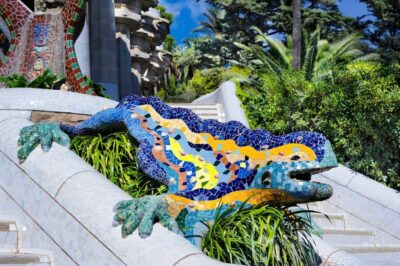
Park Güell and Gaudí House Museum Entry Ticket
Read our review →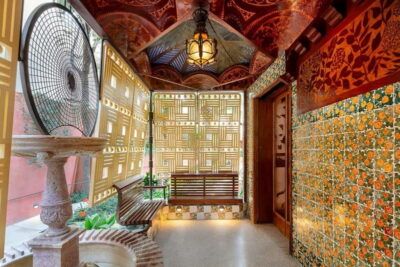
Gaudi’s Casa Vicens Skip-the-Line Entrance Ticket
Read our review →
Gaudí’s Park Güell Tour with Fast-Track Ticket
Read our review →
Sagrada Familia & Gaudi Tour Private or Small Group with Tickets
Read our review →
Complete Gaudi Tour: Casa Batllo, Park Guell & Sagrada Familia
Read our review →
Park Güell: Guided Tour with Optional Gaudí Experience Entry
Read our review →
Barcelona e-Bike Tour: Gaudí & Old Town Small Group
Read our review →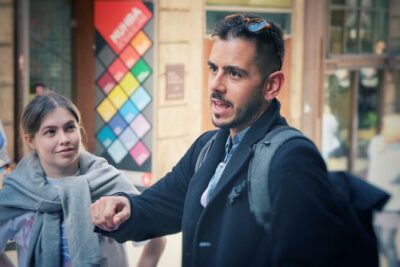
Ramblas, Old Town, Gothic and Gaudi Architecture Walking Tour
Read our review →Browse the lists this tour appears in